









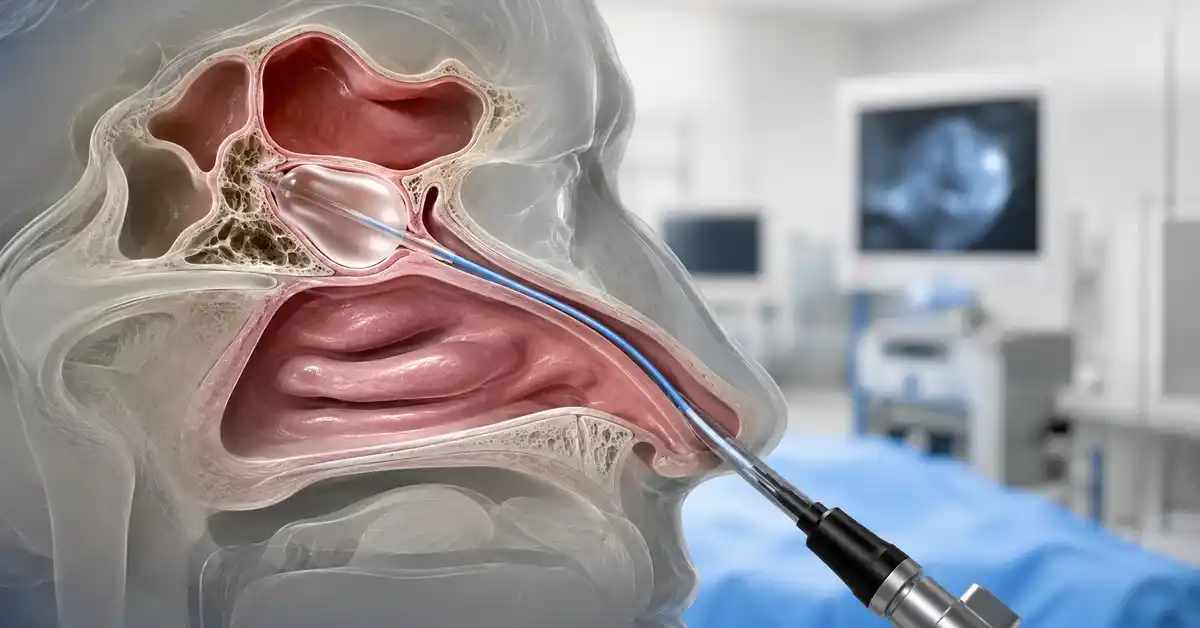
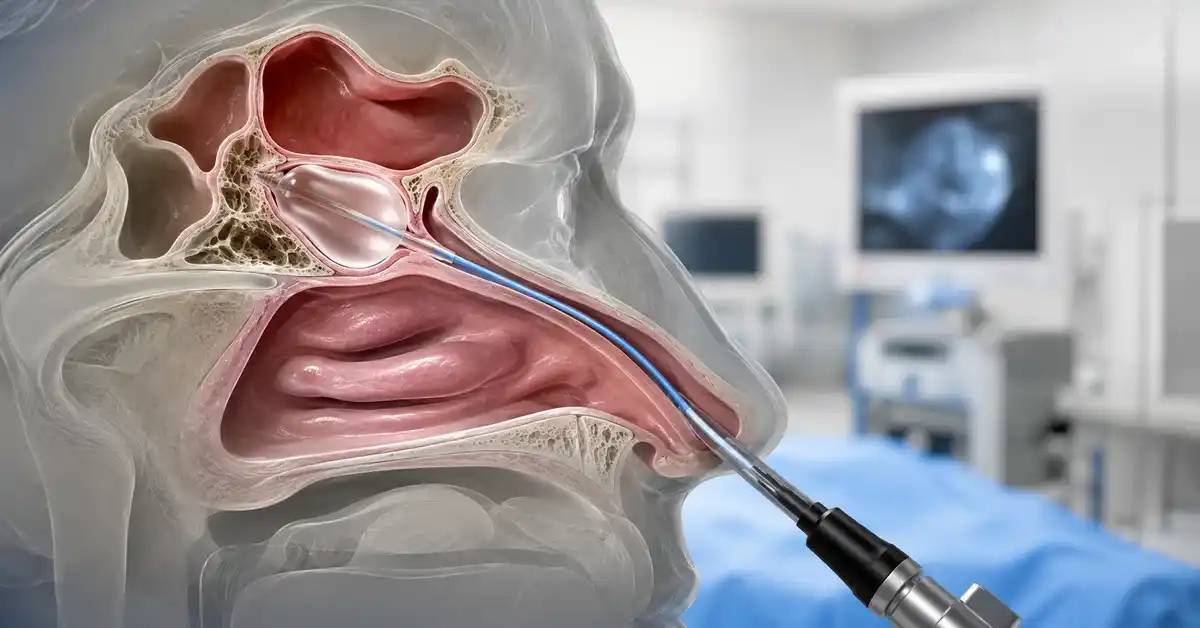
Balloon treatment for sinusitis, also known as balloon sinuplasty, is a minimally invasive option used for selected patients with chronic or recurrent sinusitis. It aims to widen the natural sinus drainage pathways using a small medical balloon, helping mucus drain more easily and improving ventilation inside the sinuses. For many patients, this approach offers sinus congestion relief treatment without the tissue removal often associated with more extensive sinus surgery.
Sinusitis can cause facial pressure, nasal blockage, thick discharge, reduced smell, headaches, postnasal drip, cough, fatigue, and repeated infections. When medications, nasal sprays, saline rinses, and allergy control do not provide enough relief, the doctor may consider procedures that improve sinus drainage. Balloon treatment is one of these options, but it is not suitable for every type of sinus disease.
The balloon sinuplasty procedure may be helpful when the main problem is narrowing or blockage of the natural sinus openings. However, patients with large nasal polyps, fungal sinus disease, severe anatomical obstruction, extensive inflammation, or complex sinus disease may need endoscopic sinus surgery or a combined approach instead.
At Safemedigo, sinus treatment planning is based on symptoms, nasal endoscopy, CT scan findings when needed, previous treatments, allergy history, and the patient’s expectations. This article explains balloon treatment for sinusitis, procedure steps, balloon sinuplasty cost, success rate, recovery time, complications, balloon vs traditional sinus surgery, and how to choose the best treatment for sinusitis.
Balloon Treatment For Sinusitis
Balloon treatment for sinusitis is designed to open blocked sinus drainage pathways without making external cuts. A thin catheter with a small balloon is inserted through the nose and guided to the affected sinus opening. Once in position, the balloon is gently inflated to widen the narrowed area, then deflated and removed.
The goal is not to remove the sinuses, but to restore better drainage. When the sinus opening is narrowed, mucus may become trapped, pressure can build up, and inflammation may persist. By widening the natural opening, balloon treatment may reduce congestion, improve sinus ventilation, and support the effect of medical treatments such as saline rinses and nasal sprays.
Balloon sinuplasty is most commonly considered in selected cases of chronic sinusitis or recurrent sinus infections. It may be used alone or combined with endoscopic sinus surgery when additional treatment is needed. Proper diagnosis is important because symptoms similar to sinusitis may also come from allergies, migraine, deviated septum, enlarged turbinates, or other nasal problems.
What Is Balloon Sinuplasty
Balloon sinuplasty is a minimally invasive sinus procedure that uses a small balloon to widen the natural openings of the sinuses. The technique is similar in concept to other medical balloon dilation procedures, but it is performed through the nasal passage to improve sinus drainage.
During the procedure, the doctor guides a balloon catheter into the blocked sinus opening, usually using endoscopic visualization. The balloon is then inflated under controlled pressure, gently reshaping and expanding the sinus pathway. After the opening is widened, the balloon is removed.
This technique may be suitable for patients whose symptoms are mainly caused by narrow sinus drainage pathways rather than widespread tissue disease. This distinction is important because balloon sinuplasty widens openings, but it does not remove large polyps, fungal material, or extensive diseased tissue.
How Sinus Balloon Dilation Works
Sinus balloon dilation works by widening the natural drainage openings of the affected sinuses. Before the procedure, the doctor identifies which sinuses are involved based on symptoms, nasal examination, endoscopy, and sometimes CT imaging.
During treatment, a small balloon is positioned in the narrowed sinus opening. The balloon is inflated briefly to expand the passage, then deflated and removed. In some cases, the sinus may be rinsed with saline to help clear trapped mucus or discharge.
The widened opening may help mucus drain more effectively and reduce pressure inside the sinus. The benefit depends on correct patient selection, the type of sinusitis, the degree of obstruction, and whether other contributing factors such as allergies or structural problems are also managed.
Benefits of Non-Surgical Treatment
The benefits of non-surgical sinus treatment with balloon sinuplasty relate mainly to its minimally invasive nature. In suitable patients, the procedure may improve sinus drainage while preserving tissue and avoiding more extensive surgery.
Potential benefits may include:
- No external incisions.
- Tissue-preserving approach.
- Reduced sinus blockage in selected cases.
- Possible faster recovery.
- Less bleeding in many cases.
- Limited discomfort for many patients.
- Improved sinus drainage.
- Better access for saline rinses and sprays.
- Possible office-based treatment in selected cases.
- Option to combine with endoscopic treatment if needed.
However, “non-surgical” should be understood carefully. Balloon sinuplasty is still a medical procedure and may require anesthesia, preparation, and follow-up. It is not a universal replacement for endoscopic sinus surgery in complex cases.
Balloon Sinuplasty Procedure
The balloon sinuplasty procedure may be performed in an equipped clinic or operating room, depending on the patient’s condition, number of sinuses treated, type of anesthesia, and whether other procedures are added. Some patients may have it under local anesthesia with sedation, while others may need general anesthesia.
Before the procedure, the doctor confirms that balloon dilation is appropriate. This may involve nasal endoscopy and CT imaging to identify the blocked sinuses, check for polyps, evaluate septal deviation, assess turbinate enlargement, and determine whether the disease is suitable for balloon treatment.
Although balloon sinuplasty is minimally invasive, it requires precision. The sinuses are located close to the eyes and skull base, so the procedure should be performed by an experienced ear, nose, and throat specialist familiar with sinus anatomy, endoscopy, and balloon techniques.
Procedure Steps
The procedure steps for balloon sinuplasty usually begin with preparing the nasal passage using local anesthetic and decongestant medication. Depending on the plan, sedation or general anesthesia may be used. The doctor then uses an endoscope to view the nasal passage and guide the balloon catheter.
Typical steps may include:
- Nasal evaluation before starting.
- Application of anesthesia.
- Endoscopic visualization.
- Guiding the catheter to the sinus opening.
- Placing the small balloon in the narrowed area.
- Inflating the balloon to widen the passage.
- Deflating and removing the balloon.
- Saline irrigation if needed.
- Checking that drainage is improved.
- Monitoring the patient after the procedure.
The exact process may vary depending on which sinuses are treated and whether balloon sinuplasty is performed alone or combined with endoscopic sinus surgery.
Preparation Before Surgery
Preparation before balloon sinuplasty begins with a full medical evaluation. The patient should tell the doctor about medications, blood thinners, allergies, chronic conditions, previous nasal surgery, and any history of bleeding problems.
Preparation may include:
- Nasal endoscopy.
- CT scan of the sinuses when needed.
- Review of sinusitis history.
- Allergy assessment.
- Stopping certain medications if advised.
- Treating acute infection before the procedure.
- Fasting instructions if general anesthesia is planned.
- Avoiding smoking.
- Using prescribed sprays or rinses before treatment.
- Arranging transportation if sedation is used.
Good preparation helps reduce risk and improve results. It also helps confirm whether balloon treatment is the right option or whether another treatment may be more suitable.
Duration Of Procedure
The duration of the balloon sinuplasty procedure depends on the number of sinuses treated, anatomy, type of anesthesia, and whether additional endoscopic steps are needed. In many straightforward cases, the procedure is relatively short compared with more extensive sinus surgery.
Simple cases may be completed within a limited time, while cases involving multiple sinuses or combined procedures may take longer. After the procedure, the patient is observed to check for bleeding, dizziness, discomfort, or breathing issues.
The most important factor is not speed, but accuracy and safety. A quick procedure is not always the best procedure, and a longer procedure may be necessary if the patient needs more complete treatment.
Read about: Chronic Sinusitis Problems and Advanced Endoscopic Solutions
Balloon Sinuplasty Cost
Balloon sinuplasty cost varies depending on the country, doctor’s experience, clinic or hospital level, anesthesia type, number of sinuses treated, need for CT imaging, and whether balloon treatment is performed alone or combined with endoscopic sinus surgery.
The cost of balloon treatment may be higher than medication alone, but medication may not be enough for some chronic or recurrent cases. On the other hand, balloon treatment may be less extensive than traditional surgery in selected patients. The right comparison should consider suitability, long-term benefit, recovery, and risk of needing another procedure.
Patients should ask what the quoted price includes. Important cost items may include consultation, imaging, anesthesia, operating room or clinic fees, balloon device cost, medications, follow-up visits, and any additional procedures if needed.
Cost Overview
Balloon sinuplasty cost differs between countries and medical centers because hospital fees, equipment costs, physician fees, anesthesia charges, and healthcare systems vary. Private centers may charge differently from hospital-based procedures, especially if general anesthesia is used.
When comparing cost across countries, patients should also compare diagnostic quality and medical experience. A procedure performed for the wrong indication may lead to ongoing symptoms and additional treatment, increasing the total cost over time.
For international patients, a clear treatment plan should include diagnosis, procedure type, number of sinuses, anesthesia, stay duration, follow-up plan, and expected recovery. This helps patients understand the real cost, not just the procedure price.
Factors Affecting Price
Factors affecting balloon sinuplasty price include medical and administrative details. A simple case involving one sinus opening may cost less than a more complex case involving multiple sinuses or combined endoscopic treatment.
Key factors include:
- Number of sinuses treated.
- Balloon alone or combined with endoscopy.
- Type of anesthesia.
- Doctor’s experience.
- Clinic or hospital quality.
- Need for CT scan.
- Presence of polyps or septal deviation.
- Procedure duration.
- Cost of balloon devices.
- Preoperative tests.
- Post-procedure follow-up.
- Medications and nasal rinses.
- Country and city.
- Translation and coordination for international patients.
A very low price may not be the best choice if it does not include proper diagnosis, safe equipment, experienced care, or follow-up. Safety and suitability should come before cost alone.
Cost Comparison
Cost comparison between balloon sinuplasty and traditional sinus treatment depends on what is being compared. If the comparison is with medication and nasal rinses, medication is usually cheaper. However, medications may not solve chronic sinus blockage in some patients.
If the comparison is with endoscopic sinus surgery, costs vary depending on the extent of surgery. Balloon sinuplasty may be suitable for limited disease and may involve shorter recovery in selected cases. Endoscopic sinus surgery may be more appropriate when tissue removal, polyp treatment, or wider sinus opening is needed.
The decision should compare effectiveness, likelihood of symptom relief, recovery time, risk of recurrence, and need for additional procedures—not cost alone.
Balloon Sinuplasty Success Rate
Balloon sinuplasty success rate depends on patient selection, accurate diagnosis, doctor experience, type of sinusitis, and number of sinuses involved. In carefully selected patients, balloon treatment may improve congestion, facial pressure, drainage, and recurrent sinus symptoms.
Success does not mean every symptom disappears forever. Some patients also have allergies, chronic inflammation, or other nasal conditions that require ongoing sprays, rinses, or follow-up even after the sinus openings are widened.
When discussing success, it is important to define the goal. Success may mean fewer infections, less facial pressure, better breathing, reduced need for medication, or improved quality of life. The degree of improvement varies from patient to patient.
Success Statistics
Success statistics for balloon sinuplasty are generally more favorable when the patient has chronic or recurrent sinusitis without large nasal polyps, with obstruction that can be treated by widening natural sinus openings. Results are often better when imaging confirms that balloon dilation matches the cause of symptoms.
Some patients notice improvement in pressure, congestion, and drainage relatively quickly, while others improve gradually as swelling decreases and the sinuses heal. Chronic inflammation may require continued medical care even after a technically successful procedure.
Balloon treatment does not treat every cause of nasal blockage. If the main issue is severe allergy, turbinate enlargement, deviated septum, or headaches unrelated to sinusitis, the result may be less satisfying.
Influencing Factors
Influencing factors for balloon sinuplasty success include correct diagnosis, proper treatment planning, and post-procedure care. The more the symptoms are related to narrowed sinus drainage pathways, the more likely balloon treatment may help.
Important success factors include:
- Diagnosis confirmed by endoscopy or imaging.
- Proper patient selection.
- No extensive nasal polyps.
- No fungal or complex sinus disease.
- Experienced ENT specialist.
- Treatment of associated allergies.
- Saline rinse use after the procedure.
- Avoiding smoking.
- Follow-up visits.
- Managing reflux or chronic inflammation if present.
- Realistic expectations.
- Treatment of recurrent infections.
Success depends on the full care plan, not the balloon alone.
Patient Experience
Patient experience after balloon sinuplasty varies. Some patients report easier breathing, less facial pressure, reduced congestion, better drainage, and improved sleep. Others may need continued medication or further treatment if they have severe allergy or extensive chronic inflammation.
A positive experience is often linked to realistic expectations. Patients who understand that balloon sinuplasty opens drainage pathways, but does not remove every cause of sinus inflammation, usually evaluate results more accurately.
Patient stories can be helpful, but they should not be treated as guarantees. Each person’s sinus anatomy, inflammation pattern, allergies, and previous treatment history are different. Medical evaluation should guide the decision.
Sinus Surgery Recovery Time
Sinus surgery recovery time after balloon sinuplasty is often shorter than recovery after extensive sinus surgery in simple cases, but temporary symptoms can still occur. Patients may experience mild congestion, drainage, pressure, or slight bleeding during the first few days.
Recovery depends on anesthesia type, number of sinuses treated, whether additional procedures were performed, and the body’s healing response. Some patients return to light activities quickly, while others need a few days of rest.
Post-procedure care is very important for maintaining results and reducing complications. It often includes saline rinses, avoiding forceful nose blowing, limiting strenuous activity for a short period, and attending follow-up visits.
Recovery Timeline
The recovery timeline after balloon treatment for sinusitis is usually manageable in many patients, especially when balloon dilation is performed alone without extensive tissue removal. Breathing and pressure symptoms may improve gradually, while mild temporary congestion can occur early.
Temporary symptoms may include:
- Mild nasal blockage.
- Nasal drainage.
- Slight bleeding or blood-tinged mucus.
- Mild facial pressure.
- Tiredness.
- Nasal dryness or irritation.
- Need for regular saline rinses.
- Gradual improvement in drainage.
If balloon treatment is combined with endoscopic sinus surgery, septoplasty, or turbinate treatment, recovery may be longer. Patients should know exactly what procedure they are having before estimating recovery time.
Post Procedure Care
Post-procedure care after balloon sinuplasty helps reduce swelling, support drainage, and prevent irritation or infection. Instructions may differ depending on the procedure and patient condition.
Common recommendations may include:
- Use saline rinses as prescribed.
- Avoid forceful nose blowing early on.
- Avoid strenuous activity temporarily.
- Keep the head elevated if advised.
- Drink fluids.
- Use prescribed medications.
- Avoid smoking.
- Do not insert objects into the nose.
- Attend follow-up visits.
- Avoid swimming or dusty environments if instructed.
- Report heavy bleeding or unusual pain.
- Continue nasal sprays if prescribed.
Following these instructions can play an important role in long-term success, especially in chronic sinusitis patients.
Return To Daily Life
Return to daily life after balloon sinuplasty varies from patient to patient. Some patients can return to desk work or light activities fairly quickly, especially if no general anesthesia or combined surgery was used. More strenuous work may require a longer pause.
Exercise, travel, and heavy activity should be resumed only when the doctor allows. If the patient has bleeding, dizziness, significant pain, or severe congestion, additional rest and follow-up may be needed.
Improvement may continue gradually. Even if the patient returns to normal life quickly, saline rinses, medical treatment, and follow-up visits may remain important until the sinuses stabilize.

Balloon Sinuplasty Complications
Balloon sinuplasty complications are uncommon in properly selected patients when the procedure is performed by an experienced specialist, but they are still possible. Patients should understand normal side effects and warning signs.
Temporary effects may include mild blockage, light bleeding, facial pressure, nasal discharge, or irritation. These usually improve within days. Less common complications may include stronger bleeding, infection, significant pain, or lack of symptom improvement.
Because the sinuses are close to the eyes and skull base, experience matters in every sinus procedure, even minimally invasive ones. Choosing a qualified ENT specialist and a properly equipped center is important for safety.
Possible Side Effects
Possible side effects after balloon treatment for sinusitis are often mild and temporary. The patient may feel congestion or pressure because the nasal tissues are irritated after the procedure.
Possible side effects include:
- Temporary congestion.
- Mild bleeding.
- Blood-tinged mucus.
- Mild facial pressure.
- Mild pain.
- Nasal irritation.
- Discharge.
- Temporary dryness.
- Mild headache.
- Incomplete symptom improvement.
- Need for additional treatment.
- Rare infection.
If symptoms are severe, worsening, or not improving as expected, the patient should contact the doctor.
Risk Prevention
Risk prevention begins before the procedure with accurate diagnosis and proper patient selection. If the condition requires endoscopic surgery or another treatment, balloon treatment alone may not solve the problem.
Ways to reduce risk include:
- Complete evaluation before treatment.
- Imaging when needed.
- Choosing an experienced ENT doctor.
- Informing the doctor about medications and blood thinners.
- Treating acute infection before the procedure.
- Following aftercare instructions.
- Using saline rinses.
- Avoiding smoking.
- Avoiding forceful nose blowing.
- Attending follow-up visits.
- Treating chronic allergies.
- Contacting the doctor for abnormal symptoms.
Prevention depends on the entire care plan, not only on the procedure itself.
When To See A Doctor
Patients should see a doctor after balloon sinuplasty if they experience unusual or severe symptoms. Mild discomfort can be normal, but certain warning signs should not be ignored.
Contact the doctor if there is:
- Heavy or persistent bleeding.
- Severe pain.
- High fever.
- Bad-smelling discharge.
- Swelling around the eye.
- Vision changes.
- Severe unusual headache.
- Neck stiffness.
- Severe dizziness.
- Persistent troublesome blockage.
- Symptoms worsening after initial improvement.
- Significant breathing difficulty.
Early evaluation helps treat complications before they become more serious and helps protect the result of the procedure.
Best Treatment For Sinusitis
The best treatment for sinusitis depends on the cause of symptoms and the type of sinus disease. Not every blocked nose needs balloon treatment, and not every sinus infection needs surgery. Some cases improve with medications, rinses, and allergy treatment, while others need balloon dilation or endoscopic sinus surgery.
If allergy is the main problem, medical treatment and trigger control may be more important than a procedure. If chronic sinusitis is caused by narrowed sinus drainage pathways, balloon sinuplasty may be suitable. If nasal polyps or extensive disease are present, endoscopic sinus surgery may be more effective.
Choosing the right treatment requires a full evaluation, not simply selecting the latest sinusitis treatment. The newest option is not always the best for every patient, and the simplest treatment may be enough in some cases.
Balloon Vs Traditional Sinus Surgery
Balloon vs traditional sinus surgery differs mainly in what each procedure does. Balloon sinuplasty widens natural sinus openings without removing large amounts of tissue. Traditional endoscopic sinus surgery may remove diseased tissue, polyps, or bone to create wider drainage pathways.
Balloon treatment may be suitable when the goal is to open drainage pathways in limited disease. Endoscopic sinus surgery may be better when the patient has nasal polyps, fungal sinusitis, structural obstruction, or widespread sinus disease requiring tissue removal.
Neither option is always better. The doctor chooses based on imaging, endoscopy, symptom severity, and medical history. In some cases, balloon dilation and endoscopic surgery may be combined.
Medical Treatment Options
Medical treatment options are often the first step for sinusitis, especially when symptoms are recent, allergy-related, or caused by acute inflammation. Treatment may include saline rinses, nasal sprays, allergy medication, and antibiotics only when bacterial infection is likely.
Medical options may include:
- Saline nasal rinses.
- Intranasal steroid sprays.
- Allergy medications.
- Trigger avoidance.
- Pain relief when needed.
- Antibiotics in selected cases.
- Humidification.
- Hydration.
- Management of reflux or allergy if relevant.
- Follow-up monitoring.
If appropriate medical treatment fails and imaging or endoscopy confirms chronic blockage, balloon sinuplasty or endoscopic sinus surgery may be considered.
Choosing The Right Treatment
Choosing the right treatment for sinusitis begins with identifying the true cause. The problem may be chronic sinusitis, allergy, structural blockage, nasal polyps, or headache unrelated to the sinuses. Each cause requires a different plan.
The doctor may consider:
- Symptoms and duration.
- Nasal endoscopy.
- CT scan when needed.
- Response to medical treatment.
- Allergy evaluation.
- Previous sinus surgery.
- Which sinuses are affected.
- Presence of polyps or septal deviation.
- Patient expectations.
- Balloon vs endoscopic surgery.
- Cost and recovery time.
- Follow-up plan.
Read about: Chronic Sinus Problems: Turkey vs USA
Conclusion
Balloon treatment for sinusitis can be a modern and suitable option for selected patients with chronic or recurrent sinusitis, especially when symptoms are caused by narrowed natural sinus drainage pathways and there are no large polyps or extensive disease requiring broader endoscopic surgery.
Still, success depends on correct diagnosis and proper patient selection. Some patients improve with medication, some benefit from balloon sinuplasty, and others need endoscopic sinus surgery or a combined treatment plan. The best choice should be based on symptoms, nasal examination, imaging, and previous treatment response.
Frequently Asked Questions: Balloon Treatment For Sinusitis
What is balloon treatment for sinusitis?
It is a minimally invasive procedure that uses a small balloon to widen natural sinus openings and improve mucus drainage.
Is balloon sinuplasty painful?
Pain is usually limited. Local anesthesia, sedation, or general anesthesia may be used depending on the case and procedure plan.
How long is sinus surgery recovery time after balloon treatment?
Recovery varies, but many patients return to light activity relatively quickly, with gradual improvement over days or weeks.
What is the difference between balloon and traditional sinus surgery?
Balloon treatment widens sinus openings without major tissue removal, while endoscopic surgery may remove diseased tissue, polyps, or bone.
Is balloon sinuplasty suitable for everyone?
No. It is best for selected cases. Large polyps, fungal disease, or extensive sinus inflammation may require endoscopic sinus surgery.