









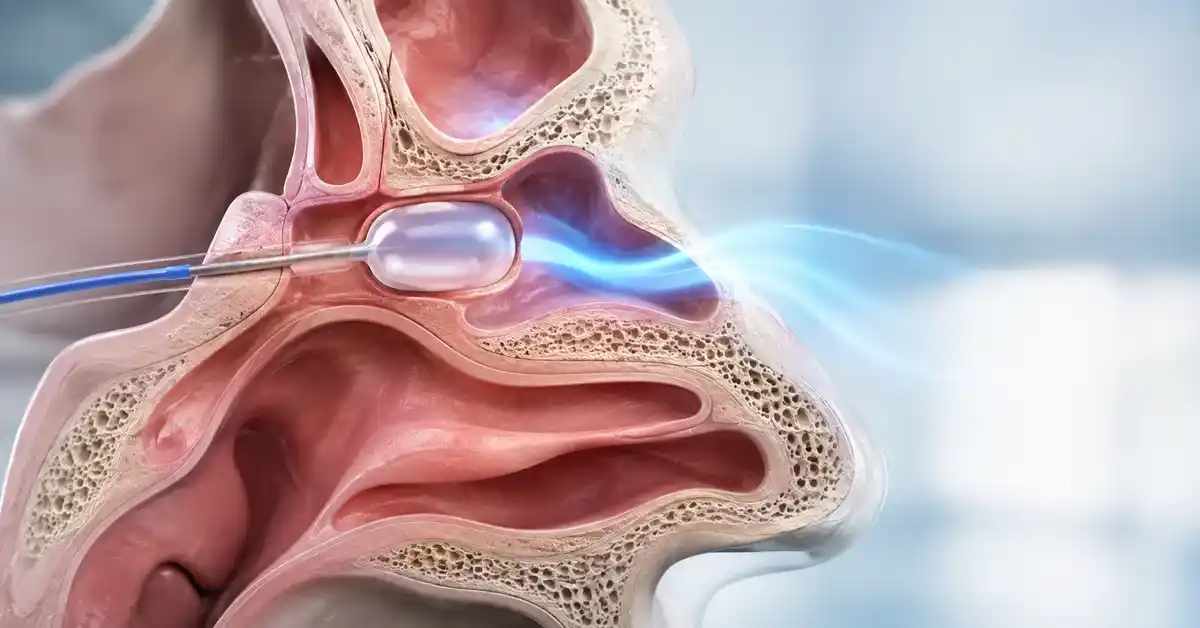
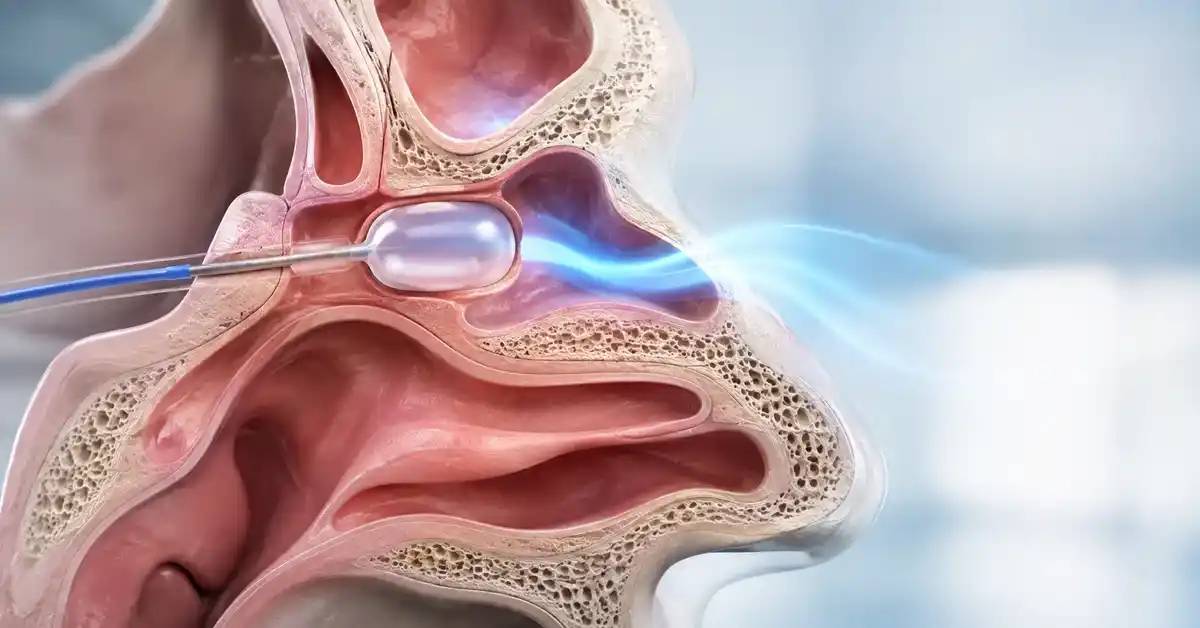
Balloon sinuplasty, also called balloon sinus ostial dilation, is a minimally invasive procedure used for selected patients with chronic or recurrent acute rhinosinusitis that has not responded adequately to appropriate medical therapy. A thin catheter is introduced through the nose, and a small balloon is inflated within a narrowed natural sinus opening to improve drainage without extensive tissue or bone removal.
Although it is sometimes described as a nonsurgical treatment, balloon sinuplasty is still a medical intervention performed by an ear, nose, and throat surgeon. It may be completed under local or general anesthesia and can serve as a less invasive alternative to traditional endoscopic sinus surgery in properly selected cases.
The American Academy of Otolaryngology–Head and Neck Surgery recognizes sinus ostial dilation as a therapeutic option for selected patients with chronic rhinosinusitis or recurrent acute rhinosinusitis after appropriate medical treatment has failed. Diagnosis should be supported by symptoms, nasal-endoscopy findings, and mucosal disease on sinus CT.
Safemedigo assists international patients with CT and endoscopy review, ENT specialist selection, comparison of balloon sinuplasty and endoscopic sinus surgery, hospital coordination, and postoperative follow-up.
What Is Balloon Sinuplasty?
Balloon sinuplasty enlarges a narrowed or obstructed natural sinus opening. Improving the opening may support mucus drainage, sinus ventilation, and access for topical medical treatment.
How Does Balloon Sinus Dilation Work?
The surgeon introduces a small endoscope through the nostril and guides a thin catheter toward the targeted sinus opening.
A balloon is positioned across the narrowed area and inflated in a controlled manner. Inflation widens the opening and remodels the surrounding bone without removing a large amount of tissue. The balloon is then deflated and removed, and the sinus may be irrigated with saline. NICE describes the procedure as gently inflating a small balloon introduced through the nose to help keep sinus passages open and unobstructed.
Which Sinuses Can Be Treated?
Balloon dilation is principally used for the maxillary, frontal, and sphenoid sinus openings. It may be performed as a stand-alone procedure or combined with other endoscopic instruments.
The ethmoid region contains multiple small air cells and often cannot be treated fully by balloon dilation alone. Significant ethmoid disease may require conventional endoscopic removal of bony partitions or inflamed tissue.
Is Balloon Sinuplasty Actually Surgery?
It is less invasive than tissue-removing sinus surgery, but it remains a procedural intervention inside the nose and sinuses.
Selected cases may be performed under local anesthesia with or without sedation in an appropriately equipped setting, while other cases require general anesthesia or an operating room.
Who Is a Candidate for Balloon Sinuplasty?
The decision should not be based on symptoms alone. The ENT specialist must confirm that sinus disease is present and determine its location and extent.
Chronic Rhinosinusitis
Chronic rhinosinusitis generally involves at least 12 consecutive weeks of symptoms, including nasal obstruction or discharge, with possible facial pressure or reduced smell and objective evidence on nasal endoscopy or CT.
Balloon dilation may be considered when medically resistant disease is limited to suitable sinus openings, particularly when extensive polyps or tissue-removing surgery are not required.
Recurrent Acute Rhinosinusitis
Some patients experience repeated episodes of acute sinusitis but become symptom-free between infections.
AAO-HNS indicators describe recurrent acute rhinosinusitis as four or more episodes in one year with complete clearing between episodes. Balloon dilation may have a role when symptoms and CT findings demonstrate ostial obstruction or mucosal disease.
CT and Nasal Endoscopy Requirements
Headache, facial pressure, or congestion alone does not establish a need for balloon treatment.
Clinical consensus states that sinus CT is required before dilation and that balloon treatment is inappropriate when sinonasal symptoms are present but CT does not demonstrate sinus disease.
When Is Balloon Sinuplasty Not Appropriate?
Balloon dilation does not treat every cause of nasal blockage or facial pain. Symptoms may result from allergy, migraine, septal deviation, turbinate enlargement, or other conditions.
Extensive Polyps and Diffuse Disease
A balloon enlarges the opening but does not remove polyps, infected tissue, or extensive inflammatory disease.
AAO-HNS patient information explains that balloon dilation is not appropriate for every form of chronic sinusitis and cannot be used for all sinuses. Endoscopic sinus surgery may be necessary when bone or tissue must be removed.
Fungal Disease, Tumors, and Complex Anatomy
Fungal debris or diseased tissue generally requires physical removal. Invasive fungal sinusitis can require urgent surgery and antifungal treatment.
Balloon dilation should not replace biopsy or tumor removal. Severe septal deviation, anatomical deformity, or complex obstruction may also require a different or combined procedure.
Headache and Sleep Apnea Without Sinus Disease
Balloon dilation is not considered appropriate solely for headache or obstructive sleep apnea when the patient does not otherwise meet diagnostic criteria for chronic or recurrent sinusitis.
How Is Balloon Sinuplasty Performed?
The details depend on the targeted sinus, anesthesia, anatomy, previous surgery, and whether other procedures are performed.
Preparation Before Treatment
The doctor reviews symptoms, previous medication, nasal endoscopy, and sinus CT. Medical history, allergies, anticoagulants, and chronic conditions are also assessed.
Active infection, uncontrolled allergy, or another nasal disorder may require treatment before the procedure. The anesthesia team determines whether local or general anesthesia is appropriate.
The Dilation Procedure
After anesthesia, the surgeon introduces an endoscope and catheter through the nostril without an external incision.
The balloon is advanced into the sinus opening, inflated briefly, and then deflated and removed. The sinus may be irrigated. The attending surgeon determines whether balloon dilation alone is sufficient or whether additional endoscopic instruments are required.
Anesthesia and Hospital Stay
Selected procedures can be completed under local anesthesia with or without sedation. General anesthesia may be used when several sinuses or additional procedures are involved.
Many patients leave on the same day, although observation depends on anesthesia, health, and the extent of surgery.
Read about: Chronic Sinusitis Problems and Advanced Endoscopic Solutions
Benefits of Balloon Sinuplasty
The principal benefit is enlargement of the natural drainage pathway while preserving surrounding tissue when extensive removal is unnecessary.
Tissue Preservation
Balloon dilation does not rely on broad removal of mucosa or bone. It produces controlled remodeling of the sinus opening.
This may result in less bleeding and swelling in selected patients, but tissue preservation is not beneficial when polyps or diseased tissue need to be removed.
Faster Recovery and Less Postoperative Debridement
Some patients return to light activities sooner and require fewer postoperative cleaning procedures than after more extensive endoscopic surgery.
A multicenter randomized study in selected patients with maxillary and anterior ethmoid disease found that symptom improvement after stand-alone balloon dilation was noninferior to functional endoscopic sinus surgery, with fewer postoperative debridements.
Symptom and Quality-of-Life Improvement
Opening the sinus pathway may improve nasal blockage, pressure, discharge, and frequency of infections in properly selected patients.
Longer-term studies have reported clinically meaningful quality-of-life improvement and reductions in antibiotic use and healthcare visits in selected populations. These findings should not be generalized to every form of chronic sinus disease.

Risks of Balloon Sinuplasty
Balloon sinuplasty is minimally invasive, but it is not risk-free. Safety depends on patient selection, CT interpretation, detailed anatomical knowledge, equipment, and surgeon experience.
Common Temporary Effects
Patients may experience:
- Mild bloody discharge.
- Nasal congestion or pressure.
- Headache or fullness.
- Temporary swelling.
- Crusting or mucus.
- Cheek or dental discomfort.
- Fatigue related to anesthesia.
The duration varies according to the number of treated sinuses and additional procedures.
Rare Serious Complications
The sinuses are close to the eyes, skull base, brain coverings, nerves, and major blood vessels.
Rare complications may include orbital injury, cerebrospinal fluid leakage, severe bleeding, infection, vascular injury, or neurological injury. Serious adverse-event reports demonstrate why balloon treatment must be performed as a specialist medical procedure rather than marketed as a simple wellness service.
Persistent Symptoms and Revision Treatment
Symptoms may continue if the underlying diagnosis is incorrect or if the disease is too extensive for balloon treatment.
The opening may narrow again, and inflammation may persist despite technical success. Some patients later require medication, repeat dilation, or endoscopic sinus surgery.
Balloon Sinuplasty vs Endoscopic Sinus Surgery
Neither procedure is universally superior. The correct approach depends on the sinus involved, disease extent, polyps, tissue removal requirements, and previous surgery.
When Balloon Dilation May Be Preferred
It may be appropriate when:
- Disease is limited to suitable frontal, maxillary, or sphenoid openings.
- CT confirms a narrowed or blocked ostium.
- Medical treatment has failed.
- Extensive polyps are absent.
- Tissue preservation is desirable.
- Local anesthesia is suitable.
- Localized disease persists after previous surgery.
AAO-HNS recognizes balloon dilation as a stand-alone or adjunctive option for selected patients.
When Endoscopic Surgery May Be Better
Functional endoscopic sinus surgery may be more appropriate for extensive polyps, diffuse ethmoid disease, fungal material, diseased bone, suspicious tissue, or complex obstruction.
Endoscopic surgery allows the surgeon to remove polyps, tissue, or bone, create wider openings, and improve access for topical medication.
The Hybrid Approach
Balloon dilation and conventional endoscopic instruments can be used during the same operation.
For example, the frontal sinus may be dilated with a balloon while ethmoid tissue or polyps are removed using other instruments. This allows the surgeon to tailor treatment to each sinus.
Recovery After Balloon Sinuplasty
Recovery depends on anesthesia, number of treated sinuses, and associated surgery. Stand-alone balloon dilation often has a shorter recovery than extensive sinus surgery.
The First Days
Mild congestion, pressure, bloody mucus, and fatigue may occur.
Patients are commonly advised to rest, keep the head elevated, avoid strenuous exercise, and avoid forceful nose blowing for the period specified by the surgeon.
Saline Irrigation and Medication
The doctor may recommend saline irrigation to clear mucus and crusts, along with nasal sprays, pain relief, or other medication.
Balloon dilation does not automatically eliminate the need for allergy treatment or anti-inflammatory nasal medication. It improves the opening but may not remove the inflammatory tendency causing chronic disease.
Warning Signs
Contact the medical team for:
- Heavy or persistent bleeding.
- Fever or chills.
- Increasing pain.
- Swelling around the eye.
- Visual changes or double vision.
- Severe unusual headache.
- Continuous clear nasal drainage.
- Neck stiffness or altered awareness.
- Foul discharge with worsening symptoms.
Eye or neurological symptoms require urgent assessment.
Cost of Balloon Sinuplasty
Cost varies because the procedure may involve one or several sinuses, local or general anesthesia, and balloon-only or combined surgery.
Factors Affecting Cost
Factors include:
- Number of sinuses treated.
- Stand-alone or hybrid treatment.
- Local or general anesthesia.
- Surgeon experience.
- CT, endoscopy, and laboratory testing.
- Hospital or office setting.
- Catheter and navigation system.
- Sinus irrigation.
- Septoplasty or turbinate reduction.
- Polyp removal or endoscopic sinus surgery.
- Medication and follow-up.
- Management of unexpected complications.
A quotation should state whether testing, anesthesia, equipment, surgery, and follow-up are included.
Cost Compared With Traditional Surgery
A stand-alone office procedure may reduce hospital and recovery costs, but specialized single-use equipment can increase procedural expense.
Endoscopic surgery may require greater operating-room resources and postoperative care, but it can provide more complete treatment when tissue must be removed. Medical suitability should therefore be considered before price.
Does a Higher Price Mean Better Results?
No. Results depend on accurate diagnosis, proper selection, surgeon expertise, and postoperative treatment.
Appropriate endoscopic surgery performed by an experienced team may be more valuable than balloon dilation used for an unsuitable condition.
Choosing the Best Balloon Sinuplasty Doctor
The doctor should have broad experience in rhinology and endoscopic sinus surgery—not only training in one balloon device.
Surgeon and Center Criteria
Consider:
- Experience diagnosing chronic and recurrent sinusitis.
- Skill in interpreting sinus CT.
- Experience in both balloon and endoscopic surgery.
- Ability to offer different approaches.
- Appropriate endoscopy and anesthesia facilities.
- Clear bleeding and infection protocols.
- Capacity to manage complications.
- International follow-up arrangements.
- Honest counseling about limitations and revision.
Questions to Ask Before Treatment
Ask:
- What does my CT show?
- Which sinus openings will be treated?
- Is balloon dilation alone sufficient?
- Do I have polyps or tissue requiring removal?
- Why is balloon treatment preferred in my case?
- Which anesthesia will be used?
- Will other procedures be performed?
- What is the risk of persistent symptoms?
- What follow-up is required?
- What is included in the treatment plan?
Safemedigo Treatment Coordination
Safemedigo organizes review of CT scans, endoscopy reports, symptoms, and previous therapy. The team coordinates specialist consultation, hospital treatment, anesthesia, and follow-up while clarifying whether balloon dilation, endoscopic surgery, or a hybrid procedure is most appropriate.
Read about: Chronic Sinus Problems: Turkey vs USA
Conclusion
Balloon sinuplasty can be a safe, minimally invasive alternative for selected patients with chronic or recurrent sinusitis that has not responded adequately to medical therapy. It enlarges natural sinus openings while preserving tissue and may allow faster recovery than more extensive surgery.
However, it is not a treatment for every headache, congestion problem, or type of sinus disease. Extensive polyps, fungal disease, diffuse inflammation, and conditions requiring tissue removal may need conventional endoscopic surgery. Successful treatment depends on objective CT and endoscopy findings, appropriate patient selection, and an experienced sinus surgeon.
Frequently Asked Questions About Balloon Sinuplasty
Is balloon sinuplasty considered surgery?
It is a minimally invasive procedure performed through the nose without an external incision, but it still requires a trained specialist and appropriate anesthesia.
Is balloon dilation suitable for every sinus condition?
No. It is intended for selected CT-confirmed disease and may be insufficient for extensive polyps, fungal disease, or diffuse inflammation.
How long is recovery?
Recovery varies with the number of sinuses, anesthesia, and additional procedures, but light activities often resume sooner than after extensive surgery.
Can sinus blockage return?
Yes. Inflammation or narrowing may recur, and some patients later require medication, repeat dilation, or endoscopic surgery.
Can balloon sinuplasty be performed under local anesthesia?
Selected cases can be performed under local anesthesia with or without sedation, while other patients require general anesthesia.