






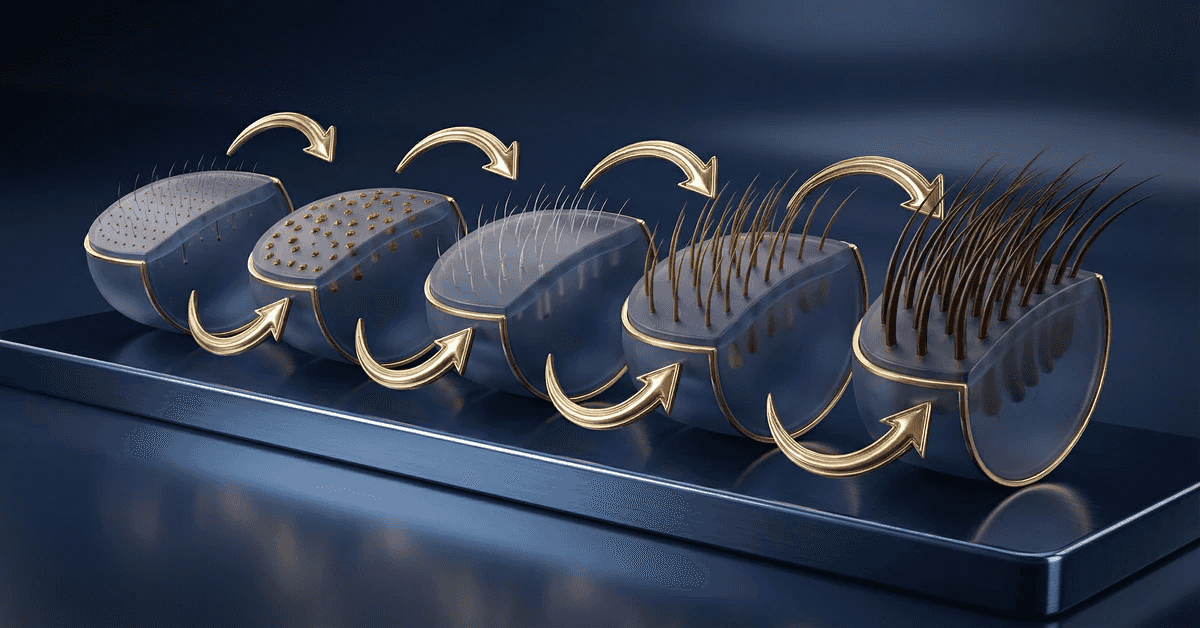
Have you recently undergone a hair transplant procedure and find yourself wondering when do hair transplant results appear? Or are you considering the procedure and want to understand the hair transplant results timeline before making your decision? Understanding when hair transplant results become visible is crucial for managing expectations and maintaining realistic goals throughout your recovery journey. The hair transplant growth timeline is a gradual process that unfolds over several months, requiring patience and proper aftercare.
This comprehensive guide will walk you through every stage of the hair transplant results timeline, from the immediate post-operative period through the final results. We'll explain when does hair grow after transplant, what to expect during each phase, and how to optimize your results. Whether you're in the early stages of recovery or approaching your final results, this complete timeline will help you understand exactly what to expect and when to expect it, ensuring you remain informed and confident throughout your hair restoration journey.
When Do Hair Transplant Results Appear? Hair Transplant Results Timeline
When do hair transplant results appear is the question that occupies the minds of most patients immediately following their procedure. The hair transplant results timeline is not a simple one-time event but rather a gradual progression that unfolds over many months. Understanding this timeline helps you maintain realistic expectations and avoid unnecessary worry during the recovery process.
When Do Hair Transplant Results Appear?
When do hair transplant results appear depends on several factors, including the transplant technique used, your scalp condition, and your overall health. Generally, you can begin seeing initial results approximately three months after the procedure. However, truly noticeable and impressive results typically become visible around the six-month mark. The complete hair transplant final results timeline usually extends to 12-18 months after surgery, when your transplanted hair has fully established itself and reached its maximum density and length.
It's important to understand that when do hair transplant results appear varies from person to person. Some individuals may notice results sooner, while others may require additional time. Genetic factors, hair type, age, and overall health all influence the speed at which results become apparent. Patience during this period is essential, as premature expectations can lead to disappointment.
Hair Transplant Growth Timeline Explained
Hair transplant growth timeline explained reveals a complex biological process occurring beneath the scalp's surface. Immediately after surgery, the transplanted follicles enter a shock phase where they adjust to their new location. This is followed by a dormant phase lasting several weeks. Then comes the growth phase, where visible hair begins to emerge. Understanding the hair transplant growth timeline helps you appreciate the biological processes at work and recognize that each stage is normal and necessary for successful results.
The complete hair transplant growth timeline can be divided into distinct phases, each with its own characteristics and expectations. From the initial shock phase through the final maturation of transplanted hair, every stage plays a crucial role in determining your ultimate satisfaction with the procedure.
Read about: Advantages and Expected Results of DHI Hair Transplant Technique
When Does Hair Grow After Transplant?
When does hair grow after transplant is a question that reveals the biological timeline of hair restoration. The answer is more complex than simply stating a specific timeframe, as the process involves several distinct phases of hair growth and adaptation.
When Does Hair Grow After Transplant? Initial Phase
When does hair grow after transplant begins approximately three to four weeks after surgery. During this initial phase, you may notice very fine, delicate new hair beginning to emerge. This hair may be extremely thin and barely noticeable at first, but it's an excellent sign indicating that the follicles are successfully establishing themselves in their new location. When does hair grow after transplant in this early stage is characterized by sparse, scattered growth rather than uniform coverage.
During this critical initial phase, it's essential to follow your surgeon's post-operative instructions precisely. Avoid harsh washing, direct sun exposure, and strenuous activities. These precautions help ensure optimal conditions for the newly transplanted follicles to establish themselves properly. The delicate new hair emerging during this phase requires gentle care and protection.
Hair Transplant Visible Results Timeline in the Early Months
Hair transplant visible results timeline in the early months shows gradual but steady progress. By the end of the first month, you should notice some new hair growth, though it may still be quite fine. By two months, the growth becomes slightly more noticeable, with hair appearing thicker and more established. Hair transplant visible results timeline continues to improve through months two and three, with increasing numbers of hairs becoming visible and establishing their natural color and texture.
It's important to manage expectations during this early period. Hair transplant visible results timeline in these initial months may not be as dramatic as you hoped, but this is completely normal. The hair is still establishing itself, and significant improvements will continue to occur over the coming months.
Read about: Detailed Comparison Between FUE and DHI Hair Transplant Methods
Hair Transplant Shock Loss Timing
Hair transplant shock loss timing is a critical phase that many patients find concerning. Understanding when this occurs and why it happens helps alleviate anxiety during this natural part of the recovery process.
When Does Transplanted Hair Fall Out? – Shock Loss Phase
When does transplanted hair fall out during the shock loss phase typically occurs around the three-month mark after surgery. This is when the new hair that began growing may start to shed. This can be alarming to patients, but it's a completely normal part of the hair growth cycle. When does transplanted hair fall out during shock loss indicates that the follicles are transitioning into a new growth phase. The hair that falls out during this period is replaced by stronger, healthier hair that will provide better long-term results.
Shock loss is not a sign of failed surgery or poor technique. Rather, it's evidence that your follicles are progressing through their natural growth cycle. The hair that falls out during this phase will be replaced by thicker, more robust hair within a few weeks to months.
When Does Transplanted Hair Fall Out? Recovery Advice
When does transplanted hair fall out and how to manage this phase requires specific care strategies. During shock loss, continue following post-operative care instructions diligently. Use gentle shampoos, avoid aggressive brushing, and protect your scalp from direct sun exposure. Don't panic if you notice significant shedding; this is expected and temporary. When does transplanted hair fall out typically lasts for several weeks to a couple of months, after which new, stronger hair begins to grow.
During this phase, maintain a healthy diet rich in proteins and vitamins, get adequate sleep, and manage stress levels. These factors support your body's natural healing processes and promote optimal hair growth. If you have concerns about excessive shedding or other complications, contact your surgeon immediately.
Read about: Hair Transplant Results: Turkey vs Germany
Hair Transplant Results After 3 Months
Hair transplant results after 3 months represent an important checkpoint in your recovery journey. At this stage, you should begin seeing more encouraging signs of progress.
Hair Transplant Results After 3 Months: What to Expect
Hair transplant results after 3 months should show noticeably more hair growth than the initial emergence. The hair should appear thicker and more established, with better color and texture development. You may also notice that the transplanted hair is beginning to blend more naturally with your existing hair. Hair transplant results after 3 months typically represent the beginning of the shock loss phase, so don't be alarmed if you notice some shedding alongside the new growth.
At this three-month milestone, you should be able to see a clear difference compared to immediately after surgery. The scalp should look less red and irritated, and the transplanted area should show obvious signs of hair growth. However, the results may still not be as impressive as your final outcome will be.
Hair Transplant Growth Timeline: 3-Month Milestone
Hair transplant growth timeline at the three-month mark shows significant progress in the healing process. The scalp has largely recovered from the surgical trauma, and the follicles have established themselves in their new location. Hair transplant growth timeline at this stage typically shows approximately 25-30% of the final hair growth, with much more to come in the following months. This milestone is an excellent time to assess your progress and adjust any lifestyle factors that might optimize your results.
Read about: Hair Transplant Cost in Turkey for 2026: What to Expect
Hair Transplant Results After 6 Months
Hair transplant results after 6 months represent a major turning point in your recovery. By this stage, you should see substantial and impressive improvements.
Hair Transplant Results After 6 Months: Noticeable Density
Hair transplant results after 6 months should display noticeably improved density in the transplanted area. The hair should appear fuller and more natural-looking, with better coverage of previously bald areas. Hair transplant results after 6 months typically show approximately 50-60% of your final hair growth, with the transplanted hair becoming increasingly thick and healthy. Most patients report significant satisfaction with their appearance at this six-month milestone, noting that the improvement is obvious to both themselves and others.
At the six-month point, the transplanted hair should have established its natural color, texture, and growth pattern. The hairline should appear more natural and blended, and the overall density should be substantially improved compared to your pre-operative appearance.
Hair Transplant Growth Timeline: Mid-Point
Hair transplant growth timeline at the six-month mid-point shows that you're halfway through the typical recovery period. Hair transplant growth timeline at this stage demonstrates that the follicles have fully established themselves and are producing healthy, strong hair. The visible transformation at this point is usually dramatic enough to justify the patience required during the earlier phases. Most patients feel confident about their decision to undergo the procedure by this milestone.
Read about: Best Treatments for Male Pattern Baldness in Turkey
Hair Transplant Results After 9 Months
Hair transplant results after 9 months show you approaching the final stages of your recovery. At this point, you should be very close to your ultimate results.
Hair Transplant Results After 9 Months: Nearing Final
Hair transplant results after 9 months should display impressive density and natural appearance. The transplanted hair should be thick, healthy, and well-integrated with your existing hair. Hair transplant results after 9 months typically show approximately 75-80% of your final hair growth, with continued improvement still occurring. The overall appearance should be very close to what you can expect as your final result, though some additional refinement may still occur.
By the nine-month mark, most patients report exceptional satisfaction with their results. The transplanted area should look completely natural, with hair growing in the correct direction and density. Friends and family may comment on how natural your restored hair appears.
Stages of Hair Transplant Growth: 9-Month Update
Stages of hair transplant growth at the nine-month mark show that the follicles have matured significantly. The hair is now producing at optimal levels, and the growth pattern has stabilized. Stages of hair transplant growth at this point demonstrate that the biological processes initiated by the surgery have largely completed their work, though some final maturation continues to occur over the next few months.
Read about: Best Modern Treatments for Female Hair Loss
Hair Transplant Final Results Timeline
Hair transplant final results timeline represents the completion of your recovery journey. Understanding when your final results will be apparent helps you plan for the long-term satisfaction of your investment.
Hair Transplant Results After One Year: Final Stage
Hair transplant results after one year should be very close to your final appearance. By the 12-month mark, approximately 90-95% of your final hair growth should be visible. Hair transplant results after one year typically show complete maturation of the transplanted follicles, with hair reaching its full thickness and length. Most patients consider their results essentially final at this point, though some additional refinement may continue through month 18.
At the one-year milestone, you should have a clear picture of your final outcome. The transplanted hair should blend seamlessly with your existing hair, and the overall appearance should be natural and satisfying. If you have any concerns about your results at this stage, consult with your surgeon about potential refinement procedures.
Read about: Latest Hair Transplant Techniques for Men and Women in Turkey
Full Hair Transplant Results Time: Up to 18 Months
Full hair transplant results time extends to approximately 12-18 months after surgery for complete maturation. Hair transplant final results timeline at 18 months represents the absolute completion of the hair growth cycle, with 100% of your final results visible. Full hair transplant results time at this point shows the transplanted hair at its maximum thickness, length, and density. The hair has completed its growth cycle and established a stable pattern of growth and shedding.
While most patients consider their results final at the 12-month mark, waiting until 18 months provides the most accurate assessment of your ultimate outcome. Any refinement procedures or additional transplants, if desired, should be planned after this complete timeline has elapsed.

Stages of Hair Transplant Growth
Stages of hair transplant growth represent the biological progression of hair restoration. Understanding these distinct phases helps you appreciate the complexity of the process and maintain realistic expectations.
Stages of Hair Transplant Growth: Week-by-Week
Stages of hair transplant growth begin immediately after surgery with the shock phase, lasting 1-2 weeks. During this period, the transplanted follicles experience trauma and begin adjusting to their new location. Weeks 2-4 mark the early growth phase, when fine new hair begins to emerge. Weeks 4-8 show continued growth with increasingly visible hair. Weeks 8-12 represent the transition into shock loss, where some shedding occurs alongside new growth. Weeks 12-16 show recovery from shock loss with stronger hair emerging. Months 4-6 display noticeable density improvements. Months 6-9 show continued maturation and thickening. Months 9-12 represent near-final results. Months 12-18 show complete maturation and final results.
Hair Transplant Growth Timeline: Major Phases
Hair transplant growth timeline encompasses several major phases, each with distinct characteristics. The immediate post-operative phase (weeks 1-2) focuses on healing and stabilization. The initial growth phase (weeks 3-8) shows the first visible hair emergence. The shock loss phase (weeks 8-16) involves shedding and recovery. The active growth phase (months 4-9) shows dramatic improvements in density and appearance. The maturation phase (months 9-18) represents refinement and final establishment of results. Each phase is essential to achieving optimal long-term outcomes.
Read about: Hair Care Tips After DHI Transplant to Ensure Best Results
Hair Transplant Results Timeline: Key Milestones
Hair transplant results timeline includes several important milestones that mark your progress toward final results. Recognizing these milestones helps you maintain perspective and celebrate your progress throughout the recovery journey.
Hair Transplant Visible Results Timeline: From Day 1 to Year 1
Hair transplant visible results timeline begins on day one with post-operative swelling and redness. By week 2, initial healing occurs. By week 4, the first fine hairs emerge. By month 2, more noticeable growth appears. By month 3, shock loss begins alongside continued growth. By month 6, substantial density improvements become obvious. By month 9, near-final results are apparent. By month 12, final results are essentially complete. Hair transplant visible results timeline demonstrates a clear progression from surgical intervention to natural-looking restoration.
Complete Hair Transplant Timeline: Quick Reference
Complete hair transplant timeline provides a quick reference for understanding your recovery journey. Weeks 1-2: Healing phase with swelling and redness. Weeks 3-4: Initial hair emergence begins. Weeks 4-8: Visible hair growth continues. Weeks 8-12: Shock loss phase with shedding. Weeks 12-16: Recovery from shock loss with new growth. Months 4-6: Noticeable density improvements (50-60% of final results). Months 6-9: Continued maturation (75-80% of final results). Months 9-12: Near-final results (90-95% of final results). Months 12-18: Complete maturation (100% of final results).
Read about: Hair Transplant Cost: Turkey vs USA and Germany
When do hair transplant results appear is a question that deserves a comprehensive and detailed answer. The hair transplant results timeline is a gradual process that unfolds over 12-18 months, with each phase playing an important role in your final outcome. Understanding when does hair grow after transplant and what to expect at each stage helps you maintain realistic expectations and remain patient throughout your recovery. The hair transplant growth timeline demonstrates that successful hair restoration requires time, proper aftercare, and realistic expectations about the pace of results.
From the initial emergence of fine new hair in the early weeks through the impressive density visible at six months and the near-final results at nine months, each milestone represents progress toward your ultimate goal. By understanding the complete hair transplant final results timeline, you can appreciate the biological processes at work and maintain confidence in your decision to undergo the procedure. Remember that individual variations are normal, and your specific timeline may differ slightly from the general guidelines presented here.
Maintaining proper aftercare throughout your recovery period is essential for optimizing your results. Follow your surgeon's instructions carefully, maintain a healthy lifestyle, and be patient as your hair transplant grows and matures. For personalized guidance on your specific hair transplant results timeline or to address any concerns during your recovery, reach out to Safemedigo today. Our experienced specialists are here to support you every step of the way.
Frequently Asked Questions: When Do Hair Transplant Results Appear? Accurate Timeline
When does hair start growing after a hair transplant?
When hair starts growing after a hair transplant usually occurs about three to four weeks after the procedure. At this stage, you may notice some very fine new hair beginning to appear. This hair may be very light and may not be noticeable at first. However, this is a very good sign indicating that the follicles are settling properly. It is important to remember that when hair starts growing after a hair transplant may vary slightly from person to person.
Is it normal for hair to fall out after transplantation?
Yes, it is very normal for hair to fall out after transplantation. This usually happens about three months after the procedure. You may notice that the hair that started growing begins to fall out. This can be very concerning, but don't worry! This means that the follicles are entering a new phase of the growth cycle. When the hair shedding phase after transplantation usually ends is about one to two months later. After this phase, the new and stronger hair will begin to grow.
How long does it take to see final hair transplant results?
How long it takes to see final hair transplant results usually occurs about 12 to 18 months after the procedure. This is the timeline that gives the hair enough time to grow completely and reach its natural length and density. At this stage, you should be able to see the true final result of the procedure. It is important to remember that how long it takes to see final results may vary slightly from person to person.
Can I speed up the appearance of hair transplant results?
Can I speed up the appearance of hair transplant results is a question many people ask. The answer is that there is no magic way to significantly speed up the process, but there are several things you can do to improve results. First, make sure to follow your doctor's instructions carefully. Second, eat a healthy diet rich in proteins and vitamins. Third, get enough sleep. Fourth, avoid stress and anxiety. Fifth, avoid smoking and alcohol. Sixth, do light exercises after getting your doctor's approval.
Are the final results of hair transplants permanent?
Are the final results of hair transplants permanent is a very important question. The answer is yes, the final results are usually very permanent. Transplanted hair comes from areas resistant to baldness, so it should continue to grow naturally for many years. Once the hair reaches the final result, it should stay that way for many years. However, it is important that you take care of your hair properly and follow your doctor's advice to maintain the results.