





PRK laser vision correction — formally known as photorefractive keratectomy PRK — stands as one of the most established and reliable procedures in refractive eye surgery, with a clinical track record spanning more than three decades. Unlike newer techniques that create a corneal flap, surface laser eye surgery PRK works directly on the corneal surface, making it the preferred choice for patients with thin corneas, irregular corneal profiles, or active lifestyles that put them at risk of flap-related complications.
This comprehensive guide covers everything patients need to know about PRK eye surgery: how the procedure works, who qualifies, what recovery looks like, and how PRK compares to LASIK. Whether you are exploring options for PRK for myopia, PRK for astigmatism, or simply seeking clarity on PRK vs LASIK, the information below provides an evidence-based, patient-friendly foundation for making an informed decision with the support of Safemedigo's ophthalmology specialists.
PRK Laser Vision Correction Overview
PRK laser vision correction remains a cornerstone of modern refractive surgery, offering proven outcomes for a wide range of patients who may not be suitable candidates for LASIK. Understanding the fundamentals of the procedure helps set realistic expectations and supports confident decision-making.
What is PRK eye surgery
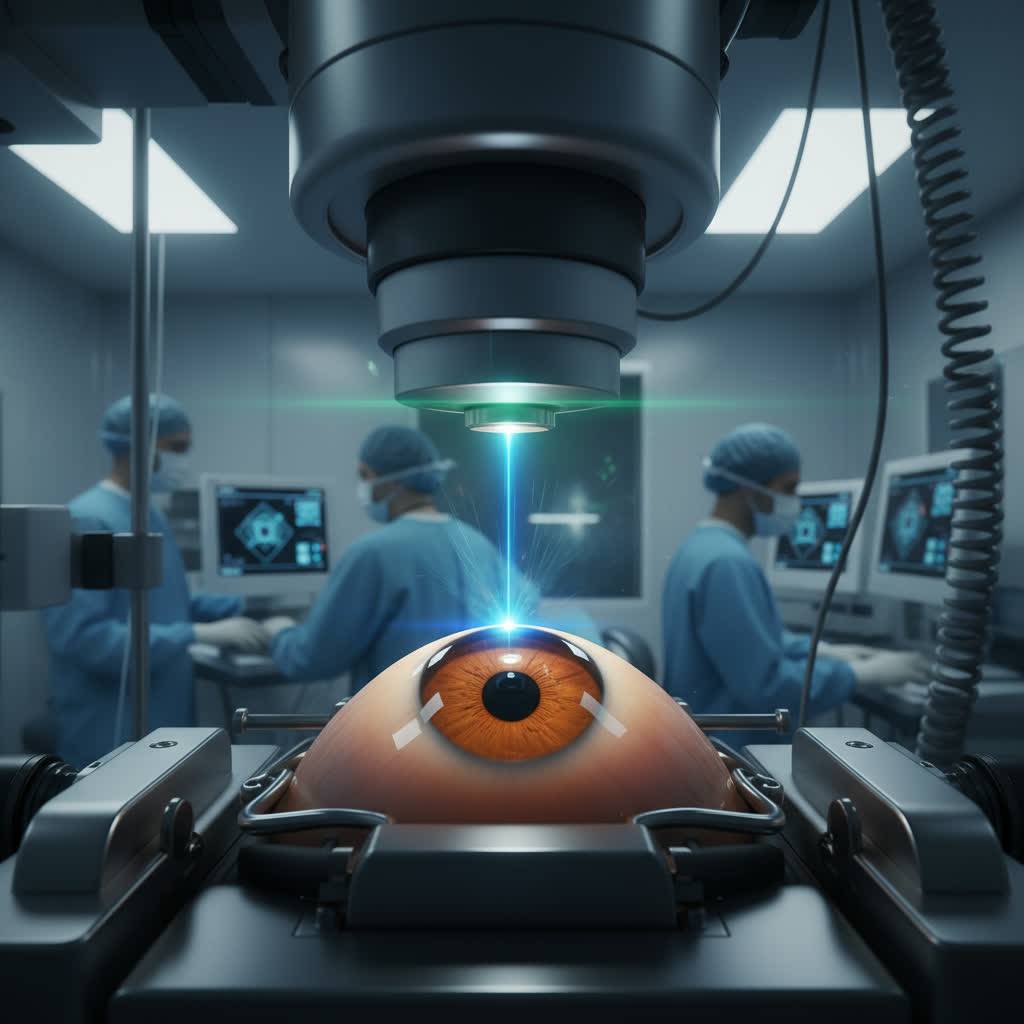
PRK eye surgery, or photorefractive keratectomy PRK, is a minimally invasive refractive procedure that uses an excimer laser to precisely reshape the cornea and correct refractive errors including myopia (nearsightedness), hyperopia (farsightedness), and astigmatism. The defining characteristic of surface laser eye surgery PRK is that no corneal flap is created. Instead, the surgeon gently removes the thin outer epithelial layer of the cornea, applies the excimer laser directly to the corneal surface, and then places a soft therapeutic contact lens over the eye to act as a protective bandage while the epithelium regenerates over three to five days. PRK eye surgery is performed under topical anesthesia in an outpatient setting, typically taking fewer than fifteen minutes per eye, and patients remain awake and comfortable throughout the entire procedure.
How the PRK laser works
The laser eye surgery PRK procedure follows a precise, well-established sequence of steps:
- Numbing eye drops are applied to ensure complete comfort throughout the procedure.
- The surgeon carefully removes the corneal epithelium using a sterile instrument, a gentle brush, or dilute alcohol solution.
- The excimer laser delivers computer-guided pulses of ultraviolet light to ablate microscopic amounts of corneal tissue, reshaping the curvature to the exact prescription of each eye.
- A soft bandage contact lens is placed over the treated cornea to protect the surface and reduce discomfort during healing.
- The epithelium regenerates naturally over three to five days, and vision progressively improves over the following weeks.
The entire laser application typically lasts less than sixty seconds per eye, with the total procedure time — including preparation and post-treatment checks — averaging around fifteen to twenty minutes per eye.
Read about: LASIK vs Femto LASIK: How to Choose the Best Vision Correction
Who is eligible for PRK
PRK eligibility criteria are carefully evaluated through a comprehensive pre-operative assessment. Ideal candidates for PRK laser vision correction typically include:
- Patients with thin corneas who do not have sufficient corneal thickness for LASIK flap creation.
- Individuals with mild corneal irregularities or early keratoconus that contraindicate flap-based procedures.
- Athletes, military personnel, or individuals in contact sports where a corneal flap could be dislodged by impact.
- Patients who have previously undergone corneal procedures that make flap creation inadvisable.
- Adults aged 18 or older with a stable refractive prescription for at least one year.
- Patients with low to moderate degrees of myopia, hyperopia, or astigmatism within treatable ranges.
- Individuals free from active eye infections, autoimmune conditions, or uncontrolled systemic diseases.

PRK Surgery Cost Factors
PRK surgery cost varies considerably depending on a range of clinical, technological, and geographic variables. Understanding these factors helps patients plan their treatment realistically and compare options across different providers and countries.
Average PRK surgery cost
The total PRK surgery cost encompasses multiple components: the procedure itself, pre-operative diagnostic testing, surgeon fees, facility charges, prescribed post-operative medications, and follow-up consultations. The type of laser technology used — standard excimer versus wavefront-guided or topography-guided systems — significantly influences the final cost, with advanced platforms commanding higher fees due to their superior precision and personalization. Turkey has emerged as a leading destination for PRK eye surgery among international patients, offering world-class ophthalmology centers equipped with the latest laser platforms at highly competitive prices compared to Western Europe or North America, without compromising on clinical quality or surgeon expertise.
Cost comparison PRK vs LASIK
In most specialized centers, PRK surgery cost and LASIK cost are broadly comparable, with LASIK sometimes priced slightly higher due to the additional technology involved in creating the corneal flap. However, the decision between PRK vs LASIK should never be driven by cost alone — it must be based on the patient's corneal anatomy, lifestyle, and clinical suitability. A patient whose corneal thickness is insufficient for LASIK will find PRK to be the only safe option regardless of price. Safemedigo's ophthalmology advisors help patients identify the most clinically appropriate procedure and the best PRK surgeon for their specific needs and budget.
Factors affecting PRK pricing
Several key variables influence the final PRK surgery cost:
- Laser technology platform: Advanced wavefront-guided or topography-guided systems cost more than standard excimer laser platforms.
- Degree of refractive error: Higher prescriptions may require longer laser application times or more sophisticated treatment algorithms.
- Surgeon experience and reputation: The best PRK surgeon with extensive subspecialty training in corneal refractive surgery commands higher fees.
- Geographic location and facility accreditation: Internationally accredited centers in major cities typically charge more than regional clinics.
- Package inclusions: Some centers bundle all pre-operative tests, medications, and follow-up visits into a single comprehensive fee.
Read about: Cost and Modern Techniques of Vision Correction Surgery in Turkey
Benefits and Risks of PRK Surgery
A balanced understanding of the advantages and potential drawbacks of PRK laser vision correction enables patients to make well-informed decisions aligned with their clinical profile and personal priorities.
Advantages of PRK laser vision correction
PRK laser vision correction offers several compelling advantages that make it the preferred choice in specific clinical scenarios:
- No corneal flap: Eliminates all flap-related risks including dislocation, striae, and epithelial ingrowth, making it significantly safer for contact sport athletes and physically active individuals.
- Suitable for thin corneas: Allows vision correction for patients who do not qualify for LASIK due to insufficient corneal thickness.
- Excellent long-term stability: PRK eye surgery results are highly stable and durable, with outcomes comparable to LASIK over the long term.
- Reduced dry eye risk: Because no flap is created, fewer corneal nerves are disrupted, potentially resulting in less post-operative dry eye compared to LASIK.
- Safer for certain corneal conditions: PRK is the preferred option for patients with mild corneal irregularities or those at elevated risk of corneal ectasia.
PRK surgery risks and complications
As with any surgical procedure, PRK surgery risks should be carefully considered before proceeding:
- Undercorrection or overcorrection: Some patients may require a retreatment session to achieve the desired refractive outcome.
- Corneal haze: A mild cloudiness can develop on the corneal surface in some cases, particularly after treating higher prescriptions. This is typically managed with steroid eye drops and resolves in most patients.
- Regression: A gradual return of some refractive error over time, more common in higher prescriptions.
- Infection: Rare but possible; managed effectively with antibiotic drops when detected early.
- Irregular astigmatism: An uncommon complication that may affect the quality of vision.
Common side effects after PRK
PRK side effects are generally temporary and resolve as the cornea heals:
- Pain and discomfort: Most patients experience moderate discomfort during the first two to three days while the epithelium regenerates.
- Light sensitivity: Photophobia is common in the first week and gradually subsides.
- Blurred or fluctuating vision: Expected during the healing period; vision stabilizes progressively over weeks to months.
- Halos and glare around lights: Particularly noticeable at night in the early post-operative period; typically resolves within a few months.
- Dry eye sensation: Common in the first weeks; managed effectively with lubricating eye drops.
Read about: Vision Correction in Children: Is LASIK Safe for Young Eyes?
PRK Recovery Time and Healing
PRK recovery time is the most significant practical consideration distinguishing PRK from LASIK. Patients should plan their schedule accordingly and follow all post-operative instructions to support optimal healing.
PRK recovery timeline
The PRK healing process follows a predictable progression:
- Days 1–3: The most uncomfortable phase. Patients experience pain, light sensitivity, and blurred vision. Rest in a dimly lit environment is strongly recommended.
- Days 4–7: The epithelium regenerates and the bandage contact lens is removed. Vision begins to improve noticeably.
- Weeks 2–4: Most patients return to desk work and daily activities. Vision continues to improve gradually.
- Months 2–3: Vision stabilizes in the majority of cases and reaches its final corrected level.
- Up to 6 months: In higher prescriptions, the full stabilization of PRK eye surgery results may take up to six months.
Corneal healing stages
The cornea undergoes three distinct phases of healing following surface laser eye surgery PRK:
- Epithelial regeneration (Days 0–7): New epithelial cells migrate from the periphery to cover the treated corneal surface.
- Stromal remodeling (Weeks 1–12): The deeper corneal tissue reorganizes and stabilizes in its newly reshaped configuration.
- Final stabilization (Months 3–6): The cornea reaches its definitive shape and PRK vision correction results become fully established.
Postoperative care tips
Adhering to PRK post op care instructions is essential for achieving the best possible outcomes:
- Use all prescribed eye drops — antibiotic, anti-inflammatory, and lubricating — exactly as directed without skipping doses.
- Avoid rubbing the eyes at all times during the recovery period.
- Wear UV-protective sunglasses outdoors to prevent corneal haze formation.
- Avoid swimming, hot tubs, and eye makeup for at least two weeks post-procedure.
- Refrain from strenuous exercise and dusty environments during the first week.
- Attend all scheduled follow-up appointments to monitor healing progress.
- Report any sudden changes in vision, increasing pain, or unusual discharge to the treating physician immediately.
Patients who follow their PRK post op care plan diligently and attend all follow-up visits consistently achieve the best long-term outcomes.
Read about: Comprehensive Eye Exams Before Vision Correction Surgery
PRK Results and Success Rate
The clinical evidence accumulated over three decades of practice confirms that PRK laser vision correction delivers excellent, reproducible outcomes for appropriately selected patients across a broad range of refractive errors.
PRK vision correction results
PRK eye surgery results are highly favorable across multiple outcome measures. The majority of patients achieve uncorrected visual acuity of 20/20 or better following full recovery, with virtually all patients reaching at least 20/40 — the threshold required for driving without corrective lenses. PRK for myopia delivers particularly strong results in low to moderate prescriptions (up to -6 diopters), with excellent stability over time. PRK for astigmatism is equally effective for regular astigmatism, with modern topography-guided laser platforms enabling highly precise correction of even complex corneal profiles.
PRK success rate statistics
Published clinical data consistently demonstrates a PRK vision correction success rate exceeding 95% for achieving 20/40 or better uncorrected vision, and approximately 90% for achieving 20/20 or better. Patient satisfaction rates following PRK eye surgery are consistently high, with the vast majority reporting significant improvement in quality of life and reduced or eliminated dependence on glasses and contact lenses. The PRK healing process, while longer than LASIK, does not compromise the quality of the final visual outcome.
Long-term outcomes of PRK
Long-term studies confirm that PRK laser vision correction results remain stable for the majority of patients over periods of ten years or more. Some degree of regression may occur in higher prescriptions over time, and the natural development of presbyopia after age forty may necessitate reading glasses regardless of the refractive procedure performed. Patients who maintain regular ophthalmological follow-up and protect their eyes from UV exposure consistently achieve the best long-term outcomes following surface laser eye surgery PRK.
Read about: Treating Childhood Myopia: When Is Surgical Intervention Needed
PRK vs LASIK Comparison
The PRK vs LASIK comparison is one of the most frequently asked questions in refractive surgery consultations. Both procedures use the same excimer laser technology to reshape the cornea, but they differ fundamentally in approach, recovery, and patient suitability.
Key differences PRK vs LASIK
To help patients understand the fundamental distinctions between these two leading procedures, the following table outlines the key differences in the PRK vs LASIK comparison:
| Criterion | PRK (Photorefractive Keratectomy) | LASIK (Laser-Assisted In Situ Keratomileusis) |
|---|---|---|
| Corneal Flap | None created; surface epithelium is removed. | Permanent hinged flap is created. |
| Recovery Time | 1 to 4 weeks for functional vision. | 1 to 2 days for functional vision. |
| Post-op Discomfort | Moderate discomfort for the first 1–3 days. | Minimal discomfort, usually resolving within hours. |
| Thin Cornea Suitability | Highly suitable and often the only safe option. | Not suitable; requires sufficient corneal thickness. |
| Flap Complication Risk | Zero risk (no flap exists). | Present, though rare (dislocation, striae). |
| Contact Sport Safety | Excellent; highly recommended for athletes. | Requires caution; risk of flap trauma. |
| Dry Eye Risk | Lower risk of inducing severe dry eye. | Slightly higher risk due to severed corneal nerves. |
Which procedure is better
Neither PRK nor LASIK is universally superior — the optimal choice depends entirely on the individual patient's corneal anatomy, prescription, lifestyle, and clinical history. PRK is the better choice for patients with thin corneas, those who engage in high-impact physical activities, and individuals with certain corneal irregularities. LASIK is preferred by patients who prioritize faster recovery and minimal post-operative discomfort, provided their corneal thickness and anatomy are suitable. A thorough pre-operative evaluation by an experienced refractive surgeon is the only reliable way to determine which procedure will deliver the safest and most effective outcome for each individual.
Recovery comparison
The most clinically significant difference in the PRK vs LASIK comparison is the recovery timeline. LASIK patients typically experience clear vision within 24 to 48 hours and return to most activities the following day. PRK recovery time is longer, with functional vision returning over one to two weeks and full stabilization taking up to three to six months. However, this extended PRK healing process does not translate into inferior final outcomes — the end results of both procedures are clinically equivalent when performed on appropriately selected patients.
Read about: LASIK Eye Correction for Adults: Post-Procedure Tips
PRK Surgery Aftercare
Comprehensive PRK post op care is as important as the surgical technique itself in determining the quality and longevity of the visual outcome. Patients who invest in diligent aftercare consistently achieve superior results.
Eye protection after PRK
Protecting the eyes following surface laser eye surgery PRK is critical during the healing period:
- Wear high-quality UV-blocking sunglasses whenever outdoors — UV exposure is a primary risk factor for corneal haze formation after PRK.
- Use the bandage contact lens as directed and do not remove it before the scheduled removal appointment.
- Avoid touching or rubbing the eyes under any circumstances during the first month.
- Protect the eyes from wind, dust, and airborne particles, particularly during the first two weeks.
- Sleep with protective eye shields for the first few nights to prevent inadvertent rubbing during sleep.
Read about: LASIK Eye Surgery: Turkey vs USA
Medication and drops usage
Prescribed medications are a fundamental component of PRK post op care and must be used exactly as directed:
- Antibiotic eye drops: Prevent infection during the critical period when the epithelium is absent or regenerating.
- Steroid (corticosteroid) eye drops: Reduce inflammation and, critically, minimize the risk of corneal haze formation. Must be tapered gradually as instructed — never stopped abruptly.
- Lubricating eye drops (artificial tears): Manage dry eye symptoms and support epithelial healing. Preservative-free formulations are preferred for frequent use.
- Pain relief: Oral analgesics may be recommended for the first two to three days to manage discomfort.
Activity restrictions after surgery
Following PRK eligibility criteria for post-operative activity restrictions supports safe and effective healing:
- Driving: Avoid until the treating physician confirms that uncorrected vision meets the legal standard for safe driving — typically around day seven to ten.
- Screen use: Limit computer and smartphone use during the first week; use lubricating drops frequently when screen use is unavoidable.
- Swimming and water sports: Avoid for at least four weeks to prevent infection risk.
- Contact sports: Avoid for at least four to six weeks; consult the surgeon before resuming any high-impact activity.
- Makeup: Avoid eye makeup for at least two weeks post-procedure.
- Alcohol consumption: Avoid for the first 48 hours as it may interfere with healing and medication efficacy.
Read about: Latest Femtolasik Techniques for Sensitive Eyes in Turkey
Conclusion
PRK laser vision correction represents one of the most thoroughly validated procedures in modern ophthalmology, offering life-changing visual freedom to patients who might otherwise be excluded from refractive surgery. With the right clinical evaluation, the best PRK surgeon, and a commitment to post-operative care, the vast majority of patients achieve outstanding, lasting results.
FAQ: PRK Laser Vision Correction
Is PRK eye surgery painful?
PRK eye surgery itself is not painful, as numbing eye drops eliminate sensation during the procedure. Post-operatively, most patients experience moderate discomfort and sensitivity during the first two to three days while the corneal epithelium regenerates. This is managed effectively with prescribed oral pain relievers, topical anesthetic drops (used sparingly as directed), and the protective bandage contact lens. The discomfort subsides progressively as the epithelium heals, and the majority of patients report that the experience was far more manageable than anticipated. By day five to seven, most patients are comfortable and functioning normally.
How long does PRK recovery take before driving is safe?
Most patients are cleared to drive approximately seven to ten days after PRK eye surgery, once the treating physician confirms that uncorrected visual acuity meets the legal standard for safe driving. However, PRK recovery time varies between individuals — some patients achieve functional driving vision sooner, while others with higher prescriptions may need additional time. Night driving should be approached cautiously in the early weeks due to potential halos and glare around lights, which are common PRK side effects during the initial healing phase. Always obtain explicit clearance from the surgeon before resuming driving.
Can PRK be performed on both eyes on the same day?
Yes, the majority of surgeons perform bilateral simultaneous PRK — treating both eyes in the same session — which is the standard practice in most accredited refractive surgery centers. This approach allows patients to undergo a single recovery period rather than two separate ones, minimizing total time away from work and daily activities. The decision to treat both eyes simultaneously is made after a thorough pre-operative evaluation confirms that both eyes meet PRK eligibility criteria and that the patient's overall health supports the bilateral approach. Some surgeons may recommend sequential treatment in specific clinical circumstances.
What is the difference between standard PRK and wavefront-guided PRK?
Standard PRK corrects the basic refractive error (sphere and cylinder) based on the spectacle prescription. Wavefront-guided PRK uses a detailed three-dimensional map of the eye's unique optical aberrations to create a highly customized treatment that corrects not only the primary refractive error but also higher-order aberrations that standard correction cannot address. Topography-guided PRK takes this personalization further by incorporating corneal shape data to optimize the treatment for each individual corneal profile. Both advanced platforms are associated with improved quality of vision — particularly in low-light conditions — and may reduce the incidence of PRK side effects such as halos and glare.
Is PRK suitable for patients with astigmatism?
PRK for astigmatism is highly effective for regular astigmatism, whether it occurs alone or in combination with myopia or hyperopia. Modern excimer laser platforms incorporate sophisticated algorithms that precisely correct astigmatic errors with excellent reproducibility. For irregular astigmatism associated with corneal conditions such as early keratoconus or corneal scarring, the suitability of PRK must be carefully evaluated on a case-by-case basis. Topography-guided PRK has shown particular promise in treating certain forms of irregular astigmatism, offering improvements in both visual acuity and optical quality that standard correction cannot achieve.