





Penile curvature describes a bend of the erect penis upward, downward or to either side. A mild curve that has been present for many years can be a normal anatomical variation and may require no treatment if it causes no pain or difficulty with intercourse.
A new or progressively worsening curvature is different. One important acquired cause is Peyronie's disease, in which fibrous scar tissue develops within the tissues surrounding the erectile bodies. Because the scarred area stretches less normally during erection, the penis can bend, shorten or develop indentation or an hourglass deformity.
At Safemedigo, penile curvature assessment focuses on when the deformity started, whether it is changing, the degree and direction of curvature, pain, erectile function and its effect on intercourse before selecting observation, conservative treatment, injections or surgery.
When Is Penile Curvature Normal or Abnormal?
Not every curved erection represents disease.
Mild Natural Curvature
A mild and longstanding curve may be completely normal if it causes no discomfort or functional problem.
The goal is not necessarily to produce a perfectly straight penis. Treatment becomes more relevant when curvature causes pain, distress or difficulty with penetration.
Congenital Penile Curvature
Congenital penile curvature is present from puberty because of differences in tissue development.
There is typically no palpable scar plaque, and the degree of curvature tends to remain relatively stable.
When congenital curvature causes significant functional difficulty, surgery is the definitive treatment. Medication does not correct this structural form of curvature.
Acquired Curvature
A penis that was previously straight and later becomes progressively curved requires assessment.
Pain, a palpable firm area, shortening or new deformity can suggest Peyronie's disease.
Earlier evaluation can be useful because treatment options differ between the active and stable phases of the condition.
Causes of Penile Curvature
The two major clinical categories are congenital curvature and acquired curvature.
Peyronie's Disease
Peyronie's disease causes fibrous scar tissue, often called a plaque, to form in the deeper penile tissues.
During erection, healthy tissue expands more normally than the scarred segment, resulting in curvature.
Patients may also develop shortening, narrowing, an hourglass shape or erectile dysfunction.
Repetitive Tissue Injury
Many patients do not remember one major injury.
Small repetitive injuries during sexual activity or other physical events may contribute to abnormal scar formation in susceptible individuals.
Developing Peyronie's disease does not mean that the patient necessarily caused the condition through a specific behavior.
Acute Penile Injury
A sudden injury during erection is different from chronic Peyronie's disease.
A cracking or popping sensation followed by severe pain, immediate loss of erection, swelling and bruising can indicate penile fracture and requires urgent medical assessment.
| Condition | Typical Presentation | Treatment Need |
|---|---|---|
| Mild natural curve | Longstanding and painless | Usually none |
| Congenital curvature | Present since puberty and stable | Surgery if functionally significant |
| Peyronie's disease | Acquired bend, plaque, shortening or pain | Depends on phase and severity |
| Acute injury | Sudden pain, swelling or bruising | Urgent assessment |
| Curvature with erectile dysfunction | Deformity plus erection difficulty | Comprehensive evaluation |
Symptoms and When to See a Doctor
A changing deformity should not be ignored simply because intercourse is still possible.
Pain During Erection
Pain is more common during the active stage of Peyronie's disease while the scar and curvature are still changing.
The active phase can last for months. Pain often improves over time even when the curvature itself remains.
Increasing Curvature or Shape Changes
Medical evaluation is appropriate if a new curvature develops or an existing bend clearly worsens.
Shortening, narrowing, an hourglass deformity or a palpable hard area are also reasons to seek assessment.
Difficulty obtaining or maintaining an erection should be discussed because erectile function strongly influences treatment choice.
When Is It an Emergency?
Seek urgent medical care after an erect penile injury if there is a sudden cracking sensation, severe pain, rapid loss of erection and significant bruising or swelling.
Inability to urinate or external bleeding also requires urgent assessment.
Diagnosing Penile Curvature and Peyronie's Disease
Diagnosis usually begins with a detailed medical and sexual history and physical examination.
Medical History and Examination
The clinician asks when the curvature began, whether it continues to change, whether erections are painful and whether intercourse is difficult.
The penis is examined for palpable plaques, length and other deformities.
This assessment also helps distinguish congenital curvature from acquired Peyronie's disease.
Measuring Curvature During Erection
Accurate documentation of an erect penis is important because the flaccid appearance may not demonstrate the true deformity.
Clinicians may use appropriately obtained home photographs or induce an erection in the clinic when precise measurement is required.
The degree and direction of curvature and the presence of narrowing or hinge deformity can then be assessed.
Ultrasound and Penile Doppler
Ultrasound can provide additional information in selected cases.
Penile Doppler ultrasound is particularly useful when erectile dysfunction needs evaluation or when penile blood flow should be assessed before certain surgical procedures.
It is not necessary for every patient with a straightforward curvature.
Nonsurgical Treatment for Penile Curvature
Treatment depends on the cause, disease phase, severity of deformity, pain and erectile function.
Observation and Pain Control
Mild curvature that does not interfere with intercourse may only require observation.
During the painful active phase of Peyronie's disease, nonsteroidal anti-inflammatory medication may be used for pain when medically appropriate.
Pain treatment does not itself remove the plaque or reliably straighten the penis.
Penile Traction Therapy
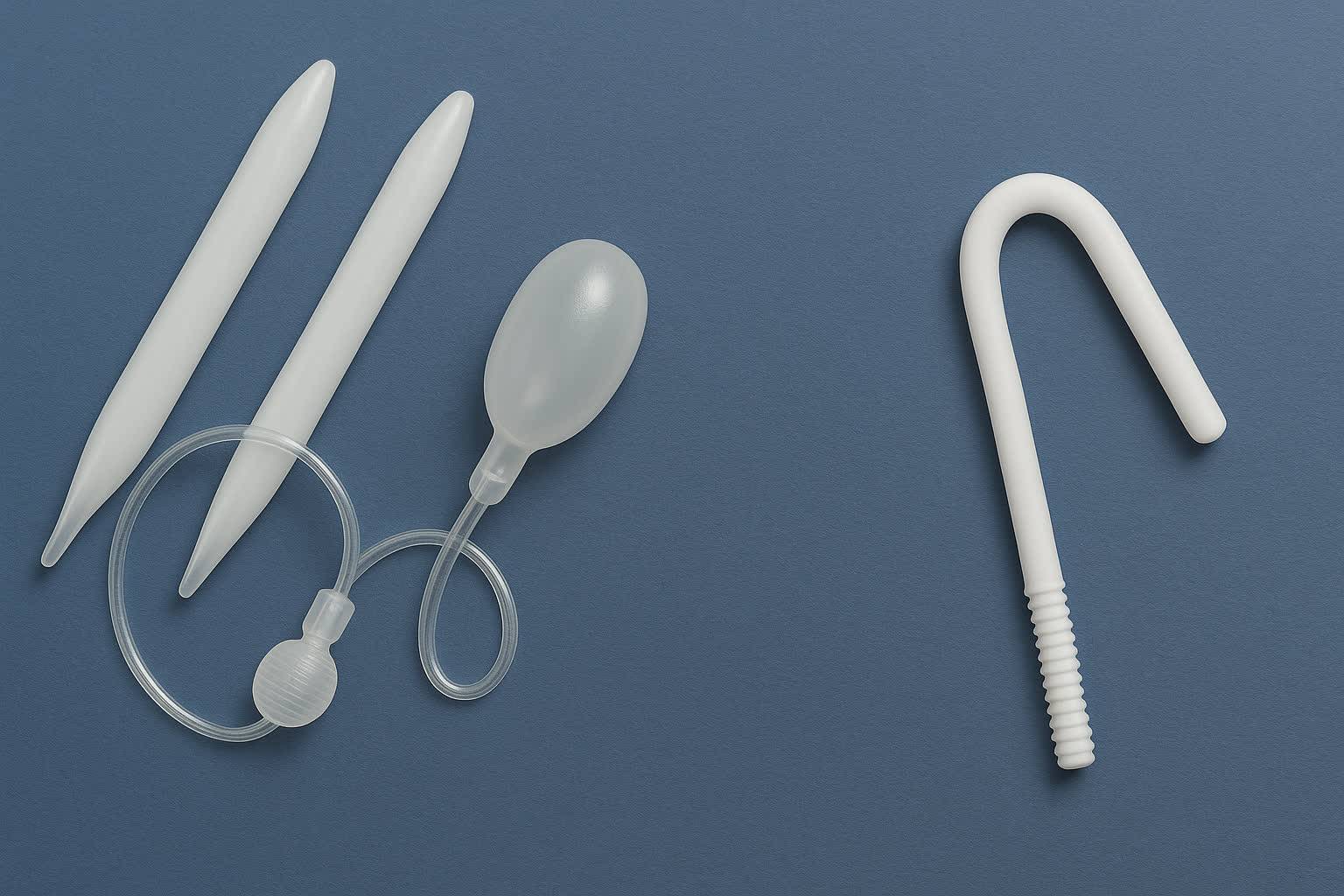
Penile traction uses a mechanical device to apply controlled stretching for prescribed periods.
In selected patients with Peyronie's disease, traction may help reduce deformity and preserve or recover some penile length.
Evidence varies by device and treatment protocol, and successful use requires consistent adherence.
Forceful manual bending or unregulated homemade stretching methods should not be used because additional injury may occur.
Plaque Injections and Erectile Dysfunction Treatment
Selected patients can receive medication injected directly into the Peyronie's plaque.
Collagenase is an enzyme-based treatment that breaks down components of collagen within the scar tissue and can improve curvature in appropriately selected patients. Availability and regulatory approval differ between countries.
Medication for erectile dysfunction may be used when erection problems coexist, although these medicines do not directly correct the curvature.
Shockwave therapy may reduce penile pain in some patients, but it should not be used with the expectation that it will reliably straighten the penis.

Surgery for Penile Curvature
Surgery offers the most powerful correction for significant stable deformity but is not appropriate during every phase of Peyronie's disease.
When Is Surgery Considered?
Surgery is generally considered when the deformity substantially interferes with intercourse and Peyronie's disease has become stable.
Stability means that the curvature is no longer progressing and the active pain has settled. Surgery is commonly delayed until the disease has been present for approximately 9 to 12 months or longer and the deformity has remained stable for several months.
Plication and Grafting Procedures
Plication or other shortening procedures correct curvature by shortening the longer side of the penis.
They are commonly considered when erectile rigidity and penile length are adequate, the curve is less severe and there is no major complex deformity.
For severe curvature, significant shortening or complex hourglass-type deformity, lengthening procedures involving incision of the restricted area and placement of a graft may be considered.
The choice depends on penile length, curvature severity, erectile function and patient priorities.
Penile Prosthesis for Severe Erectile Dysfunction
When Peyronie's disease occurs together with erectile dysfunction that does not respond adequately to medication, penile prosthesis surgery can be considered.
Additional straightening techniques may be performed during the same operation when necessary.
For congenital penile curvature with normal erectile function, corrective surgery can be performed when the deformity causes significant functional impairment.
Conclusion
Penile curvature is not automatically a disease. Mild, longstanding curvature without pain or functional difficulty may simply represent normal anatomy.
A newly developing or worsening bend, however, particularly when associated with pain, a palpable plaque, penile shortening, erectile dysfunction or difficulty with intercourse, should be evaluated by a urologist. Peyronie's disease is an important acquired cause, and treatment varies according to whether the disease is active or stable.
Mild cases may only need observation, while selected patients may benefit from pain treatment, traction or injectable therapy. Surgery is generally reserved for stable deformity that causes significant functional problems.
Sudden curvature following an erect penile injury with a popping sensation, severe pain, bruising and immediate loss of erection requires urgent medical assessment.
Frequently Asked Questions: Penile Curvature: Causes, Treatment and When to See a Doctor
Is a slight penile curve normal?
Yes. A mild longstanding curve may be normal when it causes no pain or difficulty with intercourse.
Can Peyronie's disease disappear without treatment?
Pain frequently improves over time, but major spontaneous improvement in curvature is uncommon and the scar-related deformity may remain.
Can penile curvature be treated without surgery?
Yes, depending on the cause and severity. Observation, pain treatment, traction and selected plaque injections can be considered for Peyronie's disease.
When does penile curvature require surgery?
Surgery is generally considered after the deformity becomes stable and when it significantly interferes with intercourse.
When is penile curvature an emergency?
A sudden cracking injury during erection followed by severe pain, immediate loss of erection, swelling or bruising requires urgent assessment for possible penile fracture.