





The pelvis is a complex, ring-like structure of bones at the base of the spine, forming a critical junction between the upper body and the lower limbs. It serves as a bastion of stability, transferring weight during movement, and as a protective cradle for vital organs, nerves, and blood vessels in the lower abdomen. Given its central role, a pelvic fracture is considered a major and potentially life-threatening injury. These fractures range from minor, stable breaks that heal with rest to severe, unstable injuries resulting from high-energy trauma that require immediate and complex surgical intervention.
Effective pelvic fracture management is a multidisciplinary effort focused on restoring the mechanical stability of the pelvic ring, managing associated injuries, and facilitating a return to function. The treatment path is highly individualized, depending on the fracture's severity, the patient's overall health, and the energy of the impact. While stable fractures may be managed non-surgically, unstable fractures necessitate surgical stabilization to prevent long-term pain, deformity, and disability. The journey does not end with surgery; a structured and intensive rehabilitation program is paramount for a successful recovery.
This comprehensive guide will navigate the complexities of pelvic fracture treatment. We will explore the causes and types of these injuries, detail the advanced surgical options available, and underscore the indispensable role of physical therapy in the recovery process. At Safemedigo, we are dedicated to providing patients with clear, expert-led information. Our goal is to empower you with a thorough understanding of your condition and the treatment pathway, ensuring you are an active and informed participant in your journey back to mobility and health.
Introduction to Pelvic Fracture
A pelvic fracture is a break in one or more of the bones that make up the pelvic ring. These injuries can be severe and are often associated with significant internal damage.
What is a pelvic fracture?
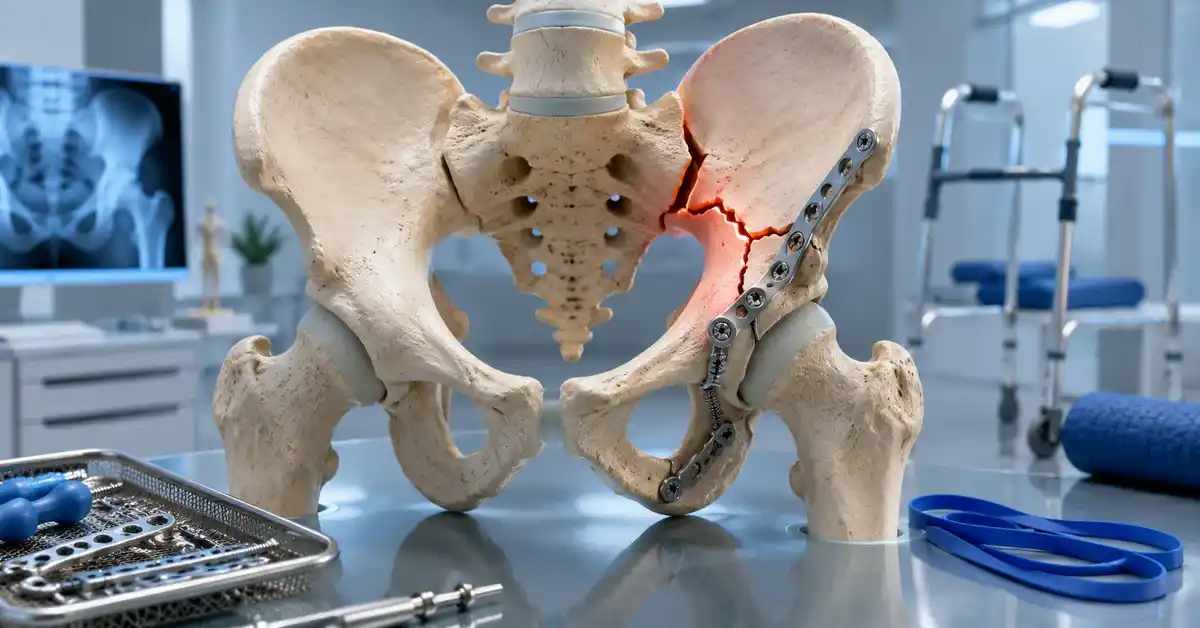
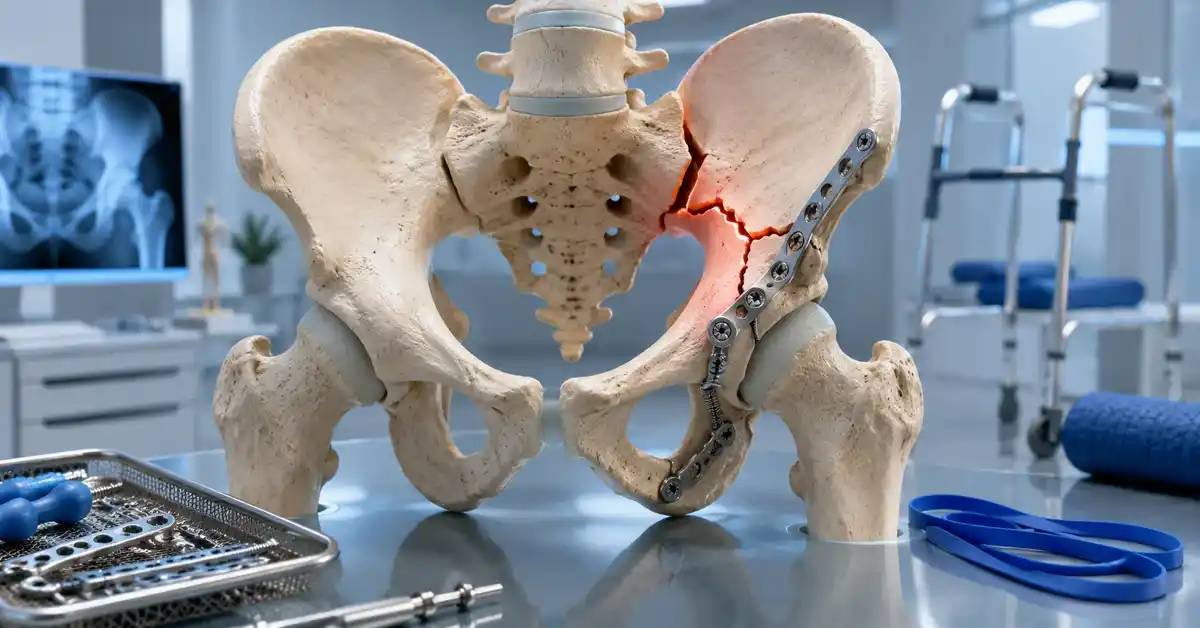
A pelvic fracture is a disruption of the pelvic bone structure. The pelvis is composed of three main bones on each side—the ilium, ischium, and pubis—which are fused together and connected in the back to the sacrum (the base of the spine) and in the front at the pubic symphysis. A fracture can occur in any of these bones. Because the pelvis is a ring, a break in one part of the ring is often accompanied by a break or ligamentous injury in another part.
Types of pelvic fracture
Pelvic fractures are broadly classified based on their stability, which is crucial for determining the treatment plan:
- Stable Fractures: In these fractures, the pelvic ring is broken in only one place, and the broken ends of the bones are not displaced or are minimally displaced. These are often low-energy fractures, such as a single break in the pubic ramus, and typically do not require surgery.
- Unstable Fractures: In these more severe injuries, the pelvic ring is broken in two or more places, resulting in a loss of structural integrity. The pelvis can no longer effectively bear weight. These are usually high-energy fractures and almost always require surgical intervention to restore stability. They are often classified by the direction of the force that caused the injury (e.g., lateral compression, anterior-posterior compression, vertical shear).
Pelvic fracture symptoms
The primary symptom of a pelvic fracture is pain, which is typically located in the groin, hip, or lower back and worsens with movement. Other pelvic fracture symptoms include:
- Inability to stand or bear weight on the legs.
- Swelling and significant bruising in the pelvic or groin area.
- Numbness or tingling in the legs or groin, suggesting nerve injury.
- In cases of high-energy trauma, there may be visible signs of associated injuries, such as open wounds or deformities, and symptoms of internal bleeding like a rapid heart rate and low blood pressure (shock).
Causes and Risk Factors of Pelvic Fracture
The cause of a pelvic fracture is directly related to the amount of force involved and the underlying strength of the bone.
Common causes of pelvic fracture
There are two main categories of causes:
- High-Energy Trauma: This is the most common cause in younger adults and results from significant force. Examples include motor vehicle collisions (cars, motorcycles), pedestrian-vehicle accidents, crush injuries, or falls from a significant height.
- Low-Energy Trauma (Fragility Fractures): This is the primary cause in the elderly. In individuals with weakened bones due to osteoporosis, a simple ground-level fall can be enough to cause a pelvic fracture.
Risk factors for pelvic fracture
Several factors can increase an individual's susceptibility to sustaining a pelvic fracture:
- Osteoporosis: This condition, which causes bones to become weak and brittle, is the single most significant risk factor for fragility fractures.
- Advanced Age: Bone density and muscle mass naturally decline with age, increasing fracture risk.
- Participation in high-risk activities: Contact sports or extreme sports can increase the likelihood of high-energy trauma.
- Certain medical conditions: Conditions that affect bone health or increase the risk of falls, such as cancer, kidney disease, or neurological disorders, are also risk factors.
Who is most at risk?
The two main populations at risk are young adults (more commonly men) involved in high-energy trauma, and elderly individuals (more commonly women) with osteoporosis who are prone to falls. For the elderly, a pelvic fracture can be a life-altering event, often leading to a significant decline in mobility and independence.
Read about: When Do You Need Hip Replacement Surgery? Essential Guidelines
Pelvic Fracture Surgery Options
For unstable pelvic fractures, surgery is necessary to realign the bones and provide stability, allowing for healing and early mobilization.
Pelvic fracture surgery
The primary goal of pelvic fracture surgery is to restore the anatomical alignment of the pelvic ring and hold it securely in place while the bones heal. This is crucial for managing pain, preventing long-term deformity, and allowing the patient to begin moving as soon as possible to avoid the complications of prolonged bed rest.
Pelvic fracture surgery options
The main surgical techniques include:
- External Fixation: This is often used as a temporary stabilizing measure, especially in emergency situations. The surgeon inserts long metal pins through the skin into the pelvic bones (ilium). These pins are connected to an external frame made of carbon fiber bars outside the body, which holds the bones in a stable position. It helps control bleeding and provides initial stability before a more definitive surgery.
- Internal Fixation (Open Reduction and Internal Fixation - ORIF): This is the definitive treatment for most unstable fractures. The surgeon makes incisions to directly access the broken bones, realigns them (open reduction), and then fixes them in place with plates and screws (internal fixation).
Hip and pelvic fracture treatment
It is important to distinguish between a pelvic fracture and a hip fracture. A hip fracture is a break in the upper part of the femur (thigh bone), while a pelvic fracture involves the ring of bones itself. While both can result from falls, their treatment is different. Hip and pelvic fracture treatment can sometimes be complex when both injuries occur simultaneously, requiring a highly specialized surgical approach to address both the femur and the pelvic ring instability.
How surgeons choose the correct procedure
The choice of procedure depends on a detailed assessment of the fracture pattern using X-rays and CT scans. The surgeon considers the stability of the fracture, the direction of displacement, the patient's overall condition (especially the presence of other injuries), and the quality of the bone.
Read about: Hip Replacement Surgery: Pre- and Post-Operation Tips
Pelvic Fracture Rehabilitation
Rehabilitation is as critical as the surgery itself and is the key to regaining function and independence.
Pelvic fracture rehabilitation
Pelvic fracture rehabilitation is a long and challenging process that begins almost immediately after surgery. The primary goals are to manage pain, restore mobility, build strength in the muscles of the hips and legs, and safely return the patient to their previous level of activity. It requires a dedicated team of physical and occupational therapists working closely with the patient.
Pelvic fracture physical therapy
Physical therapy is the cornerstone of recovery. In the early stages, the therapist focuses on safe mobilization, teaching the patient how to move in bed, transfer to a chair, and begin walking with assistive devices (like a walker or crutches) while adhering to strict weight-bearing restrictions. Pelvic fracture physical therapy is essential for preventing muscle atrophy and joint stiffness.
Pelvic fracture exercises
The exercise program is progressive. It starts with simple in-bed exercises like ankle pumps and gentle knee bending. As healing progresses, pelvic fracture exercises advance to include strengthening exercises for the quadriceps, hamstrings, and gluteal muscles. Later, balance and proprioception exercises are introduced to improve stability and prevent future falls.
Pelvic fracture rehab protocol
A typical pelvic fracture rehab protocol is phased and guided by the surgeon's instructions and the healing process:
- Phase 1 (Protection Phase, 0-6 weeks): Focus on pain control, wound care, and very limited weight-bearing (toe-touch only). Gentle range-of-motion exercises are initiated.
- Phase 2 (Mobilization Phase, 6-12 weeks): X-rays are checked for signs of healing. If satisfactory, weight-bearing is gradually increased. Strengthening exercises become more intensive.
- Phase 3 (Strengthening Phase, 12+ weeks): Focus on weaning off assistive devices, improving gait mechanics, and building endurance to return to daily activities.

Postoperative Pelvic Fracture Care and Recovery
The recovery journey requires patience and diligent adherence to medical advice.
Pelvic fracture recovery
The overall pelvic fracture recovery process is lengthy. While bone healing is a primary component, recovery also involves regaining muscle strength, confidence, and the ability to perform daily tasks independently. Psychological support is also important, as the sudden loss of mobility can be distressing.
Pelvic fracture healing time
The typical pelvic fracture healing time for the bones to unite is about 3 to 4 months. However, the full recovery to regain most of the pre-injury strength and function can take anywhere from 6 months to a year, or even longer, especially after severe, high-energy injuries.
Pelvic fracture weight-bearing guidelines
These are one of the most critical parts of postoperative care. The surgeon will provide strict instructions on how much weight, if any, you can put on your affected leg. This typically starts with "toe-touch" or "non-weight-bearing" for the first 6-8 weeks to protect the surgical fixation. Following these pelvic fracture weight-bearing guidelines precisely is essential to prevent the hardware from failing and allow the bone to heal properly.
Postoperative pelvic fracture care
Postoperative pelvic fracture care involves several key elements: wound care to prevent infection, pain management with prescribed medications, and medication to prevent blood clots (anticoagulants). It also includes following up regularly with the surgeon for X-rays to monitor healing.
Read about: Rehabilitation Exercises After Hip Replacement Surgery
Pelvic Fracture Complications and Pain
While the goal of treatment is a full recovery, potential complications can arise.
Pelvic fracture complications
Potential pelvic fracture complications include:
- Associated Injuries: Damage to bladder, urethra, rectum, nerves, and major blood vessels is common with high-energy fractures.
- Infection: Either at the surgical site or as a urinary tract infection.
- Blood Clots (DVT/PE): Deep vein thrombosis (clots in the leg) and pulmonary embolism (clots in the lung) are major risks due to immobility.
- Malunion or Nonunion: The bones may heal in an incorrect position or fail to heal at all.
- Chronic Pain and Nerve Damage: Long-term pain and altered sensation can persist after the injury.
Pelvic fracture pain management
Effective pelvic fracture pain management is crucial for comfort and to enable participation in physical therapy. This typically involves a combination of prescribed pain medications, ice application, and positioning. As healing progresses, the reliance on medication should decrease.
Warning signs requiring medical attention
You must contact your doctor immediately if you experience any of the following: fever or chills, increasing redness or drainage from your incision, severe or uncontrolled pain, calf pain or swelling (possible DVT), or sudden shortness of breath and chest pain (possible PE).
Read about: Hip Replacement Surgery: Turkey vs USA
Prevention and Long-Term Pelvic Health
Taking proactive steps can reduce the risk of pelvic fractures and promote long-term joint health.
How to prevent pelvic fracture
For the elderly, prevention focuses on two main areas: preventing falls and treating osteoporosis. This includes fall-proofing the home, regular vision checks, and medication review. For younger individuals, prevention involves safe driving practices and using appropriate protective gear during sports.
Mobility and pelvic health practices
Maintaining good mobility and pelvic health involves staying active, maintaining a healthy weight to reduce stress on the joints, and eating a balanced diet rich in calcium and vitamin D.
Pelvic fracture mobility exercises
Even for those who haven't had a fracture, specific pelvic fracture mobility exercises can be beneficial. Exercises that strengthen the core, glutes, and leg muscles help support the pelvis and improve balance. Activities like yoga, Pilates, and tai chi are excellent for improving balance, flexibility, and strength, which are all key components in fall prevention.
Read about: Hip Fracture Surgery: Turkey vs USA
Conclusion
In conclusion, a pelvic fracture is a formidable injury that demands expert medical and surgical care followed by a rigorous rehabilitation program. The path to recovery is often long, but modern pelvic fracture management techniques have significantly improved outcomes, allowing many patients to regain their mobility and return to a high quality of life. The choice of treatment, whether surgical or non-surgical, is carefully tailored to the specific fracture pattern and the individual patient.
The journey of healing from a pelvic fracture is a testament to the resilience of the human body and the importance of a collaborative partnership between the patient and their healthcare team. Success hinges on precise surgery, diligent physical therapy, and the patient's own perseverance and commitment to the recovery process. Understanding the steps, adhering to weight-bearing guidelines, and actively participating in rehabilitation are the keys to unlocking the best possible outcome.
If you or a loved one is facing the challenge of a pelvic fracture, know that advanced and effective treatment options are available. Seeking care from a team specializing in orthopedic trauma is crucial. At Safemedigo, we are committed to guiding you through this complex journey with expertise and compassion. Contact our specialist team via WhatsApp today to discuss your case and explore the most advanced surgery and rehabilitation options available for you.
Frequently Asked Questions: Pelvic Fracture Management: Surgery Options and Rehabilitation
Can a pelvic fracture heal without surgery?
Yes, stable pelvic fractures, where the bones are not displaced, can often heal without surgery. Treatment typically involves rest, pain management, and using crutches or a walker with limited weight-bearing for a period of 6-12 weeks until the bone heals.
How long does it take to recover from pelvic fracture surgery?
The pelvic fracture healing time for the bones is typically 3-4 months. However, full recovery, including regaining strength and function, is much longer. It can take anywhere from 6 to 12 months to achieve maximum improvement, and some patients may have residual stiffness or pain.
Will the plates and screws be removed after the fracture heals?
In most cases, the internal fixation hardware (plates and screws) is designed to stay in the body permanently and does not cause problems. Hardware removal is only considered in rare cases where it causes pain, irritation, or other complications after the fracture has fully healed.
What are the most important things to do during recovery?
The two most critical aspects of recovery are strictly following your surgeon's pelvic fracture weight-bearing guidelines to allow the bone to heal, and diligently participating in your pelvic fracture physical therapy program to regain strength and mobility.
Can I have a normal pregnancy after a pelvic fracture?
Most women who have had a pelvic fracture can have a normal pregnancy and vaginal delivery. However, if the fracture was severe and caused significant narrowing or deformity of the pelvic canal, a Cesarean section might be recommended. It is essential to discuss your injury history with your obstetrician.