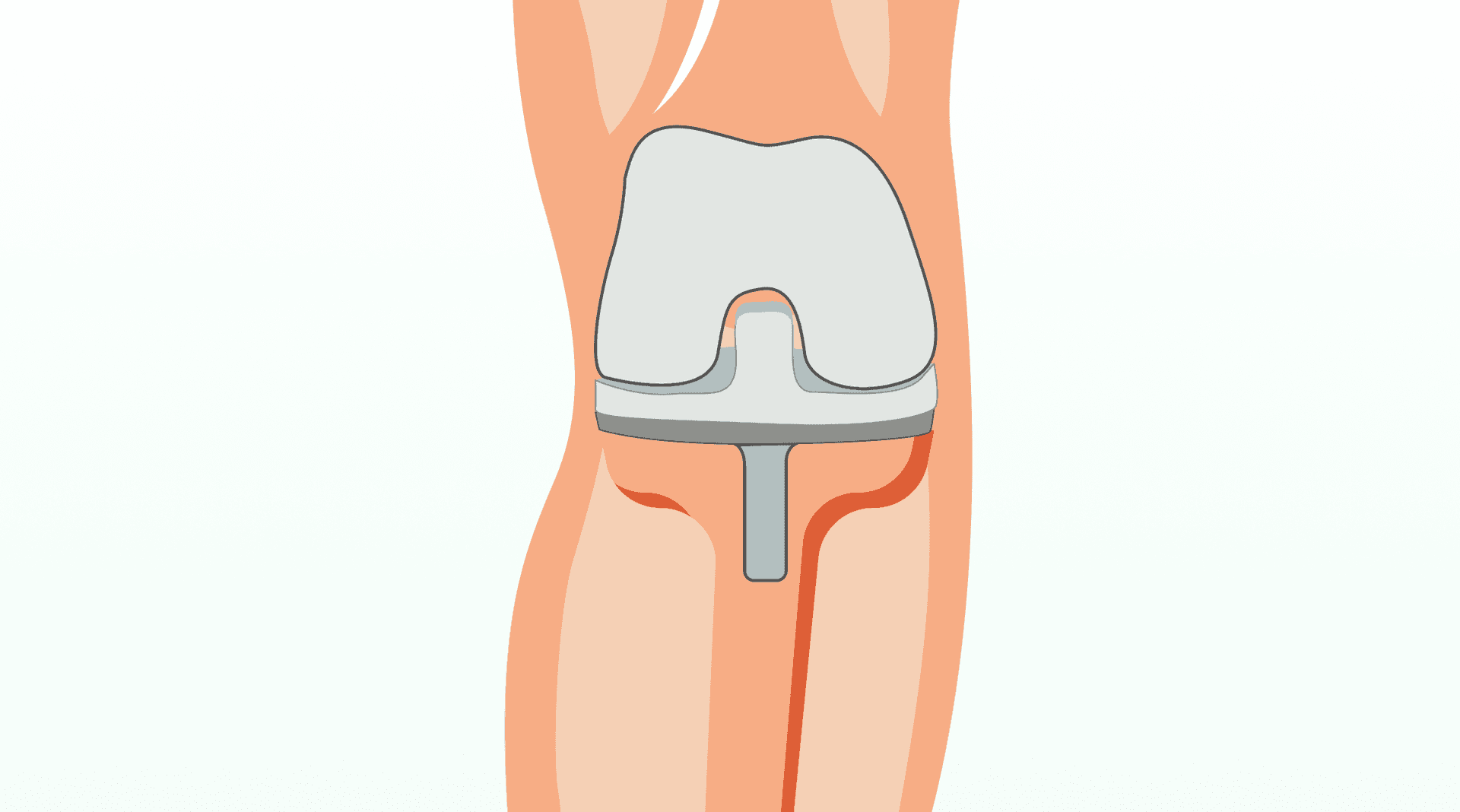






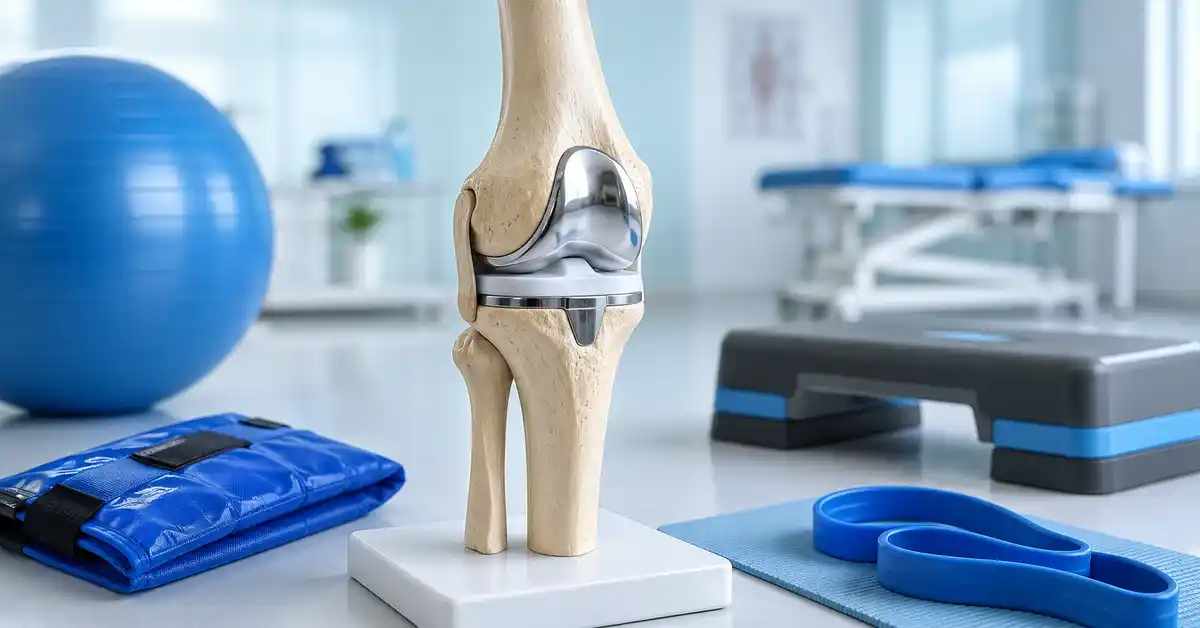
Knee joint replacement rehab is one of the most important parts of recovery after total knee arthroplasty. The surgery replaces the damaged joint surfaces, but rehabilitation helps the patient regain movement, strength, walking ability, balance, and confidence. A successful knee replacement result depends not only on the implant and surgeon, but also on a structured postoperative knee rehab program.
After knee replacement, it is normal to have pain, swelling, stiffness, bruising, and weakness around the knee. These symptoms usually improve gradually, but they require active management. Knee replacement pain management, cold therapy, safe movement, early exercises, and medication adherence all work together to help the patient move better and reduce complications.
Early rehab after knee replacement usually begins in the hospital, sometimes on the day of surgery or the next day depending on the patient’s condition and hospital protocol. The first goal is not intense exercise, but safe movement, blood circulation, gentle range of motion, and return to walking with assistance.
At Safemedigo, knee replacement rehabilitation protocol is considered part of the full treatment journey. Patients are guided on when to start rehab after knee replacement, which exercises to do, how to manage swelling, how to return to walking, and when pain may be a warning sign rather than normal recovery discomfort.
Introduction to knee joint replacement rehab
Knee joint replacement rehab is a step-by-step recovery process designed to restore function after knee arthroplasty. It includes physical therapy, home exercises after knee replacement, walking practice, swelling management, wound care, and pain control. The program should be adapted to each patient’s age, strength, medical condition, and surgical details.
Rehab starts with simple movements such as ankle pumps, quadriceps activation, knee extension, and gentle bending. Over time, the focus shifts toward strengthening, balance training, walking endurance, stairs, and return to daily activities. The speed of progress varies, so the patient should not compare recovery with others.
The main principle is controlled progression. Too little movement can increase stiffness and clot risk, while too much activity too early can increase pain and swelling. A balanced rehab plan helps the knee heal while gradually restoring function.
Goals of postoperative knee rehab
The goals of postoperative knee rehab are both short-term and long-term. In the first days, the priority is safety, circulation, pain control, and basic mobility. Later, the focus becomes strength, flexibility, walking independence, and return to normal life.
Short-term goals include:
- Reduce swelling.
- Control pain.
- Protect the incision.
- Prevent blood clots.
- Activate quadriceps muscles.
- Improve knee extension.
- Begin gentle knee bending.
- Stand safely.
- Walk with a walker or crutches.
- Learn safe transfers from bed and chair.
- Improve confidence with movement.
- Prevent excessive stiffness.
Long-term goals include:
- Walk more normally.
- Improve knee range of motion.
- Strengthen quadriceps and hip muscles.
- Climb stairs safely.
- Return to daily activities.
- Reduce dependence on pain medication.
- Improve balance.
- Return to low-impact exercise.
- Maintain a healthy body weight.
- Protect the knee implant for long-term use.
Rehab is successful when the patient gains function gradually without ignoring pain, swelling, or warning signs.
Importance of managing pain after knee replacement
Managing pain after knee replacement is essential because uncontrolled pain can limit movement, delay therapy, reduce sleep quality, and increase anxiety. Pain control allows the patient to participate in exercises and walking while the tissues heal.
Pain management may include:
- Prescribed pain medication.
- Anti-inflammatory medication when suitable.
- Cold therapy.
- Elevation.
- Gentle movement.
- Relaxation and breathing techniques.
- Proper sleep positioning.
- Avoiding overtraining.
- Short, frequent walking.
- Adjusting therapy intensity.
- Communication with the medical team.
- Multimodal analgesia when used by the care team.
Pain should gradually improve. Some discomfort with exercises is expected, but severe, worsening, or sudden pain should not be ignored.
When to start rehab after knee replacement
When to start rehab after knee replacement depends on the surgeon’s protocol and the patient’s condition, but rehabilitation often begins very early. In many cases, gentle exercises and assisted walking start within the first day after surgery.
Early rehab does not mean aggressive training. It means safe and simple movements that improve circulation, reduce stiffness, and help the patient learn how to stand and walk safely. The first sessions may include ankle pumps, quadriceps sets, assisted knee bends, and walking with a walker.
The key is to follow the medical team’s instructions. Patients with complex surgery, medical conditions, or high pain levels may progress more slowly, while others may move faster.
Early rehab after knee replacement in the hospital
Early rehab after knee replacement in the hospital focuses on safe mobility and complication prevention. The patient may feel pain, swelling, heaviness, or tightness in the knee, which is expected in the early phase. Medication and cold therapy may be used to improve comfort.
Hospital rehab may include:
- Ankle pumps.
- Deep breathing exercises.
- Quadriceps sets.
- Gluteal muscle squeezes.
- Gentle knee bending.
- Knee straightening exercises.
- Sitting at the bedside.
- Standing with assistance.
- Walking with a walker.
- Learning bathroom transfers.
- Learning how to sit and stand safely.
- Stair training if needed before discharge.
- Education about incision care.
- DVT prevention instructions.
The hospital phase builds the foundation for home or outpatient therapy. The goal is safe movement, not maximum performance.
Transition to outpatient or home-based therapy
Transition to outpatient or home-based therapy happens after discharge. Some patients continue with home physiotherapy, while others attend outpatient rehab for knee arthroplasty. The choice depends on mobility, transportation, home support, insurance, and surgeon preference.
Home-based therapy may focus on:
- Daily walking.
- Home exercises after knee replacement.
- Swelling control.
- Safe stair use.
- Wound observation.
- Medication adherence.
- Basic strengthening.
- Range of motion exercises.
Outpatient rehab may add:
- Supervised strengthening.
- Balance activities.
- Stationary bike progression.
- Gait correction.
- Manual therapy when appropriate.
- Functional training.
- More structured range of motion goals.
- Return-to-activity planning.
Both approaches can be effective when the patient follows a consistent knee replacement rehabilitation protocol.
Read about: Knee Joint Replacement: When to Opt for Surgery
Key knee replacement rehab steps
Key knee replacement rehab steps include pain control, swelling management, early movement, range of motion, quadriceps strengthening, walking progression, and functional training. Each step supports the next. For example, pain control helps movement, movement reduces stiffness, and strength improves walking.
Rehab should not be rushed. The knee needs time to heal after surgery, and pushing too hard can increase swelling. However, avoiding movement for too long can lead to stiffness and delayed recovery. The best program is consistent, progressive, and adjusted to symptoms.
The patient should track progress with simple markers such as walking distance, knee bending, knee straightening, swelling level, pain score, and ability to perform daily tasks.
Total knee replacement rehab steps day-by-day
Total knee replacement rehab steps day-by-day vary by hospital and surgeon, but a general early pattern may look like this:
- Day 0–1: ankle pumps, quadriceps sets, assisted standing, short walking.
- Day 1–2: more walking, bed-supported knee bends, sitting and standing practice.
- Days 3–7: home walking, swelling control, gentle knee bending and extension.
- Week 2: increase walking frequency, improve range of motion, continue strengthening.
- Weeks 3–4: reduce reliance on walking aids if safe, add more functional exercises.
- Weeks 5–6: stationary bike if range allows, stair practice, balance work.
- Weeks 6–12: stronger resistance exercises, longer walks, improved daily activity.
- After 3 months: continued strengthening, endurance, and low-impact activity.
This is a general guide only. The surgeon or physiotherapist may adjust the plan depending on pain, swelling, wound healing, and medical conditions.
Role of multimodal analgesia in knee replacement
Multimodal analgesia for knee replacement means using more than one pain-control method to reduce pain through different pathways. The aim is to improve comfort, reduce reliance on strong opioids when possible, and allow earlier movement.
A multimodal approach may include:
- Local anesthesia techniques.
- Regional nerve blocks.
- Acetaminophen or paracetamol.
- Anti-inflammatory medication when safe.
- Opioid medication for short-term severe pain when needed.
- Cold therapy.
- Elevation.
- Early movement.
- Sleep support.
- Patient education.
- Physical therapy pacing.
The exact medication plan must be chosen by the medical team because some patients cannot take certain pain medicines due to kidney disease, stomach problems, blood thinners, allergies, or other conditions.
Postoperative knee rehab exercises
Postoperative knee rehab exercises are essential for reducing stiffness, improving circulation, and rebuilding strength. Exercises should be performed regularly, but not aggressively. The patient should aim for steady progress while monitoring swelling and pain.
In the early phase, exercises often focus on quadriceps activation, knee extension, ankle movement, and gentle flexion. As recovery improves, the program may include resistance bands, stationary bike, sit-to-stand practice, step-ups, and balance training.
A small amount of discomfort during exercise may be expected, but severe pain, sharp pain, or swelling that worsens significantly after exercise means the program may need adjustment.
Quadriceps strengthening knee replacement routine
Quadriceps strengthening after knee replacement is one of the most important parts of rehab. The quadriceps muscle helps straighten the knee, control walking, support stair climbing, and prevent the knee from feeling unstable.
A basic routine may include:
- Quadriceps sets while lying down.
- Pressing the back of the knee toward the bed.
- Straight leg raises when allowed.
- Short arc knee extensions.
- Seated knee extensions.
- Sit-to-stand from a firm chair.
- Step-ups on a low step.
- Heel raises while standing.
- Mini-squats when approved.
- Resistance band knee extensions later in rehab.
The patient should focus on controlled movement rather than speed. If the leg cannot be lifted straight without bending, the therapist may delay straight leg raises until quadriceps control improves.
Gentle ROM and balance activities
Gentle ROM and balance activities help restore knee bending, knee straightening, and safe movement. ROM means range of motion. After knee replacement, both bending and full extension are important. A knee that does not straighten fully can affect walking, while limited bending can affect sitting and stairs.
Gentle ROM exercises may include:
- Heel slides on the bed.
- Seated knee bends.
- Assisted knee extension.
- Towel stretch behind the knee or calf.
- Stationary bike rocking before full cycling.
- Gentle calf stretching.
- Patellar mobility if recommended.
Balance activities may include:
- Standing with support.
- Weight shifting side to side.
- Mini marching while holding a counter.
- Single-leg balance later in rehab.
- Step training.
- Turning practice.
- Walking on safe flat surfaces.
Balance exercises should be done near a stable support to reduce fall risk.
Read about: Top Knee Replacement Technologies Available in Turkey
Home exercises after knee replacement
Home exercises after knee replacement keep progress moving between therapy sessions. A short daily routine is usually more effective than occasional intense exercise. The program should include circulation, ROM, strengthening, walking, and swelling care.
Patients should follow the exercise plan given by the physiotherapist. Doing too many exercises too soon can increase swelling, while doing too little may increase stiffness. The right level usually feels challenging but manageable.
Home rehab should be combined with safety measures, including proper footwear, clear walking paths, stable chairs, and avoiding slippery surfaces.
Low-impact workouts: stationary bike, walking
Low-impact workouts such as stationary bike and walking are commonly used during knee replacement recovery. They improve circulation, flexibility, and endurance without high impact on the joint.
Stationary bike tips:
- Start only when approved.
- Use little or no resistance at first.
- Raise the seat to reduce knee bend.
- Begin with partial rotations if needed.
- Progress to full rotations gradually.
- Keep sessions short at first.
- Stop if swelling increases significantly.
- Increase time before resistance.
Walking tips:
- Walk short distances often.
- Use the walker or cane until safe.
- Avoid limping if possible.
- Choose flat surfaces.
- Wear stable shoes.
- Avoid wet floors.
- Increase distance gradually.
- Rest before severe fatigue.
Walking is not a substitute for strengthening exercises, but it is a key part of returning to normal activity.
Knee replacement, cold therapy, and swelling care
Knee replacement cold therapy and swelling care help reduce discomfort and improve exercise tolerance. Swelling is common after surgery and may increase after activity. The goal is not to eliminate swelling immediately, but to keep it controlled and gradually improving.
Swelling management may include:
- Cold packs as recommended.
- Elevating the leg.
- Ankle pumps.
- Short frequent walks.
- Avoiding long sitting with the leg down.
- Compression stockings if prescribed.
- Medication adherence.
- Balancing exercise and rest.
- Monitoring incision changes.
- Avoiding excessive activity too early.
Cold therapy should be used safely. Ice should not be placed directly on bare skin, and patients with reduced sensation or circulation problems should ask the medical team for specific instructions.
Read about: Knee Replacement: Cost Quality in Turkey vs Germany
Return to walking after knee replacement
Return to walking after knee replacement is a major milestone. Most patients begin walking with assistance early, then gradually progress from walker to crutches, cane, or independent walking depending on strength and balance.
The goal is not only to walk farther, but to walk correctly. Limping, poor knee extension, fear of weight-bearing, or weak quadriceps can delay normal gait. Physiotherapy helps correct these patterns.
Walking should progress gradually. A long walk too early may cause swelling and pain, while frequent shorter walks often work better.
Progressive weight-bearing protocols
Progressive weight-bearing protocols depend on the surgeon’s instructions. Many total knee replacement patients are allowed to bear weight as tolerated, but this can vary if there are special surgical concerns.
A typical progression may include:
- Standing with a walker.
- Short assisted steps.
- Walking in the hospital corridor.
- Home walking several times daily.
- Increasing distance gradually.
- Transitioning from walker to cane when safe.
- Practicing stairs with therapist guidance.
- Improving knee extension during stance.
- Practicing smooth heel-to-toe walking.
- Increasing outdoor walking later.
Patients should not stop using assistive devices too early. A cane or walker is temporary support, not a sign of failure.
Use of assistive devices and safety tips
Use of assistive devices and safety tips helps prevent falls during recovery. The knee may feel weak or unstable early because muscles are still recovering. Walking aids protect the patient while strength and confidence improve.
Safety tips include:
- Use a walker as instructed.
- Keep both hands free while walking.
- Wear non-slip shoes.
- Remove loose rugs.
- Keep walking paths clear.
- Use night lights.
- Avoid wet floors.
- Use handrails on stairs.
- Do not rush turns.
- Sit in stable chairs with arms.
- Avoid low chairs early.
- Ask for help outdoors at first.
- Keep the phone nearby.
- Do not carry heavy items while using a walker.
Fall prevention is a central part of postoperative knee rehab because a fall can seriously disrupt recovery.

Knee replacement pain management: Techniques Tips
Knee replacement pain management should be proactive and balanced. The goal is not to remove every sensation, but to keep pain controlled enough to sleep, walk, exercise, and participate in rehab. Pain usually improves gradually, but it can fluctuate with activity.
Pain may come from the incision, swelling, muscle weakness, tissue healing, and exercise. Some pain after therapy is expected, but it should settle with rest, cold therapy, and medication. Pain that becomes worse day by day or appears suddenly may need medical review.
Patients should communicate honestly about pain. Under-treating pain can slow rehab, while overactivity despite pain can increase swelling.
Managing pain after knee replacement: medications alternatives
Managing pain after knee replacement may include medications and non-medication methods. The medical team may prescribe a combination of treatments to improve comfort.
Medication options may include:
- Acetaminophen or paracetamol.
- Anti-inflammatory medication when safe.
- Short-term opioid medication when needed.
- Nerve pain medication in selected cases.
- Blood clot prevention medication.
- Stomach protection when needed.
- Medication timing before therapy.
Non-medication options may include:
- Cold therapy.
- Elevation.
- Gentle movement.
- Relaxation breathing.
- Good sleep routine.
- Proper positioning.
- Short frequent walks.
- Avoiding overexertion.
- Physical therapy adjustments.
- Support from family.
Patients should not change medication doses or stop blood thinners without medical advice.
When pain signals a problem
Pain signals a problem when it is severe, sudden, worsening, or associated with other warning signs. Normal recovery pain should gradually improve, even if it fluctuates. Pain that becomes sharper or more intense may suggest infection, clot, implant problem, fracture, or excessive inflammation.
Contact the medical team if there is:
- Fever.
- Increasing redness around the incision.
- Drainage from the wound.
- Sudden severe knee pain.
- Calf pain or major swelling.
- Sudden shortness of breath.
- Chest pain.
- Inability to bear weight after previous improvement.
- Wound opening.
- New deformity.
- Severe stiffness that is worsening.
- Pain not relieved by medication.
- A hot, very swollen knee with feeling unwell.
Early evaluation can prevent small problems from becoming serious.
Read about: Home Exercises After Knee Replacement Surgery Recovery
Recovery timeline for knee replacement
Recovery timeline for knee replacement varies from patient to patient. Some people regain basic independence within weeks, while others need more time. Improvement in pain, swelling, strength, and endurance may continue for 6 to 12 months.
Several factors affect recovery, including age, preoperative strength, weight, diabetes, heart or lung disease, pain tolerance, surgical complexity, home support, and rehab adherence. Patients who enter surgery with better strength and activity levels often find rehabilitation easier.
The timeline should be used as a guide, not a strict rule. The most important sign is steady progress.
Weeks 1–6: mobility and strength gains
Weeks 1–6 focus on wound healing, pain control, swelling care, walking, range of motion, and basic strengthening. This is the phase when consistency matters most.
Common goals include:
- Walking safely with a walker or cane.
- Improving knee extension.
- Increasing knee bending.
- Reducing swelling.
- Performing daily home exercises.
- Getting in and out of bed independently.
- Using the bathroom safely.
- Practicing stairs when appropriate.
- Building quadriceps control.
- Reducing pain medication gradually when possible.
- Protecting the incision.
- Preventing DVT.
During this period, swelling may increase after activity. Patients should balance exercise with rest, elevation, and cold therapy.
Months 3–6: towards full function
Months 3–6 focus on strength, endurance, balance, and return to more normal daily activities. Many patients feel much better by this stage, but some stiffness, swelling after heavy activity, or muscle fatigue may continue.
Goals may include:
- Walking longer distances.
- Better stair climbing.
- Improved balance.
- Stronger quadriceps and hip muscles.
- Return to low-impact exercise.
- More normal gait.
- Less reliance on pain medication.
- Better sleep.
- Reduced swelling.
- Improved confidence outdoors.
- Return to work depending on job demands.
- Continued home strengthening.
High-impact sports and heavy physical work should be discussed with the surgeon. The implant needs protection even after pain improves.
Prevention Precautions in Rehab
Prevention and precautions in rehab are essential for safe recovery. The main concerns after knee replacement include blood clots, infection, falls, excessive swelling, stiffness, and medication errors. A good rehab plan reduces these risks while helping the patient move forward.
Patients should understand what is normal and what is not. Mild swelling, warmth, bruising, and discomfort can be expected early. However, worsening redness, fever, drainage, calf pain, shortness of breath, or chest pain should be treated as warning signs.
Rehab is not just exercise. It is a full recovery system involving movement, wound care, medication, hydration, nutrition, and communication with the care team.
Preventing DVT after knee replacement strategies
Preventing DVT after knee replacement is a priority because surgery and reduced mobility can increase clot risk. DVT usually forms in the deep veins of the leg and can sometimes travel to the lungs, causing pulmonary embolism.
DVT prevention strategies may include:
- Early walking.
- Ankle pumps.
- Taking blood thinners if prescribed.
- Compression stockings if advised.
- Compression devices in the hospital.
- Staying hydrated if medically allowed.
- Avoiding long periods of sitting.
- Elevating the leg appropriately.
- Reporting calf pain or swelling.
- Avoiding smoking.
- Following medication duration exactly.
- Keeping follow-up appointments.
Warning signs such as calf pain, one-sided swelling, sudden shortness of breath, or chest pain require urgent medical attention.
Managing swelling and incision health
Managing swelling and incision health helps reduce pain, improve mobility, and lower infection risk. Swelling should gradually improve, though it may increase temporarily after exercise or prolonged standing.
Swelling and incision care tips include:
- Use cold therapy as directed.
- Elevate the leg.
- Do ankle pumps frequently.
- Keep the incision clean and dry.
- Wash hands before touching dressings.
- Do not apply creams unless approved.
- Watch for drainage or spreading redness.
- Change dressings only as instructed.
- Avoid soaking the wound until cleared.
- Wear compression if prescribed.
- Balance exercise with rest.
- Report fever or wound changes.
Good incision care and swelling control help the patient participate more comfortably in therapy and reduce the risk of complications.
Read about: Knee Rehabilitation After Prosthetic Surgery: Exercise Plan
Conclusion
Knee joint replacement rehab is a structured process that helps patients regain movement, strength, walking ability, and confidence after surgery. The most important elements include early movement, pain management, quadriceps strengthening, range of motion exercises, cold therapy, swelling care, walking progression, and DVT prevention.
Pain, swelling, and stiffness can be normal during recovery, but they should improve gradually. Sudden severe pain, fever, wound drainage, calf pain, chest pain, or shortness of breath should be evaluated urgently. A good rehabilitation plan helps patients recover safely while reducing complications.
Frequently Asked Questions: Knee Joint Replacement Rehab
When should rehab start after knee replacement?
Rehab often starts in the hospital on the day of surgery or the next day, depending on the patient’s condition and surgeon’s protocol.
What are the most important exercises after knee replacement?
Important exercises include ankle pumps, quadriceps sets, knee straightening, heel slides, gentle knee bends, walking practice, and later strengthening and balance exercises.
How long does pain last after knee replacement?
Pain usually improves gradually over weeks and months. Some discomfort, swelling, or tightness may persist for several months, but worsening or sudden pain should be checked.
How can swelling be managed after knee replacement?
Swelling can be managed with cold therapy, elevation, ankle pumps, short frequent walks, medication adherence, and balancing exercise with rest.
How do you prevent DVT after knee replacement?
DVT prevention includes early walking, ankle pumps, prescribed blood thinners, compression if advised, hydration when allowed, and avoiding long periods of immobility.