









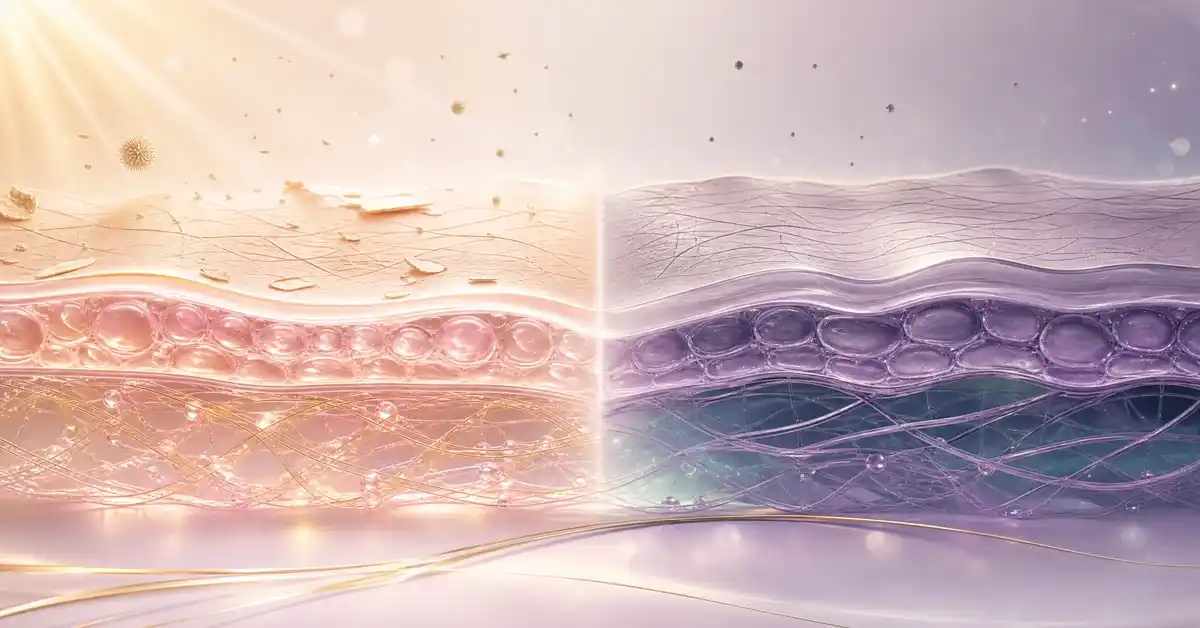
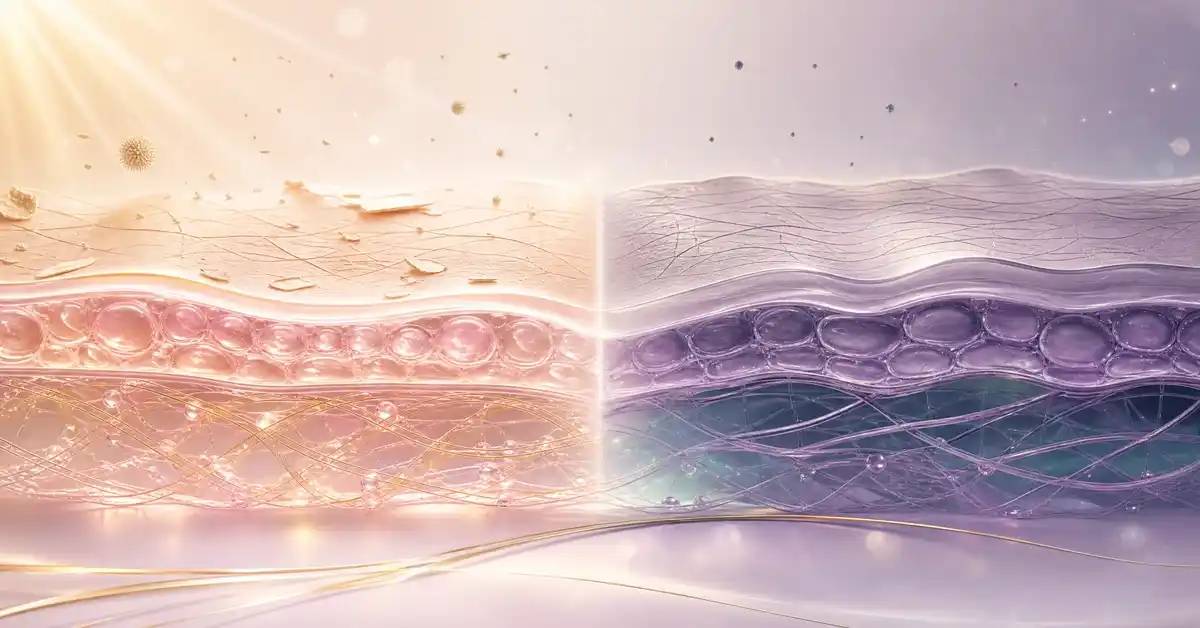
Skin ages through two overlapping pathways. Intrinsic aging develops naturally with time because of biological, genetic, and hormonal changes. Extrinsic aging develops when environmental and lifestyle exposures accelerate those changes, with chronic ultraviolet exposure being the most important contributor.
At Safemedigo, distinguishing between intrinsic and extrinsic aging helps determine whether the main concern is fine lines, dryness and volume loss, or photoaging features such as coarse wrinkles, uneven pigmentation and rough texture. Most people have a combination of both processes rather than only one.
What Is the Difference Between Intrinsic and Extrinsic Skin Aging?
The key difference is the source of the changes. Intrinsic aging is part of normal biological aging, while extrinsic aging reflects additional damage accumulated from the environment and lifestyle.
What Is Intrinsic Skin Aging?
Intrinsic aging develops gradually as cell turnover changes and the skin loses some collagen, elasticity, hydration capacity, and structural support.
It also occurs in body areas that receive little sunlight, making it the baseline aging process of the skin.
What Is Extrinsic Skin Aging?
Extrinsic aging results from external factors that accelerate visible aging.
Chronic UV exposure is the major factor and is commonly described as photoaging. Smoking, pollution, and other environmental exposures can also contribute to premature changes in skin texture and color.
Can Intrinsic and Extrinsic Aging Happen Together?
Yes. This is the usual pattern.
Fine lines and gradual loss of elasticity may reflect chronological aging, while coarse wrinkles, mottled pigmentation, and roughness in sun-exposed areas can reflect additional photoaging.
What Are the Signs of Intrinsic Skin Aging?
Intrinsic aging generally produces slower and more uniform changes.
Are Fine Lines a Sign of Natural Skin Aging?
Yes. Fine wrinkles are common in intrinsically aged skin.
They often begin around the eyes and mouth and gradually become more noticeable as skin elasticity and structural support decline. Intrinsically aged skin usually remains smoother than severely photoaged skin.
Why Does Skin Become Thinner and Drier With Age?
Skin barrier function and moisture retention change with age, while cell renewal becomes slower.
The skin may therefore become thinner, drier, more delicate, and less elastic even in areas protected from sunlight.
Is Facial Volume Loss Part of Intrinsic Aging?
Yes. Facial aging involves more than the skin surface.
Changes occur in facial fat, ligaments, muscles, and bone, contributing to flatter cheeks, deeper folds, jawline changes, and gradual sagging.

What Are the Signs of Extrinsic Aging and Photoaging?
Photoaging tends to be more uneven and is most obvious on chronically exposed areas such as the face, neck, upper chest, and backs of the hands.
Are Deep Wrinkles a Sign of Sun Damage?
Coarse and deeper wrinkles are common features of significant photoaging.
The skin can also become rougher and lose elasticity, producing a more weathered texture than skin affected mainly by intrinsic aging.
Are Dark Spots and Uneven Skin Tone Signs of Photoaging?
Yes. Pigment changes are among the most common visible signs.
They can include solar lentigines, mottled hyperpigmentation, uneven tone, and other light- or dark-colored areas.
In darker skin tones, pigmentary changes may be a more prominent sign of photoaging than deep wrinkles.
Can Photoaging Cause Visible Blood Vessels and Rough Texture?
Yes. Small visible superficial vessels and rough skin texture can occur with chronic photodamage.
Vascular changes may be less visually obvious in darker skin even when other photoaging features are present.
How Can You Tell Whether Your Skin Aging Is Intrinsic or Extrinsic?
The distribution and pattern of the changes provide useful clues, although the two processes frequently overlap.
Does the Location of Skin Aging Matter?
Yes.
More severe changes on the face, neck, chest, and hands compared with protected skin suggest a stronger extrinsic component.
Gradual thinning, dryness, and elasticity loss that also occur in protected areas are more consistent with intrinsic aging.
How Do Wrinkles and Pigmentation Differ?
| Feature | Intrinsic aging | Extrinsic aging |
|---|---|---|
| Wrinkles | Fine and gradual | Coarser and deeper |
| Skin thickness | Tends to become thinner | May appear rough or thickened |
| Pigmentation | Mild and more even | Mottled and irregular |
| Elasticity | Gradual loss | More pronounced photodamage |
| Visible vessels | Less prominent | Can become more apparent |
| Distribution | Also affects protected skin | Strongest on exposed skin |
Can a Photo Alone Diagnose the Type of Skin Aging?
A photograph can show wrinkles and pigmentation distribution but cannot fully identify every underlying cause.
Clinical assessment can distinguish photoaging from melasma and other pigment disorders and determine whether the dominant concern is surface texture, pigment, volume loss, or deeper laxity.
What Accelerates Extrinsic Skin Aging and How Can It Be Prevented?
A major advantage of extrinsic aging is that many contributing factors can be modified.
How Does Sun Exposure Age the Skin?
Repeated UV exposure damages structural components of the skin and disrupts pigment regulation.
Daily photoprotection is therefore one of the most important strategies for reducing additional photoaging, not only during summer or vacations.
Do Smoking and Pollution Accelerate Wrinkles?
They can contribute to oxidative stress and structural skin changes, increasing the likelihood of wrinkles and uneven tone.
Reducing these exposures is therefore part of long-term skin-aging prevention rather than relying only on cosmetic products.
Does Darker Skin Still Need Sun Protection?
Yes.
Higher melanin levels provide partial natural photoprotection and can delay some visible wrinkles, but they do not prevent photoaging. Darker skin can develop prominent hyperpigmentation, solar lentigines, and uneven tone from chronic exposure.
What Are the Best Treatments for Intrinsic and Extrinsic Skin Aging?
Treatment should target the dominant sign rather than age alone.
What Helps Fine Lines and Photoaged Skin?
A basic strategy usually includes daily sun protection, appropriate moisturization, and active topical ingredients selected for the skin type.
Retinoids are among the most established topical options for improving fine lines, texture, and several features of photoaging. Irritation, peeling, and dryness can occur, so the product and frequency should be individualized. Retinoid use also requires specific consideration during pregnancy or when planning pregnancy.
Which Procedures Treat Pigmentation, Roughness, and Wrinkles?
Depending on the concern, options may include chemical peels, fractional laser treatments, and selected light-based technologies for pigmentation or visible vessels.
Treatment needs to be adapted to skin tone because the risk of post-inflammatory pigmentation differs between individuals and can be particularly relevant in more pigmented skin.
What Helps When Aging Is Mainly Caused by Volume Loss or Sagging?
Surface treatments alone may not correct deeper structural aging.
Depending on the problem, treatment can include volume restoration, collagen-stimulating procedures, non-surgical tightening technologies, or surgery when laxity becomes advanced.
The most useful first step is determining whether the main concern lies in skin texture, pigment, collagen, fat volume, or deeper tissue support.
Conclusion
Intrinsic aging is the natural process associated with time and commonly causes fine lines, dryness, thinning, gradual loss of elasticity, and facial volume changes. Extrinsic aging is driven mainly by environmental exposure and often produces deeper wrinkles, roughness, uneven pigmentation, and more obvious changes in sun-exposed skin.
Most people have a combination of both. Treatment is therefore most effective when it targets the dominant feature rather than relying only on chronological age.
Frequently Asked Questions: Intrinsic vs Extrinsic Skin Aging
How can I tell whether my wrinkles are from age or sun exposure?
Fine, evenly distributed lines fit intrinsic aging more closely, while deeper wrinkles with pigmentation and roughness in exposed areas suggest additional photoaging.
Can extrinsic skin aging be reversed?
Many features can be improved, including texture, pigmentation, and some wrinkles, although treatment cannot completely return skin to its previous biological state.
Does sunscreen stop skin aging?
It does not stop intrinsic aging, but it can substantially reduce additional UV-related photoaging.
What is the difference between photoaging and normal aging?
Photoaging is accumulated light-related damage, while intrinsic aging occurs naturally with time even in protected skin.
Does darker skin age differently?
Visible wrinkles may develop later, while uneven pigmentation and dark spots can become more prominent features of extrinsic aging.