









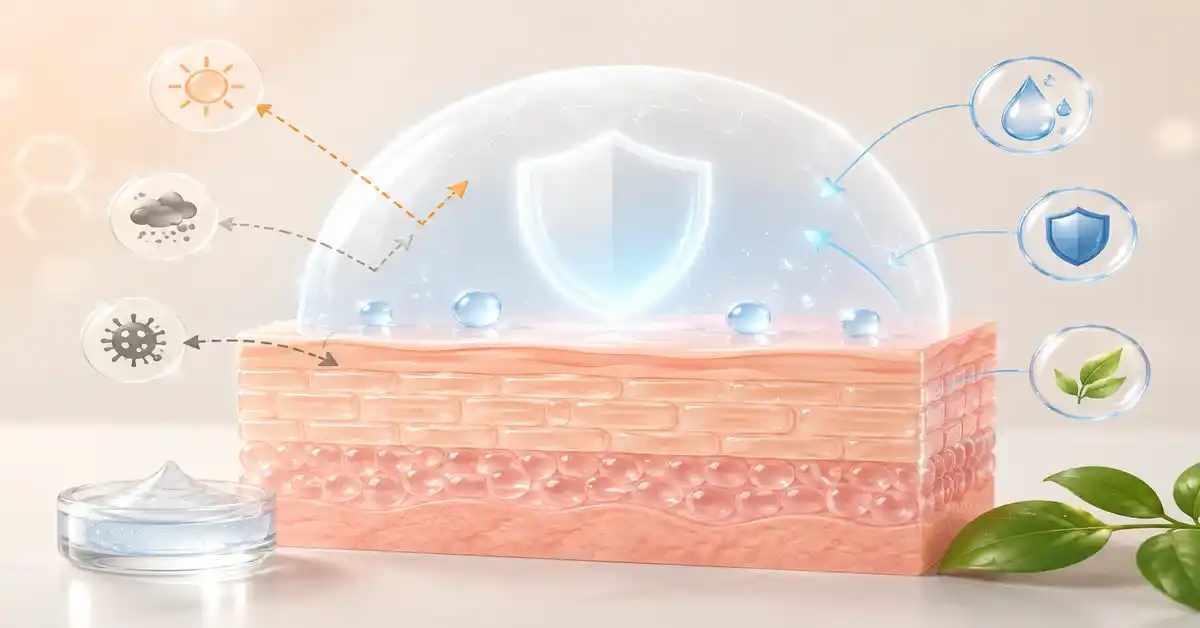
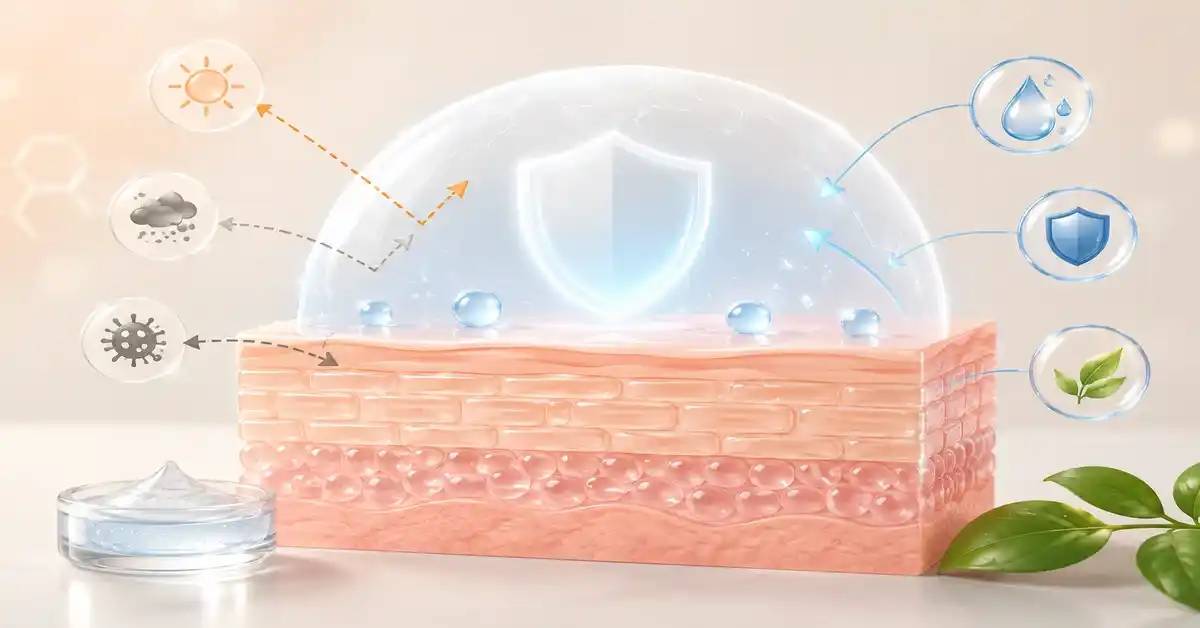
The skin barrier is the outer defensive layer that limits water loss and helps prevent irritants, chemicals, pollutants, and environmental stressors from penetrating the skin. When it functions well, the skin feels smoother, more flexible, and better able to tolerate cleansing and skincare products. When it becomes impaired, tightness, dryness, scaling, redness, itching, burning, and sensitivity may develop.
Barrier damage rarely comes from one cause alone. It commonly follows repeated over-cleansing, hot water, excessive exfoliation, simultaneous use of retinoids and acne treatments, insufficient moisturizing, or exposure to dry air and ultraviolet radiation. These factors may disrupt surface lipids and increase water loss from the outer skin.
Repair does not usually require a complicated collection of products. A temporary routine built around gentle cleansing, appropriate moisturizing, and comfortable sun protection is often a better starting point. Persistent, severe, or recurrent symptoms may indicate dermatitis, rosacea, allergy, or another condition requiring professional assessment.
Skin Barrier Function and the Signs of Barrier Damage
The skin barrier is a coordinated structure made of surface cells, natural lipids, and water-binding components. Its purpose extends beyond preventing dryness: it also limits irritation from friction, cleansing ingredients, and the environment. When the structure becomes less cohesive, water escapes more easily and the skin reacts more strongly to exposures that were previously tolerated.
How the Skin Barrier Retains Moisture and Protects the Skin
The outer layer contains tightly arranged cells surrounded by lipids such as ceramides, cholesterol, and fatty acids. This lipid matrix fills spaces between the cells, reduces uncontrolled evaporation, and helps block external irritants. Natural moisturizing components within the surface layer also support flexibility and normal shedding.
Healthy barrier function depends on balance rather than complete oil removal. Skin can look oily while still feeling tight and dehydrated, particularly after harsh cleansing. Surface shine therefore does not necessarily mean that the skin has sufficient water or that a moisturizer should be avoided.
Common Signs of a Damaged or Irritated Skin Barrier
Frequent signs include tightness after cleansing, dryness that quickly returns after moisturizing, fine flakes, rough patches, redness, itching, and increased sensitivity to temperature changes. Water, sunscreen, or a previously comfortable moisturizer may suddenly sting.
Some people develop small inflamed bumps or irritation around the mouth and nose after layering several products over compromised skin. No single symptom proves barrier damage, but the combination of tightness, scaling, burning, and reduced product tolerance suggests that the routine should be simplified.
Barrier Damage Versus an Inflammatory Skin Condition
Skin irritated by excessive skincare may improve after active ingredients are stopped and regular moisturizing begins. Eczema, contact allergy, rosacea, and infection may continue because inflammation or a specific trigger remains present.
Bleeding cracks, yellow crusts, discharge, swelling, widespread rash, severe itching, or symptoms affecting the eyelids require more than routine moisturizer. These findings may need diagnosis and prescription treatment.
Skincare Habits That Damage the Skin Barrier
Barrier damage often develops through the accumulation of several irritating habits rather than a single dramatic mistake. A strong cleanser may be followed by daily exfoliation, retinol, an acne treatment, and frequent product changes. As irritation worsens, additional products are sometimes added, creating a cycle of dryness and inflammation.
Over-Cleansing, Hot Water, and Friction
Repeated cleansing and highly foaming or alkaline products may remove protective surface lipids. Hot water, prolonged washing, facial brushes, rough cloths, and frequent scrubbing add mechanical irritation.
Use lukewarm water, massage cleanser gently with the fingertips, and pat rather than rub the skin dry. A tight, squeaky feeling after cleansing is not evidence of superior cleanliness; it may indicate that the cleansing process is too aggressive.
Combining Retinoids, Exfoliating Acids, and Acne Products
Retinoids, exfoliating acids, benzoyl peroxide, and other active products can cause dryness, scaling, redness, and irritation, particularly when introduced too frequently or combined in the same routine.
Visible peeling does not necessarily mean that a treatment is working better. When burning and persistent redness occur, reduce the frequency or pause the active ingredients. Avoid treating the new flakes with additional exfoliation, as this may deepen the barrier disruption.
Fragrance, New Products, and Environmental Exposure
Fragrance, essential oils, botanical extracts, preservatives, and alcohol-rich formulas can irritate some complexions. Introducing multiple products simultaneously makes it difficult to identify the cause of a reaction, so one new item should be tested at a time.
Dry indoor air, wind, pollution, and sunlight may also worsen water loss or inflammation. Ultraviolet exposure can affect barrier function, making photoprotection part of a complete recovery plan rather than an optional cosmetic step.
Gentle Cleansing That Preserves the Skin Barrier
Cleansing remains necessary for removing sweat, sunscreen, makeup, excess oil, and environmental residue. The goal is not to eliminate every trace of surface lipid, but to clean effectively without creating persistent tightness or burning.
Choosing a Gentle Cleanser for Your Skin Type
Dry and sensitive skin may tolerate a fragrance-free cream cleanser or mild gel better than a strong foaming formula. Oily and acne-prone skin also benefits from cleansing that removes excess sebum without causing scaling or discomfort.
A cleanser may be unsuitable if it repeatedly causes burning during use, prolonged tightness, or peeling around the nose and mouth. During barrier recovery, avoid cleansers containing multiple exfoliating ingredients, even when acne or pigmentation is also present.
How Often to Wash and How to Remove Makeup
Most people benefit from evening cleansing to remove sunscreen, makeup, and daily residue. Morning cleansing can be adjusted according to skin type, overnight products, and sweating; water alone may be sufficient for some people.
Water-resistant makeup or persistent sunscreen may require a gentle remover followed by a mild cleanser. However, daily double cleansing should be reconsidered if it leads to dryness. Allow makeup remover to dissolve the product instead of repeatedly rubbing the skin.
Protecting the Body and Hand Barrier
Long hot showers, repeated handwashing, soap, and household detergents can also damage the barrier on the body and hands. Shorter lukewarm showers and targeted cleanser use are usually less drying than applying strong soap over the entire body every day.
Pat the skin dry and moisturize promptly. Apply hand cream after washing and use protective gloves during exposure to cleaning chemicals, while avoiding prolonged moisture trapped inside the gloves.
Moisturizing and Replenishing Protective Skin Lipids
Moisturizing involves attracting water, smoothing spaces between surface cells, and reducing evaporation. The most suitable product depends on the level of dryness, body location, climate, and tendency toward acne or follicular blockage.
Moisturizer Ingredients That Support the Skin Barrier
Humectants such as glycerin and hyaluronic acid help attract water. Emollients smooth rough surface areas, while occlusive ingredients form a layer that reduces evaporation. Barrier-supporting formulas may include ceramides, cholesterol, and fatty acids to complement natural surface lipids.
Ceramide-containing products may improve hydration and reduce dryness and scaling in some forms of sensitive or treated skin. However, the complete formulation matters: fragrance, texture, preservatives, and how the ceramides are incorporated can influence tolerability and effectiveness.
Lotion, Cream, or Ointment
Lotions are lightweight and often comfortable on large areas, in humid weather, or on combination skin. Creams provide richer daily hydration and may suit the face, hands, and moderately dry skin. Ointments offer stronger occlusion and may be useful for cracked lips, severely dry hands, or small scaly areas.
The same texture is not required everywhere. A lighter product may suit the forehead, while a richer cream is applied around the nose or on dry cheeks. When a heavy formula worsens breakouts, adjust the texture rather than abandoning moisturizer altogether.
How to Apply Moisturizer During Barrier Recovery
Apply moisturizer shortly after cleansing while the skin is still slightly damp. Reapply when tightness returns, particularly after handwashing, showering, or prolonged exposure to air conditioning and dry weather.
During recovery, one consistently tolerated moisturizer is often more useful than several serums. Spread it gently without prolonged rubbing. Persistent burning, swelling, or rash after application suggests that the formula may be irritating and should be discontinued.

Protecting the Skin Barrier From Sun, Climate, and Active Ingredients
Cleanser and moisturizer are only part of the plan. The skin remains exposed to ultraviolet radiation, weather changes, heat, sweat, and active skincare ingredients. Long-term protection therefore requires comfortable sunscreen, seasonal adjustments, and gradual reintroduction of treatments.
Sunscreen and Prevention of Recurrent Irritation
Ultraviolet radiation can increase inflammation and oxidative stress and may interfere with normal barrier function. Consistent photoprotection helps support recovery and reduces the risk of post-inflammatory discoloration.
Choose a broad-protection sunscreen according to tolerability. Mineral formulas may feel more comfortable for some sensitive complexions, while others prefer lightweight chemical products. The best option is one that can be applied in an adequate amount without persistent burning or dryness, combined with shade, hats, and protective clothing.
Adapting the Routine to Weather and Climate
Cold weather, indoor heating, dry air, and air conditioning may increase water loss. A gentler cleansing schedule, richer cream, and shorter lukewarm showers can help during these conditions.
In hot and humid weather, a lighter moisturizer may be more comfortable, but sweat should still be removed gently rather than through repeated harsh washing. When traveling, changing moisturizer texture and frequency is often sufficient; replacing the entire routine may expose the skin to unnecessary new ingredients.
Restarting Retinoids and Acids Safely
Do not restart active ingredients until burning, marked redness, and visible scaling have settled and the skin tolerates basic cleansing and moisturizing comfortably. Introduce one treatment at a time, beginning with a small amount and limited weekly use.
Applying moisturizer before or after a retinoid may reduce irritation. Sensitive skin should avoid restarting exfoliating acids and retinol on the same night. Modern delivery systems may improve retinoid tolerability, but gradual introduction remains essential.
A Skin Barrier Recovery Plan and When to Seek Dermatology Care
Barrier recovery requires a period of consistency. A short, stable routine makes it easier to observe improvement and identify any product that triggers symptoms. Frequently switching between several repair creams can create new irritation and make the original cause harder to determine.
A Simplified Daily Skin Barrier Routine
In the morning, rinse with water or use a gentle cleanser when needed, then apply moisturizer and sunscreen. In the evening, remove sunscreen and makeup with a mild cleanser and apply moisturizer to slightly damp skin. A thin occlusive layer may be used on small cracked areas when tolerated.
Temporarily stop retinoids, exfoliating acids, scrubs, strong acne treatments, fragranced masks, and cleansing devices. When the skin stabilizes, reintroduce only one product at a time.
How Long Skin Barrier Recovery Takes
Tightness and stinging may begin to improve within several days after irritants are removed, while persistent scaling, redness, and sensitivity may require several weeks. Recovery time depends on severity, continued exposure, and whether an inflammatory skin disorder is present.
Do not judge a new basic routine after only one or two days, and avoid changing moisturizer repeatedly without a clear reason. Eczema, contact allergy, rosacea, or infection may prevent full recovery until the underlying condition is treated.
Signs That Require Specialist Assessment
Seek assessment when burning and redness continue despite stopping active products, or when swelling, bleeding cracks, discharge, yellow crusts, significant pain, or spreading rash appears. Eyelid involvement, mouth-area inflammation, or itching that disrupts sleep also warrants professional review.
The clinician may need to distinguish barrier damage from eczema, rosacea, allergic contact dermatitis, and infection. Treatment may include anti-inflammatory medication, detailed ingredient review, or allergy testing.
Conclusion
Protecting the skin barrier begins by reducing the practices that weaken it rather than continually adding new products. Gentle cleansing, lukewarm water, regular moisturizing, sun protection, and gradual use of active ingredients provide the foundation for recovery.
Frequently Asked Questions: How Can You Protect Your Skin Barrier From Damage and Irritation?
How can I tell whether my skin barrier is damaged?
Possible signs include tightness after cleansing, recurring dryness, scaling, redness, itching, burning, and sensitivity to previously tolerated products.
Are ceramides necessary for skin barrier repair?
They may support natural surface lipids, but recovery also depends on removing irritants, gentle cleansing, moisturizing, and sun protection.
Should I stop retinol when my skin becomes irritated?
Pause it when significant burning, redness, or scaling develops, and restart gradually only after the skin has stabilized.
Can I wash my face with water only?
Water may be sufficient in the morning for some skin types, but evening cleansing is usually needed to remove sunscreen, makeup, and residue.
How long does skin barrier repair take?
Mild irritation may improve within days, while severe damage or inflammatory skin disease may require several weeks and treatment of the underlying cause.