





Fertility can sometimes be better today than it will be after a future treatment, surgery or medical condition.
Chemotherapy, radiotherapy, reproductive surgery, diminished ovarian reserve, severe sperm loss and certain genetic or systemic diseases can all create a risk that future fertility may decline.
This is where fertility preservation becomes important.
Fertility preservation is not one single treatment.
Options may include:
Egg freezing.
Embryo freezing.
Sperm freezing.
Ovarian tissue cryopreservation.
And in selected situations, additional strategies such as ovarian transposition or fertility-sparing surgery.
The key question is therefore not:
What is the best fertility-preservation method?
It is:
Which method offers the best balance of safety, time and future reproductive potential for this specific patient?
What Does Fertility Preservation Mean?
Fertility preservation involves storing reproductive cells or tissue before fertility is lost or significantly reduced.
Material that may be preserved includes:
Oocytes.
Embryos.
Sperm.
Ovarian tissue.
And, in special investigational situations, testicular tissue.
The goal is not to guarantee a future child.
It is to preserve additional reproductive options for the future.
When Should Fertility Preservation Be Considered?
It should be discussed whenever a disease or treatment may impair reproductive function.
Examples include:
Chemotherapy.
Radiotherapy.
Ovarian or testicular surgery.
Stem-cell transplantation.
Some intensive autoimmune or hematologic treatments.
Risk of premature ovarian insufficiency.
Diminished ovarian reserve in appropriate patients.
Genetic conditions associated with gonadal failure.
Severe or deteriorating sperm production.
Why Is Early Referral Important?
Many fertility-preservation strategies work best before reproductive tissue has been exposed to gonadotoxic treatment.
For example:
Sperm is ideally banked before chemotherapy.
Eggs or embryos are ideally frozen before ovarian damage occurs.
Early referral gives patients more options and more time to understand them.
Once treatment has started, some options may become less effective or no longer available.
Is Fertility Preservation Only for Cancer Patients?
No.
Cancer is an important indication, but fertility preservation can also be relevant in:
Diminished ovarian reserve.
Genetic risk of premature ovarian insufficiency.
Certain blood disorders.
Autoimmune disease requiring gonadotoxic treatment.
Repeated ovarian surgery.
Severe male-factor deterioration.
Other conditions likely to compromise gonadal function.
How Do We Choose a Female Fertility-Preservation Strategy?
Important factors include:
Age.
Pubertal status.
Ovarian reserve.
Available time.
Medical stability.
Planned treatment.
Relationship and legal circumstances.
Future reproductive goals.
Whether ovarian stimulation is safe.
Option 1: Egg Freezing
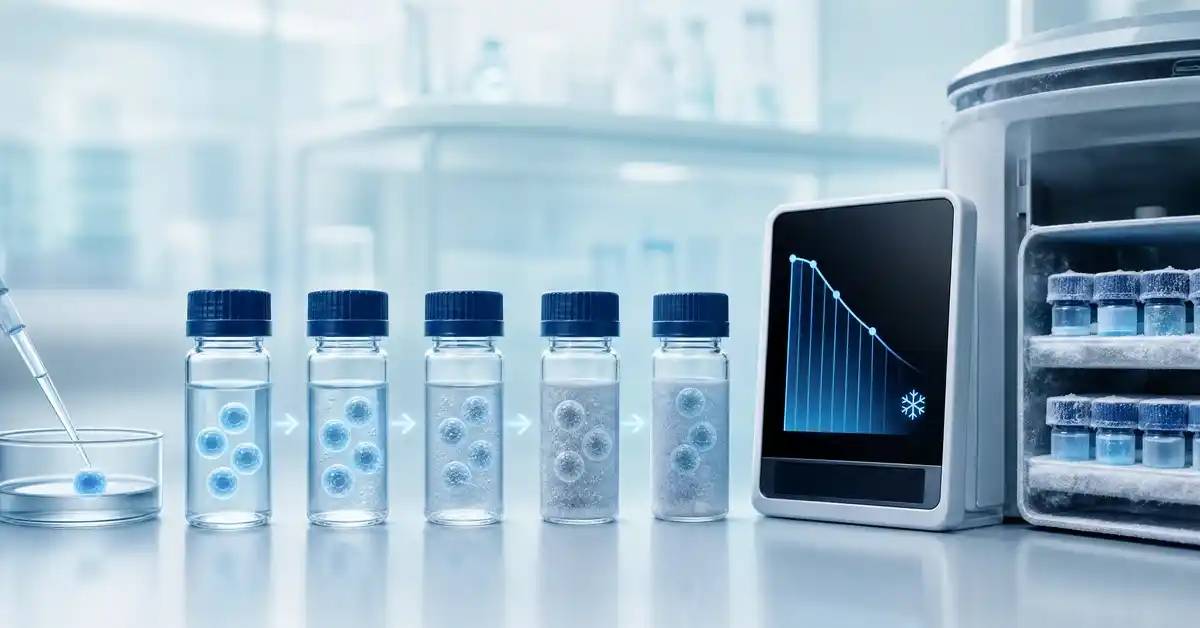
Egg freezing stores unfertilized mature oocytes.
The process usually involves:
Ovarian stimulation.
Follicle monitoring.
Egg retrieval.
Maturity assessment.
Vitrification.
Cryostorage.
Mature oocyte cryopreservation is an established fertility-preservation technique for postpubertal females.
Read Safemedigo's step-by-step guide to egg freezing.
When Is Egg Freezing Useful?
It may be appropriate when:
A woman needs fertility preservation before gonadotoxic treatment.
She does not want to create embryos now.
There is no partner or spouse involved in embryo creation.
She wants future control over sperm source.
Local medical and legal criteria allow treatment.
In Turkey, egg freezing is subject to defined medical indications rather than unrestricted elective access.
Why Does Age at Egg Freezing Matter?
Age is one of the most important predictors of future potential.
As age increases:
Oocyte number usually falls.
Chromosomal abnormalities become more common.
Ten eggs frozen at age 30 therefore do not carry the same biological potential as ten eggs frozen at age 40.
The egg does not continue aging normally during proper cryostorage.
The woman's body, however, continues to age.
Does AMH Measure Egg Quality?
No.
AMH is mainly useful for predicting:
Expected oocyte yield.
Response to ovarian stimulation.
It is not a direct measurement of chromosomal quality.
Age remains more important when discussing age-related oocyte competence.
Read Safemedigo's guide to diminished ovarian reserve and low AMH.
Option 2: Embryo Freezing
Embryo cryopreservation requires:
Ovarian stimulation.
Egg retrieval.
Fertilization.
Embryo culture.
Cryopreservation of suitable embryos.
It is also an established fertility-preservation strategy.
What Is the Advantage of Embryo Freezing?
Embryos provide additional biological information.
We already know whether:
Fertilization occurred.
Early development occurred.
The embryo reached a stage considered suitable for storage.
This gives more information than the number of eggs alone.
Is Embryo Freezing Always Better?
No.
Egg freezing leaves future sperm-source decisions open.
Embryos have already been created using a specific sperm source and may involve additional legal, ethical and personal considerations.
Read Safemedigo's guide to embryo freezing in IVF.
Eggs or Embryos?
A simplified approach is:
If the patient wants to preserve reproductive material without deciding on sperm now, egg freezing may be more suitable.
If embryo creation is medically, personally and legally appropriate, embryo freezing may offer additional information about fertilization and embryo development.
The decision should still consider:
Age.
Egg number.
Time.
Law.
Personal preference.
Can Eggs and Embryos Both Be Frozen?
In selected patients, yes.
Some may divide retrieved oocytes between:
Unfertilized egg freezing.
Embryo creation.
This requires sufficient oocyte numbers and a clear reason.
It is not necessary or useful for every patient.
Option 3: Ovarian Tissue Cryopreservation
Ovarian tissue cryopreservation differs from egg freezing.
A section of ovarian cortex containing many primordial follicles is surgically removed and stored.
In appropriate patients, the tissue may later be transplanted back after treatment.
Is Ovarian Tissue Cryopreservation Still Experimental?
No.
It is now considered an established fertility-preservation option in appropriately selected females.
It is particularly valuable when:
There is insufficient time for ovarian stimulation.
Cancer treatment must begin urgently.
The patient is prepubertal.
What Is Its Main Advantage?
It does not require a complete ovarian-stimulation cycle beforehand.
This can be critical when treatment must begin immediately.
It is also currently the principal established fertility-preservation method for prepubertal girls.
Is Ovarian Tissue Suitable for Every Cancer?
No.
Some malignancies may involve or contaminate ovarian tissue.
Future transplantation could theoretically reintroduce malignant cells.
This is particularly important in certain hematologic malignancies.
Cancer type must therefore be considered before ovarian tissue is stored or transplanted.
What If Chemotherapy Must Start in Less Than Two Weeks?
Do not automatically assume fertility preservation is impossible.
Postpubertal women can often begin ovarian stimulation immediately using random-start protocols without waiting for the next menstrual cycle.
If there is truly insufficient time for retrieval, ovarian tissue cryopreservation may become more relevant.
Read Safemedigo's guide to egg freezing before chemotherapy.
What About Hormone-Sensitive Breast Cancer?
Ovarian stimulation can often be performed using protocols designed to limit estrogen exposure, commonly incorporating letrozole.
The oncology and fertility teams should coordinate treatment directly.
Cancer therapy should not be delayed unsafely for fertility preservation.
Can GnRH Agonists Protect Fertility?
GnRH agonist ovarian suppression may be used during chemotherapy in selected women, particularly with breast cancer.
It may reduce the risk of premature ovarian insufficiency.
However, it should not replace established cryopreservation strategies such as egg, embryo or ovarian tissue preservation when those methods are feasible.
What About Pelvic Radiation?
When the ovaries would otherwise lie within the radiation field, ovarian transposition may be considered in selected women.
The ovaries are surgically moved away from the region expected to receive the highest radiation dose.
Results depend on:
Age.
Radiation field.
Dose.
Final ovarian position.
This does not guarantee future fertility.
How Is Male Fertility Preserved?
For postpubertal males, the main established strategy is:
Sperm cryopreservation.
It should ideally be performed before:
Chemotherapy.
Radiotherapy affecting the testes.
Certain surgeries.
Or predictable loss of sperm production.
Read Safemedigo's guide to sperm freezing and male fertility preservation.
How Many Sperm Samples Should Be Stored?
Multiple samples are useful when time permits.
However, even one sample can be important.
Urgent cancer treatment should not be delayed simply to achieve an arbitrary number of stored ejaculates.
What If the Sperm Count Is Extremely Low?
Cryopreservation may become even more important.
The count can deteriorate further, and sperm may later disappear entirely from the ejaculate.
Because ICSI can use very small numbers of sperm, even a limited sample may preserve a meaningful future option.
What If No Sperm Are Found in the Ejaculate?
Surgical sperm retrieval may be considered.
Options can include:
TESE.
micro-TESE.
Other epididymal or testicular retrieval methods.
If sperm are found, they may be cryopreserved for later ICSI.
Does a Man Have to Be Married to Bank Sperm?
Not when sperm is being preserved for a recognized medical reason.
An unmarried man, for example, can bank sperm before gonadotoxic cancer therapy.
Future use in IVF in Turkey is governed separately by Turkish assisted-reproduction rules.
What About Prepubertal Boys?
Prepubertal boys generally do not produce mature sperm.
Testicular tissue cryopreservation can be offered only in specialized investigational settings.
It remains experimental for prepubertal boys.
Ovarian Tissue vs Testicular Tissue in Children
This distinction is important.
Ovarian tissue cryopreservation in girls is now an established fertility-preservation technique in appropriate cases.
Testicular tissue cryopreservation in prepubertal boys remains investigational.
They should not be presented as equally established technologies.
A Simple Decision Guide
Postpubertal woman with time before chemotherapy
Consider:
Egg freezing.
Or embryo freezing when medically and legally appropriate.
Random-start stimulation may avoid waiting for the next period.
Woman who must start treatment immediately
Ovarian tissue cryopreservation may need to be discussed urgently.
Prepubertal girl
Ovarian tissue cryopreservation is the principal established option.
Postpubertal man before chemotherapy
Sperm cryopreservation should be prioritized before treatment.
Man with azoospermia
Male-fertility evaluation is needed to determine whether surgical sperm retrieval may be possible.
Prepubertal boy
Testicular tissue cryopreservation remains investigational.
Does Diminished Ovarian Reserve Justify Fertility Preservation?
In selected women, yes, depending on medical circumstances and local regulations.
Low AMH generally indicates a lower expected oocyte yield.
It does not mean that every egg is poor quality.
Some women may therefore discuss one or more retrieval cycles based on age and expected response.
Should We Try to Collect as Many Eggs as Possible?
Not at any cost.
Safety remains important.
Higher gonadotropin doses do not produce unlimited additional follicles.
The objective is to obtain a reasonable number while minimizing complications such as OHSS.

How Many Eggs Are Needed?
There is no universal magic number.
Future potential depends on:
Age at freezing.
Number of mature oocytes.
Laboratory performance.
Desired family size.
A statement such as:
“15 eggs guarantees one child”
is not scientifically appropriate for every patient.
Read Safemedigo's guide to how many eggs are ideal.
Does Fertility Preservation Stop Biological Aging?
No.
It preserves cells or tissue from a particular point in time.
An egg frozen at age 30 retains age-related characteristics associated with age 30.
The woman's body still continues to age.
Similarly, stored sperm does not stop other health changes that may affect future parenthood.
Does Freezing Guarantee Pregnancy?
No.
Each method preserves opportunity rather than guaranteeing outcome.
A frozen egg must still:
Survive warming.
Fertilize.
Develop into an embryo.
Implant.
Result in an ongoing pregnancy and live birth.
Frozen sperm must survive thawing and then be used appropriately through IUI, IVF or ICSI.
Fertility Preservation vs “Fertility Insurance”
The phrase “fertility insurance” can be misleading.
A better description is:
fertility preservation.
The patient is preserving additional future options, not purchasing a guaranteed baby.
What If Stored Material Is Never Used?
That can happen.
Some people preserve eggs, embryos or sperm and never need them because natural fertility remains adequate or family plans change.
That does not mean the original decision was wrong.
It reflected the reproductive risk known at that time.
What Happens After Cancer Treatment?
Reproductive function can be reassessed.
In women, evaluation may include:
Menstrual pattern.
AMH.
AFC.
Age.
In men:
Semen analysis.
The return of menstruation or sperm production does not necessarily mean fertility has fully returned to pretreatment levels.
Can Fertility Preservation Be Done After Treatment?
Sometimes.
If residual ovarian or testicular function remains, post-treatment fertility preservation may be considered.
However, pretreatment preservation is generally preferable because irreversible reproductive damage may already have occurred.
Is Pregnancy Possible After Cancer?
Yes.
Many cancer survivors can later become parents.
The timing of pregnancy depends on:
Cancer type.
Recurrence risk.
Ongoing treatment.
Age.
Overall health.
Pregnancy planning should therefore be coordinated with the oncology team.
What Are the Main Rules in Turkey?
Turkish regulations permit storage of reproductive cells and gonadal tissue in defined medical-necessity situations.
For women
These include:
Before chemotherapy or radiotherapy.
Before surgery expected to impair reproductive function.
Selected diminished ovarian reserve or premature-menopause-risk situations with appropriate documentation.
For men
These include:
Surgically retrieved sperm.
Before chemotherapy or radiotherapy.
Before surgery expected to cause loss of reproductive function.
Extremely low sperm number, including cryptozoospermia.
What About IVF in Turkey?
Future use of stored eggs or sperm to create embryos in Turkey is governed by assisted-reproduction rules.
The Turkish IVF framework is based on legally married couples using:
The wife's oocyte.
The husband's sperm.
Therefore, a distinction must be made between:
Permission to preserve reproductive cells for a medical reason
and:
Rules governing their later use in IVF.
Are Donor Eggs or Sperm Part of Turkish IVF?
No.
Donor gametes are not permitted within the standard Turkish IVF framework.
How Long Can Material Be Stored?
Under currently published regulations, reproductive cells and gonadal tissue can generally be stored in licensed centres for up to five years.
Storage beyond five years requires Ministry of Health authorization.
Continued storage beyond the first year also requires ongoing administrative renewal.
What Should Be Discussed Before Storage?
Ask:
Where will the material be stored?
How long can it legally remain there?
What are the annual fees?
How is consent renewed?
What happens if I move abroad?
Can samples be transferred to another centre?
Can Samples Be Transferred Within Turkey?
Yes.
Frozen reproductive cells and gonadal tissue can be transferred between licensed centres within Turkey when written requests, documentation and appropriate technical transport procedures are completed.
What About International Transfer?
International transport is more complex.
It depends on:
Turkish law.
The destination country's law.
The policies of both centres.
Stored material should not be assumed to be automatically exportable to any country.
Questions Women Should Ask
Ask:
What is my reproductive age?
What do AMH and AFC show?
How many eggs might realistically be retrieved?
Is there enough time for stimulation?
Should I freeze eggs or embryos?
Is ovarian tissue cryopreservation relevant?
Can cancer treatment safely wait for this procedure?
Questions Men Should Ask
Ask:
Could my treatment stop sperm production?
Should sperm be banked before the first treatment dose?
How many samples can realistically be collected?
Is my sperm count severely reduced?
Do I need surgical sperm retrieval?
How could the samples be used later?
The Most Important Mistake to Avoid
Waiting until treatment is finished and then asking:
Should I have preserved fertility beforehand?
When a planned therapy is known to threaten fertility, the discussion should happen before treatment begins.
The patient may still decide not to preserve fertility, but that decision should be informed.
Conclusion
Fertility preservation is not one procedure for everyone.
The principal established options are:
Mature oocyte cryopreservation for postpubertal females.
Embryo cryopreservation when embryo creation is medically, personally and legally appropriate.
Ovarian tissue cryopreservation when there is not enough time for stimulation or for prepubertal girls.
Sperm cryopreservation for postpubertal males.
Surgical sperm retrieval when sperm cannot be adequately obtained from the ejaculate.
By contrast, testicular tissue cryopreservation in prepubertal boys remains investigational.
The best strategy depends on:
Age.
Available time.
Treatment type.
Ovarian reserve or testicular function.
Legal circumstances.
Future reproductive goals.
In cancer patients, speed matters, but cancer treatment remains the priority.
Treatment should not be delayed unsafely for fertility preservation.
At the same time, fertility preservation should not be dismissed without rapid specialist assessment simply because treatment is expected to begin soon.
In Turkey, defined medical indications govern storage of reproductive cells and gonadal tissue, while future use of stored gametes remains subject to Turkish IVF rules.
The best time to discuss fertility preservation is therefore:
Before fertility is threatened—not after it has already been lost.
If you are preparing for treatment that may affect fertility, or you have significant ovarian-reserve or sperm-count concerns, you can book a consultation with Safemedigo on WhatsApp to review whether egg, embryo, sperm or gonadal-tissue preservation is the most appropriate strategy before treatment begins.
Frequently Asked Questions
What is the difference between egg and embryo freezing?
Eggs are stored before fertilization, while embryos have already been fertilized and developed before freezing. The choice depends on medical, legal and personal circumstances.
What is the best fertility-preservation method before chemotherapy?
It depends on sex, age and available time. Options can include egg, embryo or ovarian tissue cryopreservation for females and sperm cryopreservation for males.
What if cancer treatment must start immediately?
Urgent specialist assessment is needed. Random-start stimulation may still be possible in women, while ovarian tissue preservation may be considered when there is no time for egg retrieval. Sperm can often be banked quickly in men.
Does fertility preservation guarantee a future baby?
No. It preserves future reproductive opportunity, while success still depends on age, stored material, thaw survival, fertilization, embryo development and future health.
Can unmarried patients preserve fertility in Turkey?
Reproductive cells can be stored for recognized medical indications without marriage being the condition for storage itself, but later use in IVF in Turkey is subject to the country's marriage and assisted-reproduction rules.