









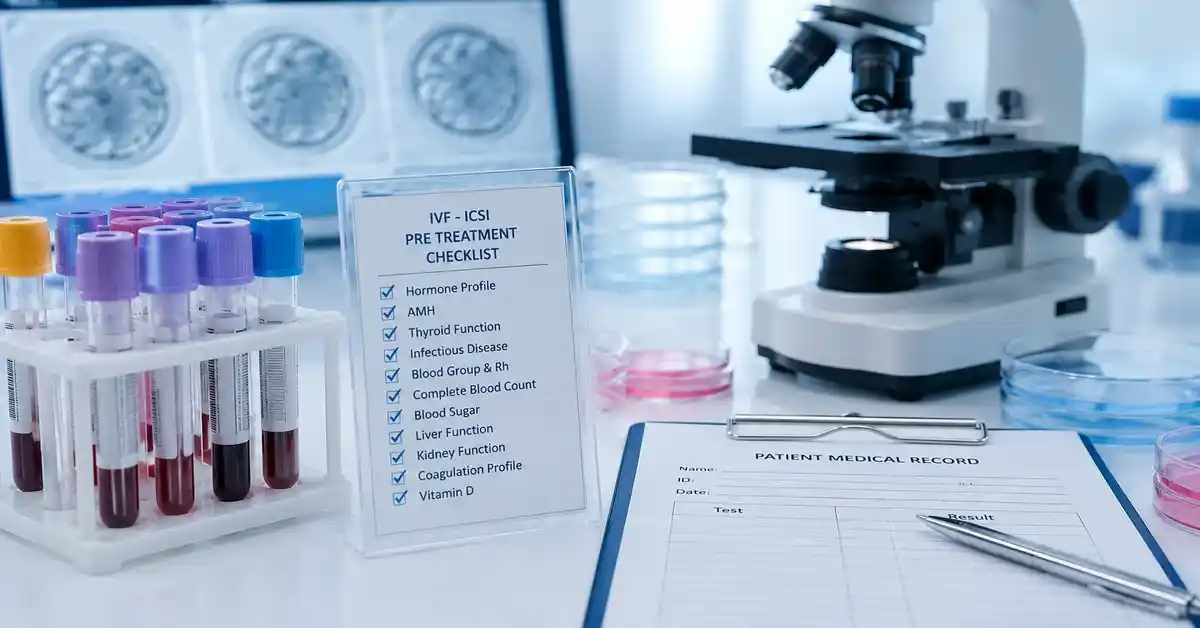
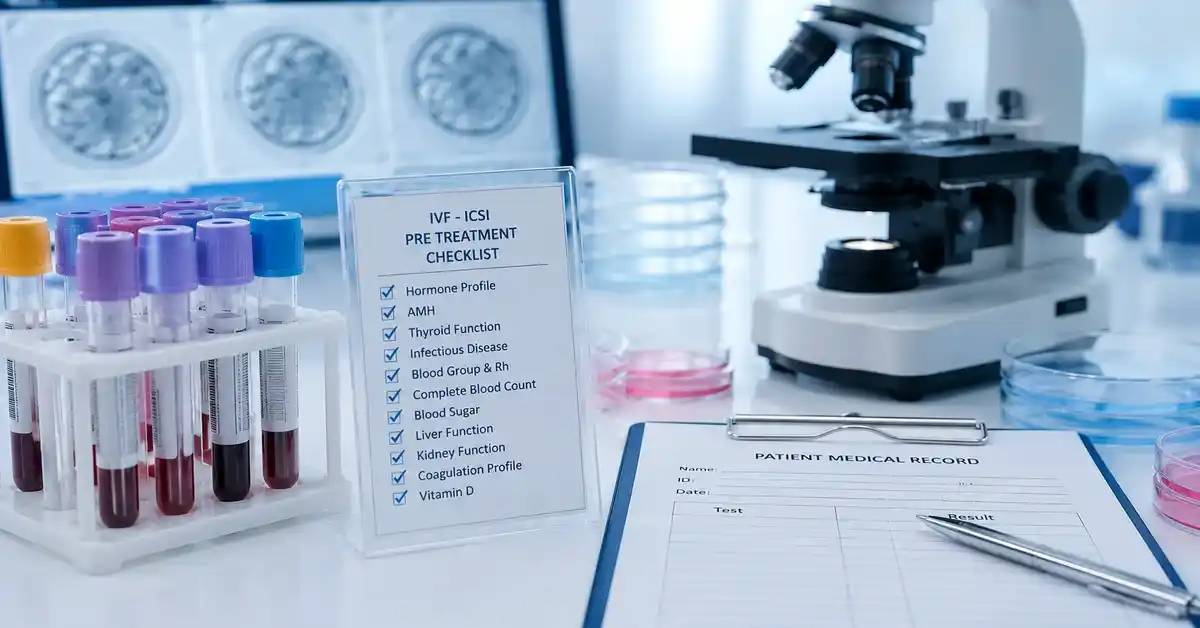
Pre-ICSI tests are an essential step before starting fertility treatment because they help the medical team understand the couple’s condition before choosing ovarian stimulation, egg retrieval timing, sperm preparation, and laboratory fertilization strategy. ICSI is a highly precise procedure, but its success depends on many factors beyond the laboratory, including ovarian reserve, hormone balance, uterine readiness, semen quality, infectious disease screening, and overall medical safety.
At Safemedigo, essential tests before ICSI are treated as a medical roadmap. They help the fertility specialist personalize the plan, reduce avoidable risks, and identify problems that may need correction before treatment begins. Starting ICSI without proper evaluation may lead to unexpected delays, inappropriate medication doses, poor response, or discovering important male fertility problems too late.
This article explains the most important Pre-ICSI tests, including blood tests before ICSI, hormone tests before ICSI, male fertility tests for ICSI, female fertility tests for ICSI, infectious disease tests before ICSI, timing of tests before ICSI, and how results help improve treatment planning.
What Are the Essential Pre-ICSI Tests and Why Are They Crucial?
Pre-ICSI tests are a group of medical and fertility evaluations performed before starting an ICSI cycle. These tests usually include hormone assessment, ovarian reserve evaluation, semen analysis before ICSI, infectious disease screening, general blood tests, and additional investigations when needed.
The goal is not to create unnecessary steps, but to build a safer and more accurate treatment plan. For example, an AMH test before ICSI can help estimate ovarian response to stimulation. A thyroid test before ICSI can detect hormonal imbalance that may need treatment. Semen analysis before ICSI helps the embryology team plan sperm preparation and fertilization strategy.
Essential tests before ICSI also help identify whether the couple needs extra support before treatment, such as managing thyroid disease, treating infection, correcting vitamin deficiencies, or arranging additional male fertility evaluation. This is why testing is part of treatment quality, not just routine paperwork.
Why tests are important before ICSI
Tests are important before ICSI because they help the doctor understand how the woman’s ovaries may respond, whether the uterus and general health are ready, and whether the male partner’s sperm sample needs special preparation. Without these tests, treatment may begin with incomplete information.
Pre-ICSI tests may help detect:
- Low or high ovarian reserve.
- Thyroid imbalance.
- High prolactin or pituitary-related hormone issues.
- Vitamin D deficiency.
- Blood count or metabolic problems.
- Infectious disease concerns.
- Severe sperm abnormalities.
- Possible need for genetic tests before ICSI in selected cases.
These results allow the doctor to choose a safer stimulation protocol and prepare the laboratory properly. They also reduce the chance of discovering a major issue on the day of egg retrieval or sperm collection.
Role of fertility tests before ICSI in treatment success
Fertility tests before ICSI play a direct role in treatment planning. For women, female fertility tests for ICSI help evaluate ovarian reserve, ovulation-related hormones, and general readiness for stimulation. For men, male fertility tests for ICSI assess semen quality and guide whether additional evaluation is needed.
The role of fertility tests before ICSI includes:
- Selecting the right ovarian stimulation dose.
- Predicting poor or excessive ovarian response.
- Detecting hormone problems before treatment.
- Evaluating semen quality before the procedure.
- Identifying infections that may require treatment.
- Planning laboratory fertilization strategy.
- Reducing avoidable cycle cancellation risks.
- Improving medical safety before anesthesia and egg retrieval.
These tests cannot guarantee pregnancy, but they help make the ICSI plan more accurate and safer.
Read about: Key Steps for ICSI Success: Expert Fertility Tips to Improve Outcomes
List of Tests Before ICSI
The list of tests before ICSI varies depending on the couple’s age, history, previous treatment attempts, menstrual cycle pattern, semen analysis results, and medical conditions. However, most fertility clinics request a core set of tests before starting treatment.
A common list of tests before ICSI may include general blood tests, hormone tests before ICSI, AMH test before ICSI, infectious disease tests before ICSI, semen analysis before ICSI, and ultrasound assessment. In selected cases, genetic tests before ICSI may be discussed, especially when semen results are extremely abnormal, there is recurrent pregnancy loss, or a known inherited condition exists.
The exact list should be personalized. A couple with PCOS may need a different evaluation from a couple with low ovarian reserve or severe male factor infertility. The best approach is to send previous reports to the fertility team before starting treatment.
Blood tests before ICSI
Blood tests before ICSI help assess general health and medical readiness for treatment. They may include complete blood count, blood group, liver and kidney function, blood sugar, and other tests based on medical history. These tests are especially important before ovarian stimulation and egg retrieval because they support safe planning.
Blood tests before ICSI may include:
- Complete blood count.
- Blood group and Rh factor.
- Liver function tests.
- Kidney function tests.
- Fasting blood sugar or HbA1c when needed.
- Coagulation tests if there is a relevant history.
- Infectious disease screening according to clinic policy.
- Additional tests if chronic illness is present.
These tests do not mean that a problem is expected. They simply help confirm that treatment can proceed safely and that any medical issue is addressed before the cycle begins.
Medical tests before ICSI for both partners
Medical tests before ICSI for both partners are important because fertility treatment depends on both egg and sperm quality. The female partner may need ovarian reserve, hormone, blood, and ultrasound assessment, while the male partner usually needs semen analysis and infectious disease screening.
For the female partner, medical tests before ICSI may include:
- AMH test before ICSI.
- Baseline ultrasound.
- Hormone profile.
- Thyroid test before ICSI.
- General blood tests.
- Infectious disease screening.
- Vitamin D test before ICSI when needed.
For the male partner, tests may include:
- Semen analysis before ICSI.
- Infectious disease screening.
- Male hormone tests in selected cases.
- Genetic tests before ICSI when medically indicated.
- Additional infection tests if semen results suggest inflammation.
Testing both partners prevents an incomplete plan and helps the clinic prepare for the full cycle.
Essential tests before ICSI for fertility evaluation
Essential tests before ICSI for fertility evaluation are the core investigations that help the doctor decide how to manage the cycle. These tests are not the same for every couple, but certain evaluations are commonly needed before starting.
Important fertility tests before ICSI may include:
- Ovarian reserve assessment.
- AMH test before ICSI.
- Baseline ultrasound.
- Hormone tests before ICSI.
- Thyroid test before ICSI.
- Semen analysis before ICSI.
- Infectious disease tests before ICSI.
- Blood tests before ICSI.
- Uterine assessment when indicated.
- Genetic tests before ICSI in selected cases.
The purpose is to identify treatment risks, estimate response, and plan the most appropriate route. If previous ICSI attempts failed, the doctor may request additional tests based on what happened in earlier cycles.

Hormone Tests Before ICSI
Hormone tests before ICSI help evaluate the reproductive and endocrine systems before treatment begins. Hormones influence ovulation, ovarian response, egg development, uterine preparation, and early pregnancy support. Even a mild imbalance may need attention before starting stimulation or embryo transfer.
Common hormone tests before ICSI may include TSH, prolactin, FSH, LH, estradiol, progesterone, and androgens in selected cases. These tests are not always requested in the same way for every patient. Timing matters for some hormones, especially FSH, LH, and estradiol, which are often checked early in the menstrual cycle.
Hormone results help the doctor decide whether to start treatment immediately, adjust medications, treat a condition first, or repeat a test if the result is unexpected.
Thyroid test before ICSI
A thyroid test before ICSI is important because thyroid hormones can affect menstrual regularity, ovulation, implantation, and early pregnancy health. The most common test is TSH, and the doctor may add Free T4 or thyroid antibodies in selected cases.
Thyroid testing may be especially important when there is:
- Irregular menstrual cycle.
- Previous miscarriage.
- Known thyroid disease.
- Symptoms such as fatigue or unexplained weight change.
- Previous abnormal TSH result.
- Family history of thyroid disease.
- Repeated fertility treatment failure.
If thyroid imbalance is found, treatment may be recommended before starting ICSI or before embryo transfer. The goal is not to delay treatment unnecessarily, but to create a more stable hormonal environment.
AMH test before ICSI
An AMH test before ICSI is one of the most useful ovarian reserve tests. AMH gives an estimate of the number of small follicles in the ovaries and helps predict how the ovaries may respond to stimulation drugs. It is useful for planning medication dose and reducing the risk of poor or excessive response.
However, AMH does not directly measure egg quality and does not guarantee pregnancy. A woman may have a good AMH but still face other fertility problems. Another woman may have low AMH but still produce usable eggs in a carefully planned cycle.
AMH test before ICSI helps with:
- Choosing ovarian stimulation dose.
- Predicting response to medication.
- Identifying low ovarian reserve.
- Identifying possible high response risk.
- Planning safer stimulation in PCOS.
- Comparing current response with previous cycles.
AMH should be interpreted with age, ultrasound findings, and medical history.
Other hormone tests before ICSI
Other hormone tests before ICSI may include FSH, LH, estradiol, progesterone, prolactin, and sometimes testosterone or other androgens. The doctor chooses these tests based on symptoms, cycle pattern, ultrasound results, and previous fertility history.
FSH, LH, and estradiol are often checked early in the cycle to understand ovarian function. Prolactin may be checked when cycles are irregular, ovulation is unclear, or symptoms suggest elevated prolactin. Progesterone may be used to confirm ovulation or evaluate timing in certain cycles.
These tests can help detect:
- Poor ovarian response risk.
- PCOS-related hormonal pattern.
- High prolactin.
- Premature progesterone rise.
- Ovulation issues.
- Pituitary-related hormone imbalance.
- Need for treatment before stimulation.
Hormone tests before ICSI are most useful when interpreted together rather than as isolated numbers.
Read about: ICSI After Failed IVF: Does It Offer Higher Chances of Success
Female Fertility Tests for ICSI
Female fertility tests for ICSI help assess ovarian reserve, hormone balance, ovulation pattern, uterine readiness, and general health. These tests guide the fertility specialist in choosing the right stimulation protocol and deciding whether any issue should be treated before treatment begins.
Female fertility tests for ICSI may include AMH, baseline ultrasound, hormone profile, thyroid test, vitamin D test before ICSI when needed, and infectious disease screening. In some cases, uterine assessment may be recommended, especially if there is previous failed embryo transfer, miscarriage, abnormal bleeding, or suspected polyps or fibroids.
The purpose is not only to diagnose infertility, but to prepare for a safer and more personalized ICSI cycle.
Female hormone profile before ICSI
A female hormone profile before ICSI gives important information about ovarian function and endocrine balance. It may include FSH, LH, estradiol, prolactin, TSH, progesterone, and androgens depending on the case. These tests can help identify why ovulation is irregular or why ovarian response may be low or high.
A female hormone profile before ICSI may be useful in:
- Irregular cycles.
- PCOS symptoms.
- Low ovarian reserve.
- Previous poor response.
- Previous failed ICSI.
- Recurrent miscarriage.
- Unexplained infertility.
- Suspected thyroid or prolactin disorder.
The results may lead to treatment adjustments, medication changes, or additional testing before starting the cycle. For example, high prolactin or abnormal thyroid function may need correction before stimulation or embryo transfer.
Vitamin D test before ICSI
A vitamin D test before ICSI may be requested because vitamin D deficiency is common and can affect general health, bone health, immune balance, and metabolism. While vitamin D alone does not determine ICSI success, correcting a clear deficiency may be part of preparing the body for treatment.
Vitamin D testing may be more relevant when there is:
- Known previous deficiency.
- Limited sun exposure.
- Fatigue or bone pain.
- Obesity.
- PCOS.
- Repeated treatment failure with documented deficiency.
- General health optimization before fertility treatment.
If deficiency is found, the doctor may recommend supplementation at a suitable dose. Patients should avoid taking high doses without medical supervision, because the goal is correction, not excessive supplementation.
Ovarian reserve assessment before ICSI
Ovarian reserve assessment before ICSI helps estimate how the ovaries may respond to stimulation. It usually includes AMH testing and ultrasound assessment of antral follicle count. Age remains an important factor because ovarian reserve and egg quality are not the same.
Ovarian reserve assessment helps the doctor:
- Estimate expected egg number.
- Choose stimulation medication dose.
- Identify poor response risk.
- Identify high response risk.
- Plan safer treatment for PCOS.
- Counsel couples about realistic expectations.
- Compare current results with previous cycles.
- Decide whether urgent treatment planning is needed.
A low ovarian reserve result does not automatically mean pregnancy is impossible. It means the treatment plan should be realistic, timely, and individualized.
Read about: Latest ICSI Protocols to Improve Fertility Success
Male Fertility Tests for ICSI
Male fertility tests for ICSI are essential because sperm quality affects fertilization and embryo development. ICSI can help overcome some sperm-related problems, but it does not make male evaluation unnecessary. A semen analysis before ICSI gives the laboratory and doctor important information before egg retrieval day.
Male fertility tests for ICSI may include semen analysis, infectious disease screening, male hormone tests, genetic tests before ICSI in selected cases, and infection assessment when inflammation is suspected. If a severe sperm problem is discovered early, the team can prepare a more suitable strategy.
The male partner should not be evaluated only on the day of egg retrieval. Early testing gives time to repeat abnormal results, treat infections, adjust lifestyle, or consult an andrologist when needed.
Semen analysis before ICSI
Semen analysis before ICSI is one of the most important male fertility tests. It evaluates semen volume, sperm concentration, total sperm count, motility, morphology, and sometimes signs of inflammation. It helps determine whether the sperm sample is suitable for ICSI and whether additional evaluation is needed.
The test should be done according to laboratory instructions, including abstinence period, collection method, and delivery timing. If the result is abnormal, the doctor may ask for a repeat test because semen parameters can vary due to fever, stress, timing, illness, heat exposure, or collection issues.
Semen analysis before ICSI helps answer:
- Is sperm present in the sample?
- Is sperm count very low?
- Is motility suitable?
- Is morphology severely affected?
- Are there signs of infection?
- Is further male evaluation needed?
- Should the lab prepare for a difficult sample?
This test is a key part of essential tests before ICSI.
Male hormone tests before ICSI
Male hormone tests before ICSI may be requested if semen analysis is severely abnormal, sperm count is very low, libido is reduced, testicular problems are present, or there is a history of surgery or hormonal disease. These tests may include FSH, LH, testosterone, prolactin, and sometimes other hormones.
Male hormone tests help determine whether the sperm problem is related to testicular production, pituitary signaling, testosterone deficiency, or another treatable factor. For example, high FSH may suggest reduced testicular sperm production, while low gonadotropins may point to a hormonal issue that requires specialist management.
These tests are not required for every man, but they are important when the semen analysis suggests a deeper problem. They can help guide treatment before ICSI and improve planning.
Genetic tests before ICSI
Genetic tests before ICSI may be discussed in selected male factor cases, especially when sperm count is extremely low, azoospermia is suspected, or there is a family history of genetic disease. The doctor may recommend tests such as karyotype or Y-chromosome microdeletion analysis depending on the semen result and clinical examination.
Genetic tests before ICSI are not routine for all couples. They are requested when the result may affect treatment planning, prognosis, or counseling. In some cases, genetic evaluation helps explain severe male infertility and guides the fertility team in choosing the safest next step.
Couples should ask:
- Why is the genetic test recommended?
- Will the result change the treatment plan?
- Is the test related to sperm count or family history?
- How long does the result take?
- Should treatment wait for the result?
- Is genetic counseling needed?
A targeted approach avoids unnecessary testing while protecting treatment quality.
Read about: Modern ICSI Steps to Improve Fertility Success
Infectious Disease Tests Before ICSI
Infectious disease tests before ICSI are commonly requested to protect the couple, medical team, laboratory procedures, and future pregnancy. Clinics may require screening for certain infections before handling eggs, sperm, or embryos.
These tests are usually requested for both partners. The exact list may depend on clinic policy, country regulations, medical history, and previous results. Infectious disease screening does not mean infection is expected; it is part of safe fertility care.
If an infection is detected, the fertility team will explain the next steps. Some cases may require treatment before starting, while others require special laboratory precautions or medical follow-up.
Screening for hepatitis and HIV before ICSI
Screening for hepatitis and HIV before ICSI is a common part of medical testing before fertility treatment. These tests may include HIV, hepatitis B, hepatitis C, and related markers depending on the clinic’s protocol and local regulations.
The purpose is to:
- Protect laboratory handling procedures.
- Guide medical precautions.
- Identify infections that need treatment or monitoring.
- Reduce risk to partners and future pregnancy.
- Ensure safe planning before egg retrieval and sperm processing.
If a test is positive, treatment may still be possible in many cases, but it requires careful medical coordination. The couple should not panic; the fertility team will explain whether treatment should be delayed, modified, or performed with special precautions.
Other infectious disease tests before ICSI
Other infectious disease tests before ICSI may be requested depending on medical history, symptoms, country requirements, or clinic protocol. Some infections can affect fertility, pregnancy health, or laboratory safety, so screening may be part of the preparation process.
Additional tests may include:
- Syphilis screening.
- Rubella immunity in some women.
- Varicella immunity when relevant.
- Chlamydia or gonorrhea testing if indicated.
- Urine culture if urinary infection is suspected.
- Semen culture when inflammation appears in semen analysis.
- Other tests based on travel, symptoms, or medical history.
Not every couple needs every infectious disease test. The doctor selects the tests based on safety, medical need, and clinic policy.
Read about: IVF Preparation Steps: Hormonal Tests and Analysis Guide
Timing of Tests Before ICSI
Timing of tests before ICSI is important because some tests can be done at any time, while others must be performed on specific cycle days. Good timing prevents unnecessary repetition and helps the doctor prepare the treatment plan correctly.
Some blood tests, infectious disease tests, AMH, thyroid tests, and vitamin D tests can often be done at any time. However, FSH, LH, and estradiol are usually most useful when performed early in the menstrual cycle. Semen analysis also needs correct preparation, especially abstinence timing.
Couples planning to travel for treatment should complete key tests early enough to allow the doctor to review results and correct any problem before starting stimulation.
Best time to perform pre-ICSI tests
The best time to perform pre-ICSI tests depends on the test type. General blood tests and infectious disease screening can often be done before treatment at any convenient time. AMH is also commonly performed at any point in the cycle, although it should be interpreted with ultrasound and age.
Cycle-related hormones such as FSH, LH, and estradiol are often done on day 2 or day 3 of the menstrual cycle. Progesterone is checked at specific times depending on why it is requested. Prolactin may need calm conditions because stress can affect the result.
Best timing helps with:
- Accurate interpretation.
- Avoiding repeated tests.
- Planning ovarian stimulation.
- Detecting problems early.
- Preparing medication doses.
- Completing treatment without last-minute delays.
The doctor should provide the timing instructions before the couple performs the tests.
When to repeat tests before ICSI if needed
Tests may need to be repeated before ICSI if the results are abnormal, outdated, incomplete, or not done at the correct time. Repeating a test is not always unnecessary; sometimes it is essential for safe and accurate planning.
Tests may be repeated when:
- Prolactin is unexpectedly high.
- TSH needs checking after thyroid treatment.
- Semen analysis is abnormal.
- Vitamin D deficiency is being treated.
- Infection treatment has been completed.
- The cycle has been delayed for several months.
- Hormone tests were done on the wrong cycle day.
- Lab values do not match symptoms or ultrasound findings.
Updated results help the doctor avoid making decisions based on old or unclear information.
Read about: IVF Cost Success: Turkey vs USA
Details About Pre-ICSI Tests
Details about Pre-ICSI tests differ from couple to couple, but the principle is the same: treatment should begin with enough information to make safe decisions. Tests help evaluate readiness, identify risks, and personalize the treatment plan.
Some patients worry that testing delays treatment. In reality, testing may save time by detecting problems before the cycle begins. For example, treating thyroid imbalance, infection, or severe vitamin deficiency before stimulation may prevent complications or delays later.
Testing should be organized and medically justified. Too many unnecessary tests may increase cost and anxiety, but skipping important tests can create avoidable problems. The best plan is balanced and individualized.
Can I start ICSI without pre-ICSI tests?
Starting ICSI without pre-ICSI tests is not recommended. ICSI requires ovarian stimulation, egg retrieval, sperm preparation, fertilization, and embryo transfer planning. Without basic testing, the doctor may not know how the ovaries will respond, whether hormones are balanced, or whether the sperm sample needs special preparation.
Essential tests before ICSI usually include ovarian reserve assessment, hormone evaluation, semen analysis, infectious disease screening, and general medical tests. The exact list may vary, but some level of testing is necessary for safe planning.
Beginning treatment without tests is like starting a complex medical journey without a map. Pre-ICSI tests help make the process safer, clearer, and more personalized.
How long do pre-ICSI tests take?
Pre-ICSI tests may take a few days to a few weeks depending on the number of tests, the menstrual cycle timing, and whether any abnormal result needs treatment. Many blood tests are completed quickly, but cycle-day hormone tests must be scheduled correctly.
Some results, such as genetic tests before ICSI, may take longer. Semen analysis can usually be completed quickly, but abnormal results may need repetition or specialist evaluation. If thyroid imbalance, infection, or high prolactin is found, treatment may be needed before starting the ICSI cycle.
Couples should avoid waiting until the last moment. Performing tests early gives the doctor enough time to review results, adjust the plan, and avoid unnecessary stress before treatment begins.
Do pre-ICSI tests differ for each couple?
Yes, Pre-ICSI tests differ for each couple. A woman with PCOS may need tests related to high ovarian response and metabolic health. A woman with low ovarian reserve may need a different focus. A man with severe sperm abnormality may need hormone or genetic evaluation, while a man with normal semen results may not need advanced tests.
Factors that influence the test list include:
- Woman’s age.
- Menstrual cycle pattern.
- AMH and ultrasound findings.
- Semen analysis results.
- Previous ICSI attempts.
- Miscarriage history.
- Chronic diseases.
- Symptoms of infection.
- Family history.
- Planned treatment strategy.
A personalized list avoids unnecessary testing while making sure important factors are not missed.
Read about: IVF Protocols: Turkey vs Germany
Conclusion
Pre-ICSI tests are crucial for fertility treatment success because they help the doctor evaluate both partners before starting the cycle. Through blood tests before ICSI, hormone tests before ICSI, AMH test before ICSI, thyroid test before ICSI, semen analysis before ICSI, infectious disease tests before ICSI, and selected additional tests, the medical team can create a safer and more personalized treatment plan.
Essential tests before ICSI do not complicate the process; they make it clearer. Each result can help adjust ovarian stimulation drugs, treat hormone problems, prepare the embryology laboratory, improve sperm evaluation, or delay treatment briefly until an issue is corrected. This makes testing a direct part of treatment quality.
Frequently Asked Questions: Essential Pre-ICSI Tests: Why They Are Crucial for Fertility Treatment Success
What are Pre-ICSI tests?
Pre-ICSI tests are medical and fertility evaluations performed before starting ICSI. They may include hormone tests, AMH, thyroid testing, general blood tests, infectious disease screening, ultrasound assessment, and semen analysis before ICSI. These tests help the doctor personalize the treatment plan.
Why are tests important before ICSI?
Tests are important before ICSI because they reveal factors that may affect safety or success. They can detect hormone imbalance, low ovarian reserve, infection, vitamin deficiency, or severe sperm problems before treatment begins, allowing the doctor to adjust the plan early.
What is the best timing of tests before ICSI?
The best timing of tests before ICSI depends on the test. AMH, thyroid, vitamin D, infectious disease screening, and many blood tests can often be done at any time. FSH, LH, and estradiol are usually done early in the menstrual cycle, often on day 2 or day 3.
Is semen analysis necessary before ICSI?
Yes, semen analysis before ICSI is necessary because it evaluates sperm count, motility, morphology, volume, and signs of inflammation. Even though ICSI can help with male factor infertility, the laboratory still needs semen information before egg retrieval and fertilization.
Do all couples need genetic tests before ICSI?
No, genetic tests before ICSI are not required for every couple. They may be recommended in selected cases such as very low sperm count, suspected azoospermia, recurrent pregnancy loss, known genetic disease risk, or specific medical history. The decision should be individualized.